

Last Updated: November 3, 2026
Quick Summary
To build a modest capsule wardrobe for children, start by decluttering outgrown clothes, then choose two or three neutral colors plus one or two accents. Stock 5 to 6 tops, 3 to 4 bottoms, 2 to 3 layers, one dressier outfit, one coat, and two pairs of shoes.
- A 25-item minimalist wardrobe for children covers a full season, per Wellness Mama's guide.
- Infants need 5-6 bodysuits, 4-5 pants, 2-3 layers, 3-4 sleepwear, and 1-2 shoes.
- Toddler summer capsules need 5-7 short-sleeve tops, 3-4 shorts, and 2 pairs of sandals.
- Let tweens pick two accent colors and one statement layer, then set coverage rules together.
- Spend most on shoes and everyday bottoms, and least on layers and sleepwear.
Table of Contents
- Why a Modest Capsule Wardrobe Works for Families
- Step 1: Take Inventory and Declutter Outgrown Clothes
- Step 2: Choose a Color Palette and Versatile Foundation Pieces
- Your Kids Capsule Wardrobe Checklist by Age and Season
- Toddler Capsule Wardrobe Winter: Staying Warm and Modest
- Toddler Girl Capsule Wardrobe Summer: Breathable and Covered
- Capsule Wardrobe for Tween Girl: Style That Respects Her Voice
- Building on a Budget: Secondhand, Sales, and Smart Replacements
- Frequently Asked Questions
Why a Modest Capsule Wardrobe Works for Families
A modest capsule wardrobe is a small, carefully chosen set of clothing that mixes and matches easily while keeping the body covered in ways your family values. Most parents who try one find that fewer clothes mean simpler mornings and less money spent.
A modest capsule wardrobe can reduce decision fatigue and help children feel secure in what they wear.
What Counts as Modest Clothing for Kids
Modest clothing for children means coverage that fits your family's standards. That usually includes:
- Tops that cover the chest and shoulders
- Bottoms that reach at least mid-thigh
- Loose or relaxed fits that allow movement
- Layers for extra coverage when needed
Modesty is personal. Some families focus on sleeve length and hem lines. Others care more about fit and fabric. Both approaches work.
The Practical Benefits: Less Laundry, Fewer Fights, Lower Costs
A smaller wardrobe means fewer clothes to wash, sort, and fold. Kids also argue less when every shirt pairs with every bottom.
Cost savings add up fast. A 25-item minimalist wardrobe for children is enough to cover a full season, according to Wellness Mama's minimalist wardrobe guide, which also reported lower stress for parents and kids.
Step 1: Take Inventory and Declutter Outgrown Clothes
Start by pulling every piece of kids' clothing out of drawers and closets. Sort into three piles: keep, donate, and toss.
Check each item for fit, stains, and wear. If it hasn't been worn in a month, it goes. Growth spurts make this decision easy: anything too tight or too short leaves the rotation today.
Once you've cleared the pile, donate the outgrown clothes to charity rather than letting them sit in bags.
Step 2: Choose a Color Palette and Versatile Foundation Pieces
Pick two or three neutral colors first, like navy, gray, white, or tan. Then add one or two accent colors your child actually likes.
Foundation pieces do the heavy lifting. A good starting grid is 5 to 6 tops, 3 to 4 bottoms, 2 to 3 layers, one dressier outfit, one coat, and two pairs of shoes, per Firebird Kids' seasonal capsule guide.
For everyday tees, our Kid's Fine Jersey Tee is a solid base layer: 100% combed ringspun cotton, a classic fit, and a tear-away label.

Your Kids Capsule Wardrobe Checklist by Age and Season
Use this kids capsule wardrobe checklist as a starting point, then adjust for your child's age, the season, and your family's modesty standards.
| Age Group | Tops | Bottoms | Layers | Sleepwear | Shoes |
|---|---|---|---|---|---|
| Infant | 5-6 bodysuits | 4-5 pants | 2-3 | 3-4 | 1-2 |
| Toddler | 5-7 tees | 4-6 pants | 2-3 | 3-5 sets | 2 |
| School-age | 6-8 tops | 4-6 bottoms | 2-3 | 3-4 sets | 2 |
| Tween | 7-8 tops | 4-5 bottoms | 2-3 | 2-3 sets | 2 |
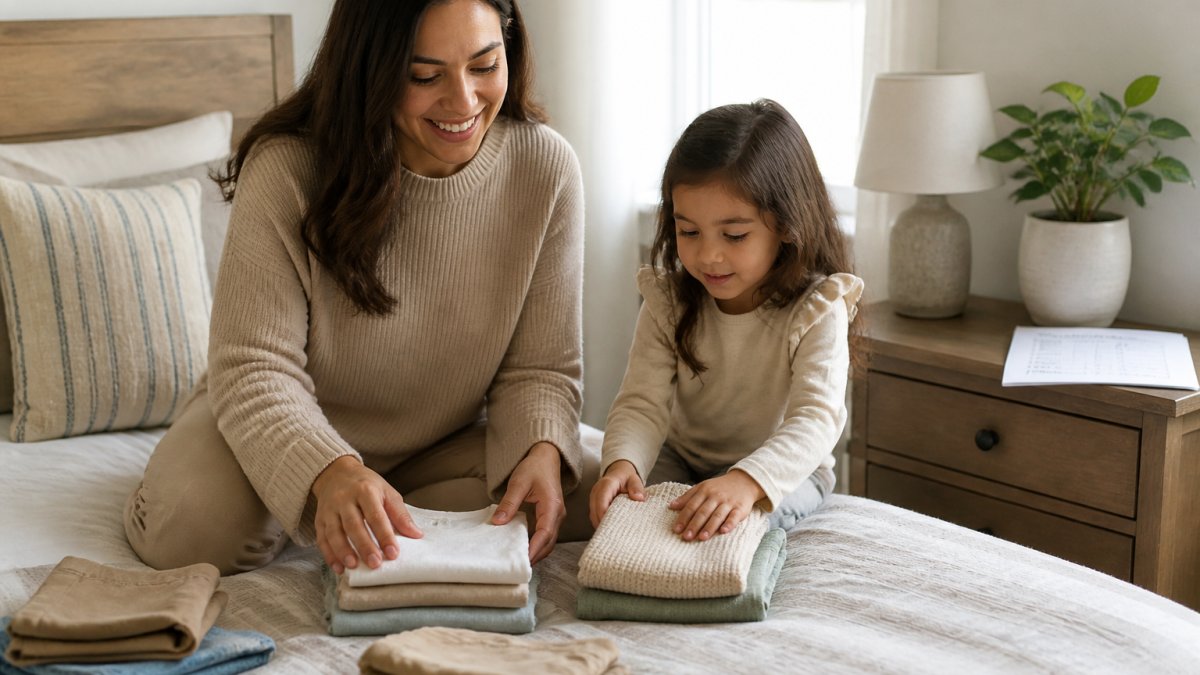
The man is American.
Translating Modesty Into Garments by Age
Modesty is a family standard, not a single rule. The practical move is to decide, for each age group, which coverage points matter most and then buy pieces that meet them without extra effort.
- Infant: Full-coverage bodysuits and footed pants do most of the work. Look for lap shoulders and snap closures so diaper changes stay simple. A bodysuit under a sleep sack covers the chest and legs without loose fabric near the face.
- Toddler: Choose tees that cover the shoulder and upper chest, and pants with a relaxed cut that reaches at least mid-thigh in shorts or full-length in pants. A lightweight cardigan or zip hoodie adds coverage for air-conditioned rooms and cool mornings.
- School-age: This is where school dress codes and family standards meet. Many schools require shoulders covered and shorts to a certain length; check the handbook before buying. Pick tops that stay tucked or long enough to cover the waistband when arms raise, and bottoms with an adjustable waist so they stay in place during play.
- Tween: Tweens often want more control. Set the coverage boundaries together, for example, sleeve length, neckline, and hem, then let her choose colors and fits inside those lines. Layering pieces like a light long-sleeve tee under a short-sleeve top extend coverage without a fight.
Modest Outfit Examples From One Capsule
A capsule works when the same pieces form different complete outfits. Here are examples using the counts above.
- School day (school-age): A neutral long-sleeve tee, relaxed-fit pants with an adjustable waist, and a light cardigan. Add sneakers. Every piece covers and layers.
- Play day (toddler): A short-sleeve tee, pull-on pants, and a zip hoodie. If the tee is sleeveless or short, layer a light long-sleeve tee underneath for coverage that moves with the child.
- Occasion (tween): A dress or skirt set with a modest hem, paired with a light layer for shoulders and arms. Keep shoes neutral so they work with the rest of the capsule.
- Layering over sleeveless or shorter garments: Keep two or three light long-sleeve tees or thin cardigans in the capsule specifically for this purpose. They turn a sleeveless dress or short-sleeve top into a modest outfit without buying new pieces.
Adjusting for Season and Growth
Season changes what the capsule needs, not how many pieces it holds.
Growth spurts can make a capsule outgrow quickly.
A table of item counts is not a shopping list. Start with what you already own, fill only the gaps, and add one or two pieces at a time.
For the youngest child, an Infant Fine Jersey Bodysuit is made from 100% cotton for solid colors and has plastic snaps at the cross closure for easy changing access.

Toddler Capsule Wardrobe Winter: Staying Warm and Modest
Winter calls for warmth without bulk. Build around long-sleeve tees, a fleece or knit sweater, and one heavy coat.
Our Toddler Long Sleeve Tee is made from 100% combed ringspun cotton fine jersey with a topstitched ribbed collar.

Add two pairs of pants, warm socks, and a hat. Keep the palette tight so everything layers together.
Toddler Girl Capsule Wardrobe Summer: Breathable and Covered
Summer modesty comes down to fabric and cut. Choose breathable cotton, loose fits, and longer shorts or skirts.
A summer capsule for toddlers usually needs:
- 5-7 short-sleeve tops
- 3-4 shorts or light pants
- 1-2 dresses or skirt sets
- 2 pairs of sandals or sneakers
Light colors reflect heat. Cotton keeps skin cool. Skip heavy prints that trap warmth.
Capsule Wardrobe for Tween Girl: Style That Respects Her Voice
Tweens want a say in what they wear. A capsule wardrobe for a tween girl works best when she helps pick the palette and the pieces.
Let her choose two accent colors and one statement layer. Then set the coverage rules together so she understands the boundaries.
This approach builds buy-in. Kids who help build the capsule wear it more often.
Building on a Budget: Secondhand, Sales, and Smart Replacements
A capsule wardrobe doesn't require new clothes, and it doesn't require buying everything at once. A budget-first approach is to set a realistic spending limit for the season, prioritize the pieces your child will wear most, and replace worn items one at a time.
Set a Seasonal Spending Limit
Start with a number you can afford for the season, then divide it across categories in priority order. A common pattern is to spend the most on shoes and the everyday bottoms that get the hardest wear, and the least on layers and sleepwear that are outgrown quickly. Write the limit down and track it; the goal is to avoid a mid-season second shopping trip.
Prioritize What Gets Worn Most
Rank the capsule by wear frequency. Everyday tops and bottoms come first, then shoes, then layers, then sleepwear and occasion pieces. If the budget runs short, buy the top two categories new or in good used condition and wait on the rest. A child can wear the same three tops and two bottoms on repeat far longer than most parents expect.
Secondhand and Sales Strategy
- Shop consignment and thrift stores for everyday tops, bottoms, and layers; inspect seams, knees, and cuffs for wear.
- Buy end-of-season sales in the next size up for the categories that grow fastest, usually pants and long-sleeve tops.
- Accept hand-me-downs, but sort them against your palette and modesty standards before they enter the capsule.
- Use a simple rule for used items: if it needs repair before the first wear, leave it unless the repair is quick and the item is a priority piece.
Replacement Strategy
Replace one worn item at a time, not the whole closet. Keep a running list of gaps, a stained tee, a too-short pair of pants, and fill them as budget allows.
Watch out: secondhand shopping can undo a budget fast if you buy outside your palette or modesty standards.
For more ideas, see our guide to affordable ways to shop for ethical fashion.
The 70/30 rule helps here too: anchor 70% of the closet in timeless basics and use 30% for trend pieces, per Judy P Apparel's capsule wardrobe guidance.
Frequently Asked Questions
What is the 3-3-3 rule for a capsule wardrobe?
The 3-3-3 rule is a simple starting framework: pick 3 tops, 3 bottoms, and 3 layering pieces that all work together. For a child, that means three everyday shirts, three pairs of pants or shorts, and three layers like a hoodie, cardigan, or light jacket. This creates at least nine outfit combinations from just nine items. It is a manageable way to test whether a capsule approach fits your family before committing to a full seasonal wardrobe.
How many clothes does a child need in a capsule wardrobe?
A practical target is 5 to 7 everyday tops, 3 to 5 bottoms, 2 to 3 layering pieces, 1 dressier outfit, 1 coat, and 2 pairs of shoes. Some families manage with about 25 total items per season, including sleepwear and underwear. The exact number depends on how often you do laundry and how many days a week your child wears a uniform or play clothes. Start on the lower end and add only what you find yourself reaching for.
How do I choose modest clothes that children will feel comfortable wearing?
Look for relaxed fits, longer hems, and fabrics that breathe, like 100% combed ringspun cotton. Let your child pick from a pre-approved palette so they have a say in color while you control coverage and durability. Test movement before you commit: have them sit, reach, and run in the dressing room or at home. Avoid scratchy tags and tight waistbands. Modest clothing should never restrict play, and the best pieces are the ones your child forgets they are wearing.
How often should I update a child's capsule wardrobe as they grow?
Plan a full seasonal review twice a year, before back-to-school and before summer. In between, do a quick monthly check for outgrown sleeves, tight waistbands, and worn knees. Growth spurts can make a winter capsule obsolete in weeks, so keep a small bin of hand-me-downs in the next size up. Replace items one at a time rather than rebuilding the whole wardrobe. Durable cotton pieces that survive multiple children make this cycle cheaper and less wasteful.
Building a modest capsule wardrobe for children takes one focused weekend, not years of trial and error. At IGIT Apparel, we make faith-inspired kids' clothing that supports that effort: soft cotton basics, durable prints, and every purchase funding Christian youth ministries. Free shipping and secure payments make it easy to start. Get started with IGIT Apparel and give your child a wardrobe that's simpler, modest, and made with purpose.
