

Table of Contents
- What Clothes Can You Donate
- How to Prepare Clothes for Donation
- Sort and Pack Your Donation
- Where to Donate Clothes
- Clothing Donation Tax Deduction
- Textile Recycling and Alternatives for Unwearable Items
- Common Mistakes to Avoid When Donating Clothes
- Making Your Donation Count
- Frequently Asked Questions
Last Updated: October 4, 2026
What Clothes Can You Donate
Knowing which items charities need ensures your donation makes real impact.
Acceptable Items
Charities welcome clothes that are clean, in good condition, and ready to wear. Look for items that fit these criteria:
- Everyday wear: T-shirts, jeans, casual pants, sweaters, and basic tops in current styles
- Professional clothing: Button-up shirts, blazers, dress pants, and skirts suitable for work
- Seasonal items: Winter coats, light jackets, and weather-appropriate layers
- Undergarments: Unused or gently worn socks, underwear, and bras (still in original packaging when possible)
- Activewear: Workout clothes, yoga pants, and athletic shirts in good condition
- Children's clothing: Outgrown items in excellent condition, including school clothes and play wear
- Formal wear: Dresses, suits, and special occasion outfits
Each piece should be something you'd wear yourself. When you donate clothes to charity, you're giving someone a real wardrobe option, not a trash bin.
Items to Keep or Discard
Some garments don't belong in a donation pile. Set these aside for recycling or disposal instead:
- Heavily worn items: Clothes with permanent wrinkles, fading, or loss of shape
- Underwear with elastic damage: Anything that no longer fits properly or has visible wear
- Pilling or bobbling: Fabrics with significant fuzzing that won't wash out
- Stains that won't come clean: Permanent marks from food, grease, or other substances
- Missing buttons or broken zippers: Unless you plan to repair them before donating
- Ripped seams or holes: Except small holes that are easily mended
- Lingerie or swimwear: Most charities decline these for hygiene reasons
- Items with odors: Clothes that smell of smoke, mildew, or pet odors even after washing
When in doubt, ask: Would this help someone or frustrate them? Donating quality items ensures your contribution makes real impact.
How to Prepare Clothes for Donation
Proper preparation separates thoughtful donations from ones that burden charities and shows respect for the organization and recipients.
Inspect and Clean Your Garments
Examine each piece in natural light, checking front and back for stains, discoloration, or damage.
Wash or dry clean items before donating. Most charities prefer clean clothes because it shows you value the donation. Use standard wash for everyday items, appropriate settings for delicate fabrics, and air dry when possible.
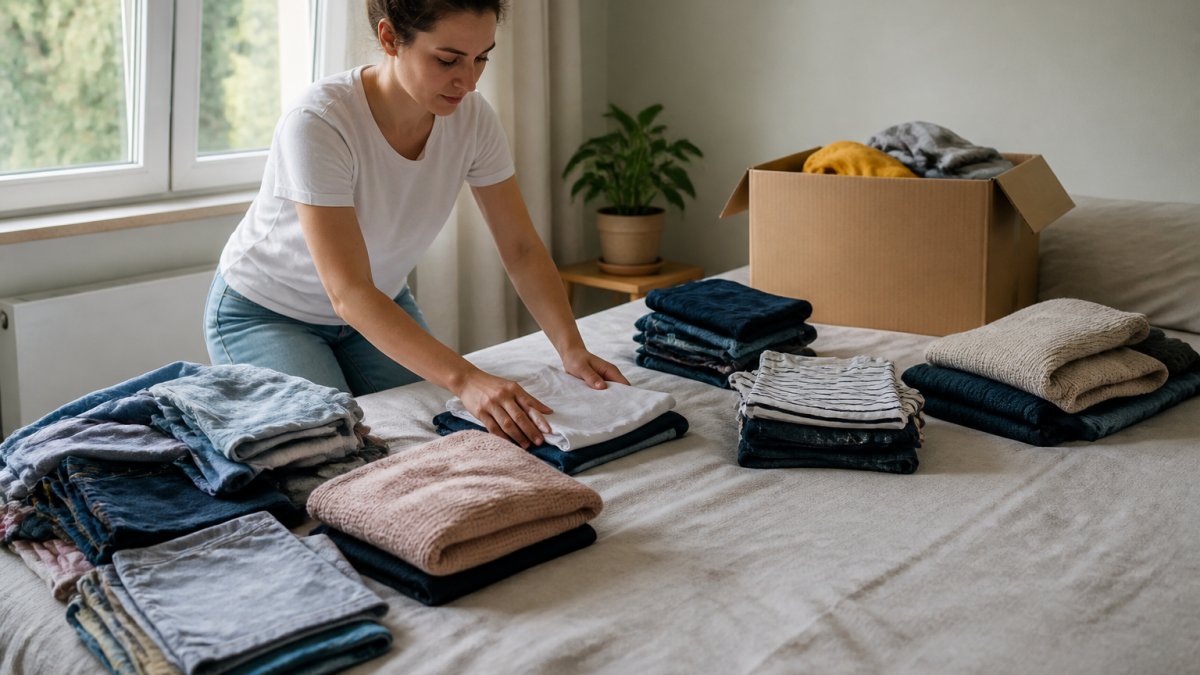
Treat small stains with oxygen-based removers, testing on an inconspicuous area first.
Empty Pockets and Check for Damage
Empty every pocket before packing. Charities appreciate this because it protects volunteers and keeps processing smooth.
Do a final damage check: test zippers and buttons, look for loose seams or fraying. Small repairs make a real difference, tighten loose buttons or stitch coming seams. Items ready to wear get used instead of sitting in storage.
Sort and Pack Your Donation
Organization matters when you donate clothes to charity, it saves nonprofits time and gets items to people faster.
Organize by Type and Size
Group items by category (shirts, pants, dresses, jackets, underwear, children's items) and arrange by size within each category. This helps staff quickly process donations.
Pack Securely in Bags or Boxes
Use sturdy bags or boxes that won't fall apart. Fill about three-quarters full so staff can safely lift them. For large donations, ask about free pickup services.
Where to Donate Clothes
Different charities serve different communities and have different needs.
Local Nonprofits and Charities
Local nonprofits often have the most direct impact. Look for homeless shelters, job training programs, community centers, religious organizations, or youth groups. Call ahead to ask about current needs, accepted items, and drop-off hours, some focus on professional wear, others on children's clothing.
Verifying Charity Legitimacy
Before you donate clothes to charity, verify that the organization is legitimate and uses donations responsibly. A few simple checks protect your contribution:
Check if the organization has nonprofit status. The IRS maintains a searchable database of registered 501(c)(3) nonprofits at IRS Tax Exempt Organization Search. Look up the organization's name to confirm it's legitimate.
Ask where donations go. Legitimate charities can explain their process clearly. Do they sell items at thrift stores to fund programs? Do they distribute clothing directly to people in need? Do they partner with other organizations? A transparent answer shows they take donations seriously.
Review their financials if available. Many nonprofits publish annual reports showing how they spend money. A healthy nonprofit spends most donations on programs and services, not overhead. If a charity's website doesn't provide this information, ask for it directly.
Check their online presence. Real organizations have active websites, social media accounts, and contact information. Be cautious of charities that only accept donations through unclear channels or pressure you to donate immediately.
Clothing Donation Tax Deduction
Donations to qualified charities may be tax-deductible if you itemize deductions.
Documentation and Valuation
Keep records of what you donate. The IRS requires documentation for charitable contributions over $250. For smaller donations, you need a receipt from the charity.
Create a list of items you're donating, including descriptions and estimated values.
The IRS provides guidance on valuing donated clothing through IRS Publication 561 on determining property value. Use this resource to make reasonable estimates.
Get a receipt from the charity. The organization should provide documentation showing the date of donation and a description of items (you can list "clothing" rather than every individual piece). Keep this receipt with your tax records.
Be honest with valuations. The IRS audits charitable deductions, and inflated values raise red flags. Use realistic thrift store prices as your guide. If you're unsure about an item's value, estimate conservatively.
Textile Recycling and Alternatives for Unwearable Items
Items that are truly unwearable, heavily stained, torn beyond repair, or structurally compromised, deserve recycling instead of donation.
When to Recycle Instead of Donate
Donate clean, structurally sound items ready to wear. Recycle those that aren't.
Recycle items with permanent stains, significant tears, broken zippers, elastic failure, severe pilling, persistent odors, extreme fading, or seam separation. If you wouldn't give it to someone you know, recycle it.
How Textile Recycling Works
Textile recycling breaks down clothing into fibers used for insulation, padding, industrial rags, composites, nonwoven textiles, and yarn. This keeps textiles out of landfills and reduces demand for virgin fiber production.
Finding Textile Recycling Programs
Search locally: Start with your city or county waste management website. Most municipalities list textile recycling drop-off locations. Search for "textile recycling near me" or "clothing recycling [your city]" to find nearby options.
Textile-specific programs: Some organizations specialize in textile recycling:
-
Planet Aid operates donation bins in many communities across the country. Their bins accept worn-out clothing, shoes, and textiles. Items are sorted; wearable pieces are resold, and unsuitable items are recycled. Find a bin at Planet Aid bin locator.
-
Goodwill and Salvation Army accept items beyond what they can sell. Unsold or unsuitable donations are sent to textile recyclers rather than landfills. When you donate to these organizations, you're supporting both direct distribution and recycling infrastructure.
-
Local nonprofits and community centers often partner with textile recyclers. Call ahead to ask whether they accept worn-out items for recycling.
Retailer take-back programs: Some major clothing brands run in-store take-back programs for worn items:
- Patagonia accepts worn Patagonia gear for recycling or repair through their Worn Wear program.
- REI accepts worn outdoor gear for recycling.
- H&M has collection bins in stores for worn clothing of any brand.
- Nike accepts worn Nike shoes for recycling into new products.
- Levi's accepts worn Levi's jeans for recycling.
These programs vary by location and brand, so check the retailer's website or call your local store to confirm participation.
Textile waste facilities: Some cities operate dedicated textile waste facilities that accept all types of worn clothing and textiles. Contact your local solid waste management department for locations and hours.
Upcycling: Giving Textiles New Life
Upcycling transforms unwearable items with sentimental value into tote bags, quilts, patches, rags, pet beds, or stuffing. Pinterest and YouTube offer free DIY tutorials. For professional upcycling, search "upcycling services near me", costs range $50-$300+ depending on complexity.
Special Handling for Specific Materials
Shoes: Most textile recyclers don't accept shoes. Try Nike Grind (participating Nike stores or mail-in), Soles4Souls (gently worn for distribution), local shoe repair shops, or search "shoe recycling near me." Synthetic fabrics: Most textile recyclers accept polyester and nylon, but confirm first. Contaminated items: Dispose of hazardous materials through hazardous waste facilities.
Making the Recycling Decision
When you have a pile of unwearable items, sort them:
- Separate by condition: Wearable items go to donation; unwearable items go to recycling.
- Check for special materials: Shoes, heavily synthetic items, or contaminated textiles may need specialized recycling.
- Find the right program: Use the resources above to locate a textile recycler, retailer program, or nonprofit that accepts your items.
- Prepare items: Remove any non-textile components (zippers, buttons, snaps) if the program requests it. Most recyclers handle this, but confirm.
- Drop off or arrange pickup: Many programs offer drop-off locations; some offer mail-in or pickup services for large quantities.
By choosing recycling for truly unwearable items, you ensure that textiles are processed responsibly rather than ending up in landfills. Combined with thoughtful donation of wearable clothes, this approach maximizes the value of your wardrobe and supports environmental sustainability.
Common Mistakes to Avoid When Donating Clothes
Small oversights can undermine your donation's impact. Watch out for these common pitfalls.
Donating dirty or stained items. This creates extra work for nonprofits and may cause items to be discarded.
Forgetting to empty pockets. Lost items frustrate volunteers and can cause safety issues if sharp objects are left inside.
Choosing the wrong organization. Not every nonprofit needs the same items.
Dropping off without asking. Some charities have limited storage space or specific collection schedules.
Donating out of season. Winter coats in July aren't immediately useful. Time your donations to match the season when possible.
Including items you wouldn't wear. If something doesn't feel right on you, it won't feel right on someone else either.
Making Your Donation Count
Your clothing donation has real impact when done thoughtfully. We believe in supporting communities through meaningful action, whether that's through mission-driven purchases or thoughtful giving.
When you donate clothes to charity, you're extending the life of quality garments and supporting organizations that serve real people.
The process takes time, but it matters. Clean, organized, well-intentioned donations move quickly through nonprofits and reach people who need them. Your effort transforms closet clutter into genuine community support.
Start with one section of your closet. Sort through items honestly. Clean what needs cleaning. Pack everything carefully. Choose an organization whose mission resonates with you. Document your donation for tax purposes if applicable. Then take your donation in, knowing you've done the work right.
That's how you donate clothes to charity in a way that actually makes a difference.
Frequently Asked Questions
What condition should clothes be in before donating?
Clothes should be clean, free of stains and odors, and in wearable condition. Check for working zippers, intact seams, and no significant tears or damage. Items with minor wear are acceptable, but garments that are heavily soiled, have permanent stains, or smell bad should not be donated. Inspect each piece carefully, donors appreciate receiving clothing they can actually wear.
Should I wash clothes before donating them?
Yes, launder your clothes before donation. Wash items according to their care labels and ensure they are completely dry before packing. Clean clothes show respect for the recipient and increase the likelihood that donated items will actually be used. This is a fundamental best practice for responsible donation.
How much can I deduct for donating a bag of clothes?
The IRS allows deductions for charitable clothing donations, but you must itemize deductions on your tax return. You cannot deduct more than the fair market value of the items. Keep detailed records, photos, and a receipt from the charity. Consult a tax professional to determine your specific deduction amount based on the condition and type of clothing.
Where should I donate clothing to be most beneficial?
Research local nonprofits that align with your values. Verify that the charity is legitimate by checking its 501(c)(3) status on the IRS website. Consider donating directly to organizations that serve specific populations, youth programs, women's shelters, or job-training centers, where your donation directly helps people in need.
When you're ready to support causes you believe in, consider how your purchases align with your values. IGIT Apparel offers faith-inspired clothing that combines style with purpose, every purchase directly supports Christian youth ministries and initiatives. Shop with confidence, knowing your investment fuels meaningful community impact while helping you express your faith authentically.