

Table of Contents
- Why Verifying Charity Clothing Donations Matters
- Step 1: Use the IRS Tax-Exempt Organization Search
- Step 2: Check Charity Watchdogs and State Registration
- Step 3: Recognize Legitimate Clothing Donation Bin Signs
- Step 4: Understand How to Claim Clothing Donations on Taxes
- Local vs. National Charities: Adjusting Your Verification
- Red Flags and Digital Receipt Tracking
- Conclusion: Donate With Confidence
- Frequently Asked Questions
Last Updated: September 6, 2026
Why Verifying Charity Clothing Donations Matters
Verifying charity clothing donations is the process of confirming that an organization collecting your used goods holds legitimate tax-exempt status before you hand over your bag. Most donors skip this step entirely, assuming that any collection bin or storefront operates for a genuine cause. That assumption can cost you more than a tax deduction; it can fund an operation that has nothing to do with charity.
The stakes are real. The IRS maintains a public database of every organization eligible to receive tax-deductible charitable contributions, and the IRS Tax Exempt Organization Search tool exists specifically to separate legitimate nonprofits from fraudulent solicitors. When you donate to a verified group, your contribution qualifies as an itemized deduction under IRS rules. When you donate to an unregistered operation, you lose that benefit entirely.
At IGIT Apparel, we understand the impulse to give generously. Our business model supports Christian ministries and youth initiatives, which is why we believe in the importance of verification. This guide walks you through the exact steps to confirm a clothing charity is legitimate, protect your deduction, and ensure your generosity actually reaches people in need.
Step 1: Use the IRS Tax-Exempt Organization Search
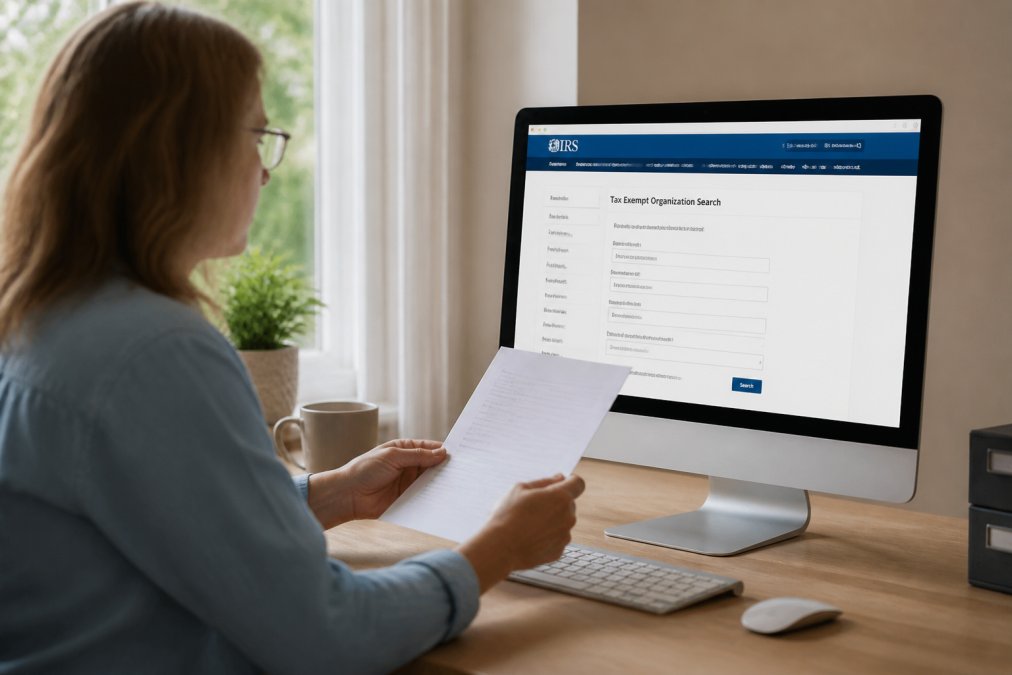
The IRS tax-exempt organization search is the single most reliable way to verify any charity, including those collecting clothing donations. This free online database lists every organization that has received 501(c)(3) status, meaning contributions to them are tax-deductible.
Start your verification here:
- Visit the IRS Tax Exempt Organization Search tool on the official IRS website
- Enter the organization's full legal name or Employer Identification Number (EIN)
- Review the search results for the exact organization name and its status
- Confirm the organization's "Tax Period" is current and active
- Check the "Tax-Exempt Status" field reads as "Active"
A common mistake is searching only the organization's trade name. Many charities operate under a legal name that differs from what appears on their donation bins. If your initial search returns nothing, search the EIN listed on any solicitation materials or try variations of the name.
Step 2: Check Charity Watchdogs and State Registration
Beyond the federal database, legitimate clothing donation charities should pass scrutiny from independent charity watchdogs and state regulators. These checks reveal how efficiently an organization uses donations and whether it complies with state charitable solicitation laws.
Most states require charities to register before soliciting donations from their residents. Your state attorney general's office maintains public records of registered charities, and many publish searchable databases online. A legitimate organization serving your area will have an active registration on file.
Independent charity rating platforms add another layer of accountability. Organizations like Charity Navigator evaluate nonprofits on financial health, accountability, and transparency. While smaller local charities may not appear on national rating platforms, larger organizations should have verifiable ratings that show how much of each dollar reaches programs rather than overhead.
Step 3: Recognize Legitimate Clothing Donation Bin Signs
Legitimate clothing donation bin signs share common features that fraudulent bins often lack. Learning to read these signs protects you from donating to operations that sell your clothing for profit while claiming charitable purposes.
A legitimate bin displays clear identifying information on its front panel:
- The charity's full legal name and EIN
- A contact phone number or website address
- A statement of the charity's purpose
- The charity's registration number if state law requires one
- A physical address where the charity can be reached
Bins lacking this information should raise immediate concern. Many for-profit textile recyclers place unmarked bins to collect clothing they sell by the pound, and the charitable connection is either vague or entirely absent.
Step 4: Understand How to Claim Clothing Donations on Taxes
Understanding how to claim clothing donations on taxes requires knowing the IRS rules for valuing used items and documenting your contribution properly. The IRS allows deductions for clothing donations only if the items are in "good used condition or better," and the deduction equals the item's fair market value at the time of donation.
Fair market value is what a willing buyer would pay for the item in its current condition at a thrift store or resale shop. For clothing, this is typically a fraction of the original purchase price. The IRS Publication 526 provides guidance on charitable contributions, while IRS Publication 561 offers detailed instructions for determining fair market value on donated property.
A practical valuation approach for clothing:
| Item Type | Condition | Typical Valuation Range |
|---|---|---|
| Everyday shirts and pants | Good used condition | $3 to $8 per item |
| Coats and jackets | Good used condition | $10 to $25 per item |
| Designer or luxury brands | Good used condition | 20% to 40% of retail price |
| Children's clothing | Good used condition | $2 to $5 per item |
| Shoes and accessories | Good used condition | $3 to $10 per pair |
To apply these ranges, start with what you originally paid for the item, then adjust downward based on age, wear, and current style relevance. For example, a winter coat you bought for $150 three years ago in excellent condition might have a fair market value of $20 to $30 at a consignment shop. The IRS expects you to use a reasonable, consistent method, not to inflate values based on original purchase price.
Documentation requirements are stricter than most donors realize. The IRS requires a written acknowledgment from the charity for any single clothing donation valued at $250 or more. This acknowledgment must include a description of the items donated and state whether you received any goods or services in return. Request this receipt at the time of donation, not later, because charities are not obligated to provide retroactive documentation.
For donations under $250, you still need a bank record or written communication from the charity showing its name, the donation date, and a description of the items. A simple receipt with the charity's letterhead, your name, the date, and an itemized list of clothing satisfies this requirement. Keep these records for at least three years from the date you file your return, or longer if you underreported income.
A common mistake is deducting the "thrift store price" for items that are stained, torn, or outdated. The IRS explicitly disallows deductions for clothing in less than good condition unless you attach a qualified appraisal. Sort your donations honestly before assigning values, and discard items that no longer meet the condition threshold.
Local vs. National Charities: Adjusting Your Verification
Local and national charities require different verification approaches because they operate under different regulatory and transparency frameworks. National organizations maintain extensive public records, while local groups may rely on smaller-scale documentation. Understanding this distinction is critical because the clothing donation landscape includes for-profit textile recyclers that mimic charitable operations.
For national charities, verification is straightforward. They file annual Form 990 returns, appear on charity rating platforms, and maintain active registration in every state where they solicit. A quick check of the IRS database and a national watchdog platform provides sufficient confidence. Organizations like Goodwill Industries International, The Salvation Army, and St. Vincent de Paul all maintain publicly accessible financial disclosures and state registrations.
Local charities demand more hands-on verification. Many operate on volunteer leadership and modest budgets, so their digital footprint may be limited. In these cases:
- Request proof of 501(c)(3) status directly from the organization
- Ask for their most recent Form 990 or financial summary
- Confirm their registration with your state's charity regulator
- Visit their physical location if they operate one
- Ask how clothing donations are distributed or sold
A practical test for local bins: legitimate charities that operate clothing bins typically have a physical presence you can visit, such as a thrift store, church office, or community center. For-profit collectors often have only a phone number or website with no verifiable address. If the bin lists a phone number, call it and ask directly whether the organization holds 501(c)(3) status and how proceeds are used.
Some of the most effective clothing charities are local faith-based organizations that distribute donations directly to families in their community. Their verification trail may be thinner than national groups, but direct conversations with leadership often provide the confidence that paperwork cannot. Ask to see their most recent annual report or financial summary, even if it is a simple one-page document. Legitimate local charities welcome this scrutiny.
State charity regulators maintain searchable databases that often include local organizations too small for national rating platforms. Your state attorney general's office or secretary of state website typically offers a lookup tool where you can confirm active registration and see whether any complaints have been filed against the organization. This check takes less than two minutes and provides protection that national databases cannot offer for local groups.
Red Flags and Digital Receipt Tracking
Several warning signs indicate a clothing donation operation is not what it appears to be. Recognizing these red flags prevents wasted donations and protects your tax records from invalid claims.
Red flags that signal a fraudulent solicitation:
- High-pressure tactics demanding immediate donation decisions
- Refusal to provide an EIN or proof of tax-exempt status
- Bins that are unmarked or identify only a for-profit company
- Collection drives that cannot name the specific charity receiving goods
- Requests for cash donations instead of clothing at a "clothing drive"
- Claims that all donations are tax-deductible without mentioning IRS valuation rules
Digital receipt tracking solves the documentation problem that plagues clothing donations. Unlike cash contributions that generate automatic records, clothing donations require you to create and preserve your own documentation. A simple system works well:
- Photograph each bag of clothing before donation
- Photograph the donation bin or facility signage
- Obtain and store the charity's written receipt
- Log each donation in a spreadsheet with date, charity name, and itemized list
- Store all records digitally in cloud storage for at least three years
This system protects you during an IRS audit and helps you track your charitable giving across the year. The IRS requires donors to maintain records supporting their deductions, and digital documentation satisfies this requirement more reliably than paper receipts that fade or get lost.
Conclusion: Donate With Confidence
Verifying charity clothing donations protects your tax deduction, your generosity, and the people you intend to help. The process takes minutes: check the IRS database, review state registration, examine bin signage, and document every donation with a proper receipt.
Mission-driven giving should feel joyful, not uncertain. When you confirm an organization's legitimacy before donating, your contribution carries full weight, both as a tax-deductible charitable contribution and as genuine support for the cause you care about.
At IGIT Apparel, we built our business on the principle that generosity should be transparent and impactful. Every purchase supports Christian ministries and youth initiatives, making a meaningful impact and helping shape the next generation of believers. Get started with IGIT Apparel and make your next clothing purchase count for something eternal.
Frequently Asked Questions
How do I check to see if a charity is legitimate?
Use the IRS Tax-Exempt Organization Search tool on IRS.gov. Type in the organization's exact legal name or EIN. A legitimate charity will display an 'Active' status. Cross-check this with the charity's own website and a watchdog like Charity Navigator or GuideStar to confirm the name matches and the organization files Form 990 annually.
What are the signs of a fraudulent clothing donation charity?
Look for vague mission statements, names that sound similar to well-known nonprofits, and aggressive collection tactics. A major red flag is a donation bin with no registered charity name or tax ID. Legitimate bins must clearly display the organization's name, contact information, and registration number. If you cannot find the charity in the IRS database, do not donate.
How do I claim clothing donations on my taxes?
You must itemize deductions on Schedule A to claim clothing donations. The IRS requires clothing to be in 'good used condition or better' to be deductible. You need a written acknowledgment from the charity for any single donation valued at $250 or more. For non-cash donations over $500, you must complete Form 8283 and attach it to your tax return.
What is the best website to check charities?
The IRS Tax-Exempt Organization Search is the official source for confirming tax-exempt status. For financial health and accountability, use Charity Navigator, Candid (formerly GuideStar), or CharityWatch. Each offers different data, so checking at least two sources gives you the clearest picture of how a charity uses donations.