

Table of Contents
- The Journey of a Donated Garment: From Drop-Off to Distribution
- Sorting and Processing: How Donation Centers Evaluate Your Clothes
- What Happens to Clothes That Don't Sell at Thrift Stores
- Textile Recycling and Fiber Reclamation: The Second Life of Worn Clothing
- Export Markets and the Global Secondary Market for Used Textiles
- How to Donate Clothes Responsibly and Verify Impact
- The Environmental Cost: Landfill Impact and Fast Fashion Cycles
- Conclusion
Last Updated: August 14, 2026
The Journey of a Donated Garment: From Drop-Off to Distribution
When you drop a bag of clothes at a donation center, you're initiating a complex supply chain that extends far beyond your local thrift store. Understanding where does my clothing donation go reveals a system balancing charitable missions with economic realities. A single garment's journey involves sorting facilities, quality assessments, retail operations, and often international markets, each stage determining whether it becomes someone's treasure or textile waste.
Most donors assume their clothes go directly to thrift store shelves. The reality is more nuanced. Only a fraction of donations reach retail floors; the rest enter secondary markets, get processed for textile recycling, or end up in landfills. At IGIT Apparel, we've observed how mission-driven businesses intersect with donation logistics: when you purchase faith-inspired clothing supporting youth ministries, you're participating in a similar circular economy where purchases fund initiatives rather than just filling closets.
The first 24-48 hours after drop-off are critical, as your clothes move from collection sites to sorting facilities, where trained staff evaluate condition, brand, size, and marketability to determine everything that follows.
Sorting and Processing: How Donation Centers Evaluate Your Clothes
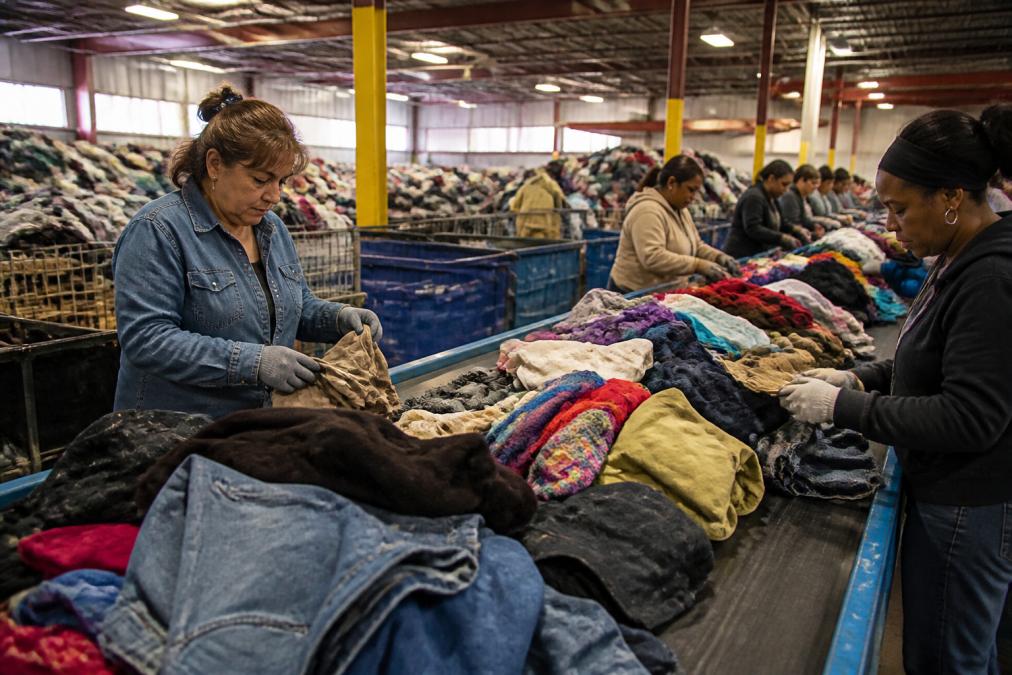
Sorting facilities are the backbone of the donation economy. When your gently used clothes arrive, staff make split-second decisions routing items toward different destinations. Each garment is assessed for wearability, brand recognition, damage, and market demand.
The sorting process typically follows these steps:
- Initial intake and inspection, Staff remove items from bags and check for obvious damage, stains, or odors
- Condition grading, Clothes are sorted into categories: like-new, gently used, fair condition, or unsuitable for resale
- Category sorting, Items are organized by type and size
- Brand and quality assessment, Designer labels and high-quality pieces are flagged for premium pricing
- Final quality check, Anything with tears, permanent stains, or broken zippers gets diverted to recycling or disposal
Processing time varies by facility capacity and donation volume. A well-staffed sorting center can process thousands of items daily. Many facilities now use barcode systems and data tracking to monitor inventory movement and predict which items will sell quickly.
A common mistake donors make is assuming all clothing gets fair evaluation. Items requiring special handling, delicate fabrics, vintage pieces, or repairs often get overlooked in high-volume facilities. Sorting quality directly determines whether your donation creates value or becomes waste.
What Happens to Clothes That Don't Sell at Thrift Stores
Not every sorted item reaches thrift store shelves. After sorting, garments are priced based on condition and demand. Thrift stores typically stock items for 30-60 days. If something doesn't sell within that window, it enters a secondary journey.
Unsold inventory takes several paths:
Clearance and discount sales, Items marked down 50-75% to move stock through weekly clearance events.
Secondary thrift operations, Larger charities operate multiple locations with different price points. High-end items go to premium thrift stores; lower-quality pieces go to discount outlets where prices drop to $0.50-$2.00 per item.
Wholesale to textile processors, Items bundled by weight and sold to companies that grade them for export or recycling.
Donation to other charities, Some thrift operations donate unsold clothing to homeless shelters, job training programs, or disaster relief organizations.
Textile recycling and fiber reclamation, Clothing unsuitable for resale gets shredded into fibers for industrial rags, insulation, or lower-grade textile products.
Industry observations suggest roughly 20-40% of donations become retail merchandise. The rest enters secondary markets or recycling streams. This isn't failure, it's the system working as designed. A charity's mission is maximizing value extracted from donations, whether through direct resale or material recovery.
Textile Recycling and Fiber Reclamation: The Second Life of Worn Clothing
Textile recycling represents the final stage of the donation journey for many garments. When clothing can't be resold, it's transformed into new materials through fiber reclamation processes.
Textile recycling facilities receive bales of unsold and unsaleable clothing. Sorters separate items by fiber content: cotton, polyester, wool, blends, and synthetics. This separation is crucial because different fibers have different end-use applications.
The recycling process works like this:
- Fiber sorting, Items are separated by material composition
- Shredding, Clothing is mechanically shredded into fibers
- Cleaning and carding, Fibers are cleaned and processed into uniform strands
- Respinning, Fibers are twisted into new yarn or thread
- End-use manufacturing, Yarn becomes insulation, industrial rags, carpet backing, or lower-grade textiles
Common end products include industrial rags and wiping cloths (largest market), automotive insulation, building insulation, carpet underlayment, and furniture stuffing.
The economics of textile recycling depend on fiber quality and market demand. Natural fibers like cotton command higher prices because they can be respun into new fabric. Synthetic blends and heavily worn items often become industrial rags, the lowest-value end product.
Each time fibers are recycled, they degrade slightly. Synthetic fibers can cycle multiple times, but natural fibers weaken after 2-3 cycles. Eventually, even recycled fibers end up in landfills. Recycling avoids landfill space and extends material life, but shredding and respinning consume energy.
Export Markets and the Global Secondary Market for Used Textiles
A significant portion of unsold donations never reaches domestic recycling facilities. Instead, they're bundled and exported to secondary markets worldwide, creating a global supply chain largely invisible to donors.
Approximately 60-70% of collected donations in the United States are exported to developing countries. This includes items too worn for domestic retail but still wearable, as well as unsorted mixed bales sold by weight to international buyers.
The export process follows this pattern:
Collection and grading, Charities sort donations into export-quality bales, with premium items going to high-value markets and lower-grade items bundled as mixed lots.
Baling and shipping, Clothing is compressed into 1,000-pound bales, containerized, and shipped via cargo vessels to ports in Africa, Asia, Latin America, and Eastern Europe.
Secondary market distribution, Local traders and vendors purchase bales, sort them further, and resell to consumers through street markets and retail shops.
Retail and reuse, Consumers in these markets purchase used clothing at prices far below new retail, extending garment life and providing affordable fashion options.
The global secondary market for used textiles is economically significant. Buyers in Kenya, Ghana, India, and Vietnam rely on imported used clothing to stock retail operations. However, large volumes of cheap used imports can undercut local textile manufacturing. Countries like Rwanda and Kenya have restricted used clothing imports to protect domestic industries.
Exporting donations isn't inherently good or bad, it's a complex economic reality. Charities depend on export revenue to fund operations. Consumers in developing countries depend on imports for affordable clothing. Yet the system can also perpetuate dependency and suppress local manufacturing.
How to Donate Clothes Responsibly and Verify Impact
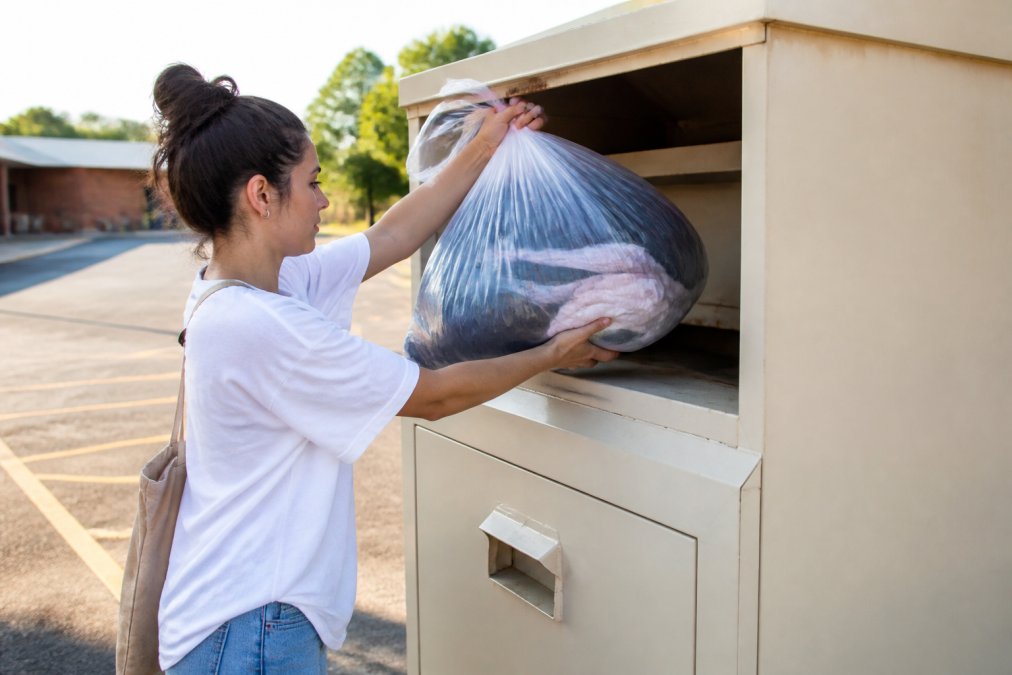
Donating clothes responsibly means understanding the impact of your choices and selecting organizations aligned with your values. Not all donation centers are equal; some maximize resale and local impact, while others prioritize volume and export revenue.
Steps to donate responsibly:
1. Assess garment condition, Donate only items you'd wear yourself. Check for stains, tears, broken zippers, and odors. Clean clothing before donating.
2. Choose the right organization, Research donation centers in your area. Charities with transparent missions and multiple locations typically maximize resale. Ask whether they prioritize domestic resale or export.
3. Verify charitable status, Confirm the organization is a registered 501(c)(3) nonprofit. Check their annual reports or IRS Form 990 to see how donations are used.
4. Understand the supply chain, Ask where donations go. Do they operate thrift stores? Do they export? Do they recycle unsold items? Transparent organizations will answer these questions.
5. Consider seasonal timing, Donate seasonal clothing during relevant seasons. Winter coats are more valuable in fall; summer clothes in spring.
6. Request impact documentation, Ask for reports on how many donations were resold, recycled, or exported. Some charities publish annual impact reports.
A transparency checklist for donors should include:
- Does the organization publish annual impact reports?
- What percentage of donations reach retail shelves?
- Where do unsold items go?
- How much revenue supports charitable programs versus overhead?
- Are they a registered nonprofit with public financial records?
- Do they operate locally or primarily export?
If an organization can't answer these questions, that signals they may not prioritize transparency. Mission-driven businesses like IGIT Apparel demonstrate how purpose-driven commerce works: when you purchase faith-inspired clothing, you know exactly where proceeds go because the model is transparent.
The Environmental Cost: Landfill Impact and Fast Fashion Cycles
The donation system exists because of a deeper problem: fast fashion. The average American generates 81 pounds of textile waste annually. Most never enters the donation stream and goes directly to landfills.
Fast fashion accelerates the donation cycle. Garments designed for 1-2 seasons of wear create constant turnover. Synthetic fabrics degrade faster than natural fibers. Construction shortcuts mean zippers break, seams split, and elastic fails quickly. The result is a supply of donations far exceeding resale capacity.
Textiles represent approximately 5-8% of landfill waste by weight, but far more by volume because clothing doesn't compress efficiently. Once in landfills, natural fibers decompose slowly, cotton takes 5 months, wool takes 1 year, but synthetic fibers take 20+ years or longer.
Manufacturing a single cotton t-shirt requires 700 gallons of water. Polyester production generates microplastics that persist in ecosystems. Dyeing and finishing processes consume chemicals and energy. Transporting garments globally creates carbon emissions.
Donations don't solve this problem; they manage its consequences. A garment worn twice and donated still consumed resources during manufacturing. Donations extend useful life, but they don't address the root cause: overconsumption and poor-quality manufacturing.
What matters most is wearing clothes longer. A garment worn 100 times has a lower environmental impact per wear than one worn 5 times. Choosing quality over quantity, natural fibers over synthetics, and timeless styles over trends all reduce the burden on donation systems.
The most sustainable choice is buying less and choosing better. When you do donate, select organizations that maximize resale and local impact. Brands prioritizing quality, whether faith-inspired apparel from IGIT Apparel or any other manufacturer focused on lasting value, reduce the volume of donations needed.
Conclusion
The journey of your clothing donation is complex and often invisible. From sorting facilities to thrift store shelves, secondary markets, and eventually textile recycling or export, each stage reflects economic realities and charitable missions. Understanding where does my clothing donation go helps you donate responsibly and recognize the limitations of donation as a sustainability solution.
When you donate quality clothing to transparent organizations, you're participating in a circular economy that extends garment life and generates charitable impact. When you purchase clothing intentionally, selecting durable pieces that last, you reduce the volume of donations needed. IGIT Apparel demonstrates how purchases can directly support meaningful causes: every purchase funds Christian youth ministries while providing quality apparel designed to last. By combining thoughtful consumption with responsible donation, you maximize both personal impact and community benefit.
Frequently Asked Questions
What actually happens to your donated clothes?
Your clothing donation enters a supply chain that branches in multiple directions. After collection at a drop-off location or donation bin, items are transported to a sorting facility where workers evaluate condition and quality. Gently used clothing typically reaches thrift store shelves within weeks. Items in poor condition may enter textile recycling programs for fiber reclamation, be converted to industrial rags, or exported to secondary markets overseas. Only a small percentage ends up in landfills, though synthetic fibers and heavily worn garments have lower recovery rates than natural materials.
Where is the most ethical place to donate clothes?
Choose charitable organizations that publish transparency reports showing how donations support their missions. Look for nonprofits focused on your values, faith-based ministries, youth programs, or community organizations that directly serve your community. Verify their donation logistics by asking how much inventory reaches thrift store shelves versus being exported or recycled. Avoid for-profit donation bins that prioritize volume over impact. Direct donations to local charities often have shorter supply chains and clearer accountability than large national networks, reducing processing time and environmental footprint.
What is the dark side of donating clothes to charity?
Fast fashion cycles have created an oversupply problem. Many donations exceed what thrift stores can sell, leading to unsold inventory being exported to developing nations or sent to landfills. Synthetic fibers dominate modern clothing and resist fiber reclamation, creating textile waste that cannot be recycled. Some for-profit donation bins mislead donors about charitable impact. Additionally, the garment lifecycle of cheap, trendy clothing means donations often arrive already worn out, reducing their value in secondary markets. Understanding these realities helps donors choose higher-quality items and more transparent organizations.
How do I know my donations are actually making a difference?
Request donation impact reports from the charity or organization. Legitimate nonprofits track landfill diversion rates, the percentage of items reaching thrift store shelves, and direct program funding. Ask specific questions: What percentage of revenue goes to programs versus operations? How do donations support youth ministries or community initiatives? Verify their charitable status through the IRS. When you donate through mission-driven brands like IGIT Apparel, ask for transparency on how purchase proceeds fund Christian youth initiatives. Donations tied to specific programs or causes offer clearer accountability than generic charity bins.
This article was written using GrandRanker