

Last Updated: November 7, 2026
Quick Summary
Textile waste burdens Christian environmental stewardship because creation belongs to God, so how we handle clothing is a discipleship question. The EPA estimated only 14.7% of all textiles were recycled in 2018, totaling 2.5 million tons, with the rest landfilled or incinerated. Stewards should reduce, repair, reuse, then recycle.
- The EPA estimated only 14.7% of textiles were recycled in 2018, totaling 2.5 million tons.
- Synthetic fibers resist decomposition for decades in landfill and shed microfibers.
- Most textile recycling is mechanical downcycling, and blended fibers are hard to separate.
- Only a fraction of donated clothing is resold locally; much is baled and exported.
- Rank options as reduce, repair, reuse, recycle, since reducing prevents waste before it is created.
Table of Contents
- Why Textile Waste Is a Stewardship Issue
- The Scale of the Problem: Textile Waste Statistics
- How Clothing Waste Affects the Environment
- A Biblical Case for Creation Care
- Textile Waste Recycling: What Works and What Doesn't
- Practical Textile Waste Solutions for Families and Churches
- Wearing Your Values: Choosing Apparel with Purpose
- Frequently Asked Questions
Why Textile Waste Is a Stewardship Issue
The U.S. Environmental Protection Agency estimated that only 14.7% of all textiles were recycled in 2018, totaling 2.5 million tons, according to EPA Textiles: Material-Specific Data. The rest went to landfills or incinerators. For Christians, that number should prompt more than a shrug.
Textile waste is the discarded fabric and clothing generated at every stage of production, use, and disposal. It includes pre-consumer scraps from factories and post-consumer garments that households throw away. The impact of textile waste on Christian environmental stewardship comes down to a simple conviction: creation belongs to God, and how we handle clothing is a discipleship question, not just an environmental one. This guide walks through the scale of the problem, what Scripture says about it, and what families and churches can actually do.
The Scale of the Problem: Textile Waste Statistics
Textile waste statistics paint a picture of a system built on volume and speed. Clothing waste has grown as garment lifespans shrink and overconsumption becomes normal. The EPA figure of 2.5 million tons recycled in 2018 is a benchmark, not a ceiling: it describes material management, not attitudes or practices.
Researchers are also questioning assumptions. A 2024 lifecycle assessment by A. Klooster and colleagues examined whether buying second-hand clothes actually reduces environmental impact, and the study treats that benefit as a question to assess rather than a proven outcome. That matters for stewardship: good intentions need verification.
How Clothing Waste Affects the Environment
How clothing waste affects the environment runs across the entire textile lifecycle, from fiber production to disposal. The damage is cumulative and often invisible to the shopper holding a cheap t-shirt. A useful way to think about it is stage by stage, because each stage raises a different stewardship question.
Fiber Production and Raw Material Inputs
Cotton is a thirsty crop, and conventional cotton production relies heavily on irrigation, pesticides, and fertilizer. Polyester, the most widely used synthetic fiber, is made from petroleum-based inputs and requires energy-intensive chemical processing. The choice of fiber therefore locks in a large share of a garment's total impact before the garment is even cut and sewn. Most lifecycle assessments find that fiber production and yarn preparation account for a substantial portion of a garment's water and energy footprint, which is why fiber choice matters more than many shoppers assume.
Landfills and Persistence
Most discarded clothing ends up in landfill, where synthetic fibers resist decomposition for decades. Textile disposal at this scale turns solid waste streams into long-term liabilities. Research on fast-fashion waste in Ghana describes textile waste as a persistent environmental hazard because of its quantity and durability, according to R. Kilbridge's 2025 study. Garments outlast the trends that created them. Natural fibers like cotton and wool do break down, but in a sealed landfill they decompose anaerobically and can generate methane, a potent greenhouse gas. Synthetics such as polyester and nylon persist far longer and shed microfibers throughout their life.
Water, Energy, and Emissions
Textile production consumes enormous water and energy, and dyeing generates wastewater laced with chemical pollution. Greenhouse gas emissions accumulate at every stage: fiber growth, manufacturing, shipping, and disposal. The take-make-waste model treats these costs as externalities. A circular economy approach treats them as design constraints instead. Two mechanisms deserve special attention for stewards:
- Wastewater and chemical discharge. Dyeing and finishing are among the most water-intensive and chemically loaded steps in the supply chain. When those effluents are poorly treated, the burden falls on downstream communities, which connects textile waste directly to neighbor-love and environmental justice.
- Microplastic shedding. Synthetic garments release microfibers in the wash and in landfill leachate. These particles are difficult to capture and have been documented in waterways and sediment, which means the environmental cost of a cheap synthetic garment continues long after it leaves the closet.
Why the Lifecycle Lens Matters for Stewardship
A lifecycle view reframes the Christian question. The issue is not only what happens to a garment at the end of its life but every resource, worker, and community touched along the way. That is why the most useful stewardship question is not "Is this garment recyclable?" but "Was this garment needed, and how long will it serve?" Extending a garment's useful life by even a modest amount spreads its production impacts over more wears and reduces the pressure that drives overproduction in the first place. The next sections translate that principle into biblical conviction and practical action.
A Biblical Case for Creation Care
Christian environmentalism rests on a clear biblical perspective: human responsibility for creation is not optional. Genesis describes humanity as caretakers, not owners. Care for creation flows from gratitude, not guilt.
This is where the impact of textile waste on Christian environmental stewardship becomes concrete. Waste is a form of ingratitude. Every garment discarded after a few wears represents resources, labor, and water spent carelessly. A 2019 law review article by E. Teibel argued that voluntary industry action may be insufficient and that official regulations may be necessary if the fashion industry does not address environmental disruption. Christians can advocate for better systems while changing personal habits. Both belong to the same calling.
Textile Waste Recycling: What Works and What Doesn't
Textile waste recycling is necessary but not sufficient. Mechanical recycling can turn fabric into insulation, wiping cloths, and mattress filling, and material recovery keeps some textiles out of landfills. But recycling has limits, and a Christian steward should understand them before treating the recycling bin as an absolution.
The Mechanics and Limits of Textile Recycling
Most textile recycling today is mechanical: fabric is sorted, shredded, and re-spun into lower-grade fiber. That process is real and useful, but it is usually downcycling, the new material is weaker than the original, so a garment rarely becomes another garment of equal quality. Blended fibers are the central obstacle. A cotton-polyester blend is difficult and costly to separate, so many blended garments are diverted to lower-value uses or excluded from recycling altogether. Chemical recycling that could separate blends exists but remains limited in scale and energy demand. The practical takeaway is that recycling recovers material, not value, and it cannot keep pace with the volume of new clothing produced.
Donation Is Not a Disposal Solution
Donation is not a magic solution either. Only a fraction of donated clothing is resold locally; much of the remainder is baled and exported, where it can undercut local textile industries and overwhelm waste systems in receiving communities. A UC Santa Barbara Bren School project with Patagonia set out to analyze the environmental and public-health impacts of pre-consumer textile waste in the apparel supply chain, and the research does not report a simple win. Contamination, wet, mildewed, or non-textile items, further reduces the share of donations that can be reused. To see what actually happens after drop-off, read where your clothing donations actually go.
A Decision Framework: Reduce, Repair, Reuse, Recycle
The honest takeaway is a hierarchy, not a single habit. Rank your options in this order:
- Reduce. Buy fewer garments and choose ones you will wear for years. This is the only step that prevents waste before it is created.
- Repair. Mending, rehemming, and replacing buttons extends lifespan at low cost and keeps garments in use.
- Reuse. Resell, swap, or donate items that are still wearable, and be honest about condition so donations are not contaminated.
- Recycle. Route unwearable textiles to a recycler that accepts them, understanding that the output is likely downcycled.
Watch out: Treating a donation bin as a guilt-free disposal chute can do more harm than good when items are unwearable or contaminated, because those items burden the receiving organization and often end up in the waste stream anyway.
The Christian Angle Competitors Miss
Most environmental guides stop at "reduce, reuse, recycle" without asking who bears the cost of the current system. A stewardship framework adds two questions: Does this choice show restraint, and does it treat the workers and communities downstream as neighbors? Recycling and donation are good tools, but they are downstream fixes. The upstream question, how much we buy and how long we keep it, is where Christian conviction about contentment and care for creation does the most work.
Practical Textile Waste Solutions for Families and Churches
Textile waste solutions work best when they start small and repeat. Here is a practical framework for households and congregations.
| Action | Effort | Frequency | Impact |
|---|---|---|---|
| Wash less, air dry | Low | Weekly | Extends garment lifespan |
| Repair before replacing | Medium | As needed | Diverts waste from landfill |
| Buy fewer, better pieces | Medium | Seasonal | Reduces overconsumption |
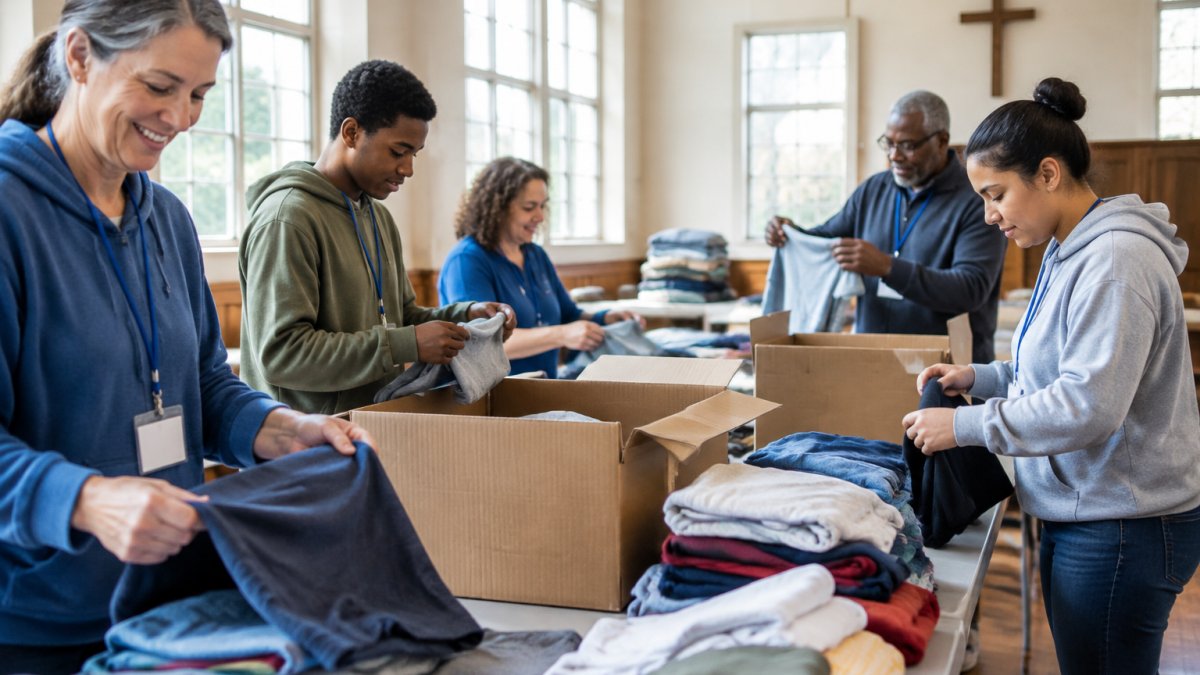
| Host a church clothing drive | High | Quarterly | Redirects usable clothing |
All are American.
At Home: Buying Less and Caring Better
Clothing care is the cheapest environmental strategy available. Wash cold, air dry, and mend seams before they fail. Teach children that garment lifespan is a stewardship metric. Families building a faith-aligned wardrobe can start with this guide to sustainable Christian fashion for families.
At Church: Hosting a Clothing Drive with Purpose
A clothing drive works when the church sorts with intention. Partner with a reputable organization, separate high-value items, and communicate where donations go. Church organizers should read these tips for donating high-value apparel to charity before the next drive.
Wearing Your Values: Choosing Apparel with Purpose
Purchasing decisions are stewardship decisions. When you buy, you vote for a supply chain. That is the core of the impact of textile waste on Christian environmental stewardship: every purchase either reinforces the take-make-waste model or resists it.
IGIT Apparel exists to make that choice easier. Every purchase supports Christian ministries and youth initiatives, with free shipping and secure payments. For readers ready to act, explore sustainable clothing options for Christian consumers and learn how to choose ethical clothing brands without falling for greenwashing.
The challenge is real: clothing waste is growing, recycling has limits, and good intentions are not enough.
Frequently Asked Questions
Why should Christians care about textile waste?
Christians are called to be stewards of God's creation, and textile waste is a direct result of how we consume and discard clothing. The U.S. EPA estimated that only 14.7% of textiles were recycled in 2018, meaning millions of tons end up in landfills. Caring for creation includes making thoughtful choices about what we buy, how we care for it, and where it goes when we're done. This is a practical way to live out biblical values of responsibility and gratitude.
What are the most effective textile waste solutions for a family?
Start by buying less and choosing quality pieces that last. Care for clothing properly by washing less often and air-drying when possible. When items are worn out, look for textile recycling programs rather than throwing them away. Host a clothing swap with friends or donate items in good condition to organizations that genuinely need them. These steps reduce waste and model stewardship for children.
Can textile waste be recycled, and what are the limits?
Textile recycling exists but has limits. Mechanical recycling can turn fabrics into insulation or rags, while chemical recycling is still developing. The U.S. EPA reports that only 14.7% of textiles were recycled in 2018. Many curbside programs don't accept clothing, so you often need to find specialized drop-off locations. Recycling is valuable, but reducing consumption and extending garment lifespan are more effective first steps.
How can churches encourage sustainable clothing habits?
Churches can host clothing drives with clear guidelines on what's needed, partner with local shelters for direct distribution, and teach stewardship in sermons or small groups. Organizing a swap event or a repair workshop helps families extend garment life. By making sustainable choices a normal part of church life, congregations can support families and reduce waste together.
