

Last Updated: November 16, 2026
Quick Summary
Conscious consumerism impacts society by pressuring brands to audit factories, trace raw materials, and improve labor standards, while cutting waste through durable, longer-lasting products. It also carries real costs: higher prices that limit access for lower-income households, rebound effects, and a responsibility problem that can crowd out corporate and policy action.
- Ethical sourcing pressures brands to audit factories, trace raw materials, and improve labor standards.
- In apparel, most emissions and water use occur upstream in fiber production, dyeing, and fabric finishing.
- Sustainable products often cost more, pushing responsible purchasing out of reach for lower-income households.
- A rebound effect happens when a green purchase justifies buying more overall, canceling out the benefit.
- Verification takes about five minutes: look for third-party certifications rather than self-declared badges.
Table of Contents
- What Conscious Consumerism Actually Means
- The Positive Impact of Conscious Consumerism on Society
- The Negative Impact of Conscious Consumerism on Society
- Ethical Consumerism Examples You Can Recognize
- Greenwashing and Conscious Consumerism: How to Verify a Claim
- How to Practice Conscious Consumerism in Five Steps
- Choose Apparel That Puts Your Purchase to Work
- Frequently Asked Questions
What Conscious Consumerism Actually Means
Conscious consumerism is the practice of making purchasing decisions based on a product's environmental and social impact, not just its price or convenience. Consumers weigh cost and durability alongside values when they shop, which tells us something important: this movement is not pure idealism. It runs alongside hard practical concerns.
At IGIT Apparel, we see this tension every day. People want their purchases to mean something, but they also want a shirt that lasts past ten washes. Understanding the impact of conscious consumerism on society starts with accepting that reality rather than pretending price does not matter.
The Positive Impact of Conscious Consumerism on Society
The clearest benefits show up in how companies build and run their supply chains. When enough buyers ask where a product came from, businesses change their answers. But the honest version of this story is more specific than "buying better helps society." The positive impact is real where it can be traced to a mechanism and measured against an indicator.
Cleaner Supply Chains and Better Working Conditions
Ethical sourcing pressures brands to audit factories, trace raw materials, and improve labor standards. A practical guide to ethical sourcing can help readers see what those improvements look like in practice. Research in Frontiers in Sustainability reports a strong effect of conscious consumerism on sustainable consumption intention, and elevated ethical awareness appears to sharpen how people judge a brand's practices.
The mechanism is straightforward: a brand that must name its suppliers cannot hide a subcontractor with unsafe conditions as easily. The measurable indicators are supplier disclosure rates, audit frequency, corrective-action closure rates, and the share of a product's weight traceable to a named facility. When a company publishes a supplier list and a factory audit summary, that is a verifiable signal. When it publishes only a paragraph about "partnerships," it is not.
Less Waste and Lower Resource Use
Sustainable design and waste reduction follow the same logic. A deeper look at textile waste and faith-driven consumption explains how buying fewer, better items cuts resource use over a product's lifecycle. A deeper look at textile waste and faith-driven consumption explains how buying fewer, better items cuts resource use over a product's lifecycle.
The positive effect is largest when it targets the stage of the life cycle with the biggest footprint. In apparel, most emissions and water use occur upstream, fiber production, dyeing, and fabric finishing, so a durable garment worn for years spreads that fixed upstream cost across more uses. In electronics, the use phase and disposal dominate, which is why repair and take-back programs matter more than the box.
How to Tell Whether the Impact Is Real
A useful test is to ask three questions about any claimed benefit: What indicator moved? By how much? Who verified it? Emissions, waste tonnage, labor-condition findings, and supply-chain transparency are the indicators that can actually be checked. Broad claims like "better for the planet" cannot. Brands making the most verifiable progress are often willing to publish unflattering numbers alongside the good ones.
Watch out: a brand can improve one indicator while worsening another, for example, cutting packaging waste while shifting production to a supplier with weaker labor oversight, so a single strong metric is not proof of overall improvement.
Where the Positive Impact Stops
Individual purchasing shifts supply chains only when the shift is large enough for a brand to notice and durable enough to survive a quarter of weak sales. That is why the positive impact is strongest in categories with concentrated brands and visible supply chains, and weakest in fragmented categories where no single buyer group can move the needle. The realistic claim is not that conscious consumerism fixes supply chains on its own, but that it creates pressure that regulation, organized consumer action, and industry standards can convert into durable change.
The Negative Impact of Conscious Consumerism on Society
Here is where most guides get it wrong: they treat conscious consumption as a pure good. It is not. Two real costs deserve honest attention, and a third is the one that matters most for society.
Higher Prices and Unequal Access
Sustainable products often cost more, which pushes responsible purchasing out of reach for lower-income households. Affordability is not a side issue. Affordable ways to shop ethical fashion shows how buyers stretch a budget without abandoning their values. affordable ways to shop ethical fashion shows how buyers stretch a budget without abandoning their values, and that matters if the movement is going to reach beyond the affluent.
The price premium is not arbitrary. Certified organic fiber, living-wage production, third-party audits, and smaller production runs all carry real costs that show up at the register. The social consequence is that the movement can become a status signal available mainly to higher-income buyers, while lower-income households are left with the cheaper, less traceable options.
Rebound Effects and the Illusion of Change
A rebound effect happens when a "green" purchase justifies buying more overall, canceling out the benefit. The Network for Business Sustainability argues that conscious consumption is a shared responsibility, not something shoppers can fix alone. Individual choices matter, but they cannot substitute for corporate and policy-level change.
The mechanism is easy to miss. A shopper who buys a certified jacket may feel licensed to buy three more items that season, or may replace a working product earlier because the new one is marketed as greener. The result is higher total consumption even though each individual purchase looked responsible. A related trap is the illusion of change: swapping a product for a "sustainable" alternative can feel like impact while leaving the total volume of purchases untouched.
The Responsibility Problem
Placing the burden on individual shoppers can crowd out the institutional action that actually moves society-level outcomes. When a company frames its sustainability as a consumer choice, it can avoid the harder work of changing its own sourcing, paying for audits, or supporting regulation. The structural critique is not that individual choices are worthless, it is that they are weakest exactly where the problem is largest. Worker protections, industry standards, and disclosure rules change outcomes at a scale no single shopper can reach.
Watch out: a brand that markets heavily on consumer responsibility while lobbying against disclosure requirements is sending a signal about which kind of change it actually wants.
What This Means for the Movement
The honest conclusion is that conscious consumerism carries real social costs alongside its benefits. The goal is not to abandon it but to pair it with the things it cannot do alone: policy that sets a floor for labor and environmental practice, organized consumer action that targets specific corporate behavior, and transparency rules that make verification possible without a five-minute investigation on every purchase.
Ethical Consumerism Examples You Can Recognize
Real examples make the concept concrete. Here is what conscious consumerism looks like in everyday purchasing decisions:
- Reading the label before buying a cotton shirt to check for organic certification and country of origin.
- Choosing longevity over novelty, repairing a jacket instead of replacing it each season.
- Buying from mission-driven brands that publish where their funding goes.
- Avoiding brands with documented labor violations, even at a higher price.
- Questioning vague claims like "eco-friendly" that carry no certification behind them.
The common thread is informed decisions backed by verifiable details, not slogans.
Greenwashing and Conscious Consumerism: How to Verify a Claim
Greenwashing is marketing that exaggerates or fakes environmental and ethical credentials. It is the biggest threat to the movement, because it turns consumer trust into a sales tactic.
Verification takes about five minutes. Look for third-party certifications rather than self-declared badges. Check whether a brand names its suppliers or hides behind generalities like "ethically made." Ask where the money actually goes. If a company claims to fund a cause, it should be able to show you. A 2026 guide to finding genuinely ethical Christian clothing walks through these supply chain checks step by step.
How to Practice Conscious Consumerism in Five Steps
Conscious consumerism works best as a repeatable process rather than a one-time gesture. Use this sequence:
- Define your priority for each purchase: environmental impact, labor conditions, or mission funding.
- Check the claim against a third-party certification or published report.
- Compare longevity against price so cost per wear, not sticker price, drives the decision.
- Buy less and choose better, targeting items you will keep for years.
- Track where your money goes and drop brands that cannot prove their claims.
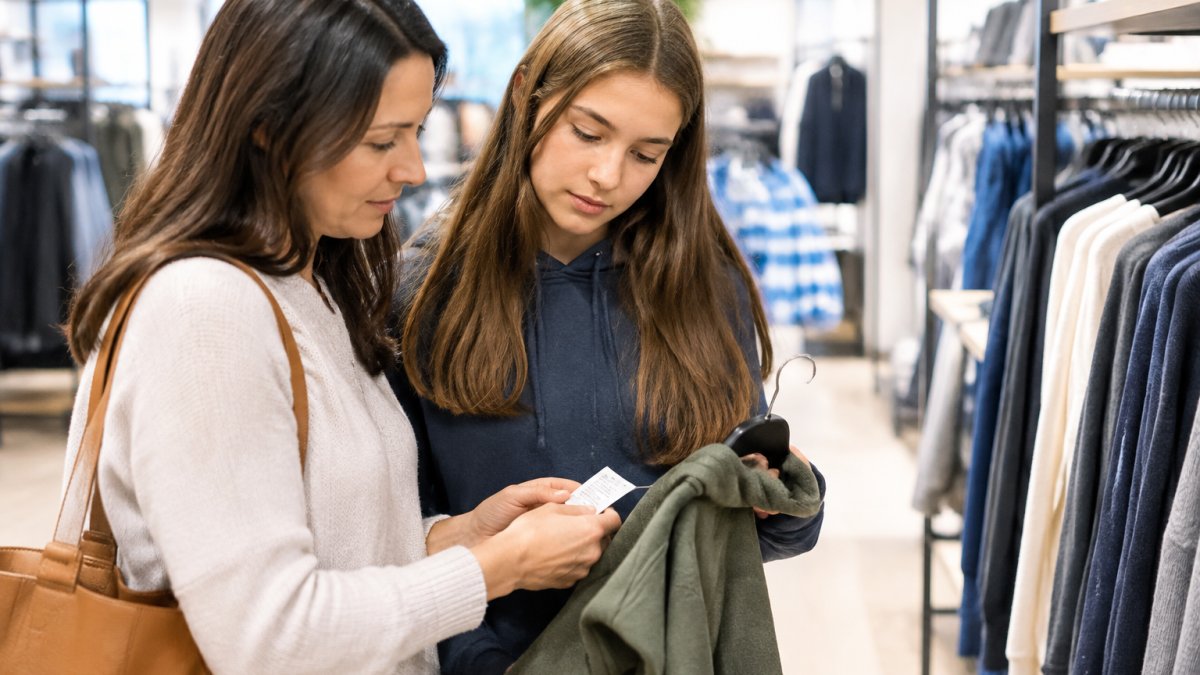
That last step is where most people stop short. Verification is the difference between real impact and a good feeling.
Conscious consumerism works best as a repeatable five-step process.
| Step | What to do |
|---|---|
| 1 | Define your priority: environmental impact, labor conditions, or mission funding |
| 2 | Check the claim against a third-party certification or published report |
| 3 | Compare longevity against price so cost per wear drives the decision |
| 4 | Buy less and choose better, targeting items you will keep for years |
| 5 | Track where your money goes and drop brands that cannot prove claims |
Choose Apparel That Puts Your Purchase to Work
The impact of conscious consumerism on society ultimately depends on whether purchases reach causes that do measurable good. That is the standard we hold ourselves to at IGIT Apparel. Explore our Ultra Cotton Long Sleeve Tee collection to shop purposeful apparel.
Our challenge to you: before your next clothing purchase, ask where the money goes and whether the brand will show you.
Ready to make your wardrobe mean something? IGIT Apparel combines faith-inspired designs with a mission that funds youth ministry, so the shirt you wear does more than look good. With secure payments and free shipping, getting started is simple. Get started with IGIT Apparel and turn your next purchase into support for the next generation of believers.
Frequently Asked Questions
How does conscious consumerism affect society?
It shifts how businesses source, produce, and market goods. Consumers weigh cost and longevity when buying, so companies respond to those priorities. The effect runs both ways: cleaner supply chains and less waste on one side, higher prices and rebound effects on the other. The net result depends on whether shoppers verify claims or accept them at face value, which is why greenwashing is such a central risk.
What are the negative effects of conscious consumerism?
The biggest one is access. Eco-labeled goods often cost more, and 63% of consumers already rank cost as their top purchase factor, according to Mastercard. That means lower-income households can be priced out of the ethical option. Rebound effects matter too: buying a sustainable item can justify buying more overall, canceling the gain. There is also fatigue and skepticism when brands overstate their credentials, which erodes trust in the whole category.
How can I avoid greenwashing when shopping?
Look for specifics rather than adjectives. A brand that says 'sustainable' tells you nothing; one that names a certification, a factory, or a published giving report gives you something to check. Search the certifier's registry, read the brand's impact page, and see whether it discloses what percentage of revenue or profit goes where. If a claim cannot be traced to a third party or a public document, treat it as marketing until proven otherwise.
Can conscious consumerism influence how businesses operate?
Yes, and the pressure is measurable. A survey cited by The Roundup found 84% of customers say poor environmental practices will alienate them from a brand, and 55% will pay more for eco-friendly ones. Companies read those numbers as revenue risk. That is why sourcing policies, packaging changes, and giving programs now appear in annual reports. For a mission-driven apparel brand, a published breakdown of where ministry funding goes is the same kind of accountability signal.
