

Quick Summary
Successful youth group sponsorship starts with shared values, not shared budgets. Groups should match their mission to a sponsor's values, build a scored prospect list of local businesses, offer clear tiered benefits, and send short, personal outreach letters.
- Write down your group's mission in one or two sentences before approaching any business.
- Score each prospect from 1 to 3 on audience overlap, mission fit, and connection strength.
- Offer three tiers (Friend, Partner, Champion) with specific, concrete benefits for each.
- Send a one-page sponsor report within two weeks of your final event to support renewal.
- Keep your first outreach to three or four sentences and end with a clear next step.
Table of Contents
- Why Sponsors Say Yes to Youth Groups
- Aligning Your Group's Mission With Sponsor Values
- Building a Prospect List of Local Businesses
- Creating Sponsorship Tiers and Valuing Your Benefits
- Writing an Outreach Letter and Proposal That Get a Reply
- Sponsorship Proposal Examples for Youth Organizations
- Best Practices for Non-Profit Youth Sponsorship and Renewals
- Your First Sponsor Meeting This Month
- Frequently Asked Questions
Youth group sponsorship has quietly become one of the more reliable ways for ministries to fund their work. Sponsors who connect with youth programs often find that families respond warmly to a brand that supports the group, and that kind of trust is hard to buy through a banner ad.
This guide from IGIT Apparel walks through the strategies that actually lead to signed sponsors. We cover how to match your group's mission to a sponsor's values, how to build a prospect list, how to structure tiered benefits, and how to write an outreach letter that gets a reply. Along the way, you'll see how the sponsorship process works from first contact to a renewed partnership.
Here's the core idea: sponsors don't pay for logos. They pay for access to people they care about. The groups that close deals understand that and build every part of the pitch around it.
Why Sponsors Say Yes to Youth Groups
Sponsors say yes when they see a clear connection between their business and the families they want to reach. Youth sports offers a useful model here. Youth sports is a large market, and families invest significantly in it each year (State of Play 2025: Our Annual Report on Trends in Youth Sports).
That spending power is why local businesses pay attention. A dentist, a credit union, or a family restaurant wants to be known by the parents who already trust the group. Youth programs give them a built-in audience of engaged, local families.
Sponsors also value stability. A group that is growing and well organized looks like a safe bet.
Watch out: a sponsor who sees no clear return will not renew, no matter how much they liked the kids. Show them exactly who will see their name and how.
Aligning Your Group's Mission With Sponsor Values
Good sponsorships start with shared values, not shared budgets. Before you approach anyone, write down what your group stands for in one or two sentences. Then look for businesses whose own stated values overlap with yours.
Here is a simple way to test fit:
- Does the business serve the same families you serve?
- Does its public messaging reflect values like service, integrity, or community?
- Would your members feel good wearing or seeing its name?
If the answer to two of those is no, keep looking. A mismatched sponsor creates friction with parents and weakens the partnership over time. A strong fit makes the pitch easier because you are asking a business to do something it already wants to do.
Building a Prospect List of Local Businesses
Most groups build a prospect list by memory, which means it fills up with the businesses that are easiest to think of rather than the ones most likely to say yes. A more reliable approach is to source prospects from four places and then score them against the same criteria every time.
Start with sourcing. Ask each parent, coach, and volunteer for three businesses they already use and trust. Walk the streets near your practice field, gym, or meeting space and note storefronts with a community feel. Check your group's own records for past donors, vendors, and event partners. Finally, look at the chamber of commerce member directory in your area, which is public and usually sorted by industry.
Once you have a raw list, score each business from 1 to 3 on three factors:
- Audience overlap: Does the business serve families with children in your age range?
- Mission fit: Does its public messaging reflect the values your group teaches?
- Connection strength: Do you already know someone who can make an introduction?
Add the scores. Businesses scoring 7 to 9 go to the top of your outreach queue. Scores of 4 to 6 get a second look, often after you find a warm introduction. Anything below 4 stays on the list but is not contacted this season. Repeating the same scoring each cycle keeps your decisions consistent and makes it easy to explain to board members why you approached one business before another.
Record each prospect in a shared spreadsheet with these columns: business name, decision-maker, score, source, introduction path, status, and next follow-up date. Review the list monthly. Prospects that stall for two follow-ups should be moved to a dormant tab so your active list stays manageable.
Watch out: a long list of unqualified businesses wastes outreach time and can make your group look like it is sending mass emails. Keep the active list short enough that every entry gets a personal message.
Creating Sponsorship Tiers and Valuing Your Benefits
Tiered packages make it easier for a sponsor to say yes at the level that fits their budget. A common structure has three levels, each with clear, specific benefits.
| Tier | Typical Benefits | Best For |
|---|---|---|
| Friend | Name listed on the program or website | Small local businesses |
| Partner | Logo on uniforms or signage, social mentions | Established local brands |
| Champion | Event naming rights, banners, and recognition at games | Larger businesses wanting major visibility |
Be concrete about what each tier includes. "Visibility" is vague. "Logo on the back of 40 practice jerseys worn at every home game" is something a sponsor can picture.
Value your benefits by counting what they actually deliver. If your team plays 20 home games with 150 people in the stands, a logo on jerseys reaches that audience repeatedly. Be honest about your numbers, and avoid inflating reach you can't verify.
Some sponsors can't spend cash but can help in other ways. In-kind support, such as donated printing, food for events, or services, can fill gaps and still count as a valuable partnership.
Writing an Outreach Letter and Proposal That Get a Reply
Keep your first message short. A busy owner will read three or four sentences, not a long essay. Your outreach letter should cover who you are, why you are reaching out to them specifically, what you are asking for, and how to respond.
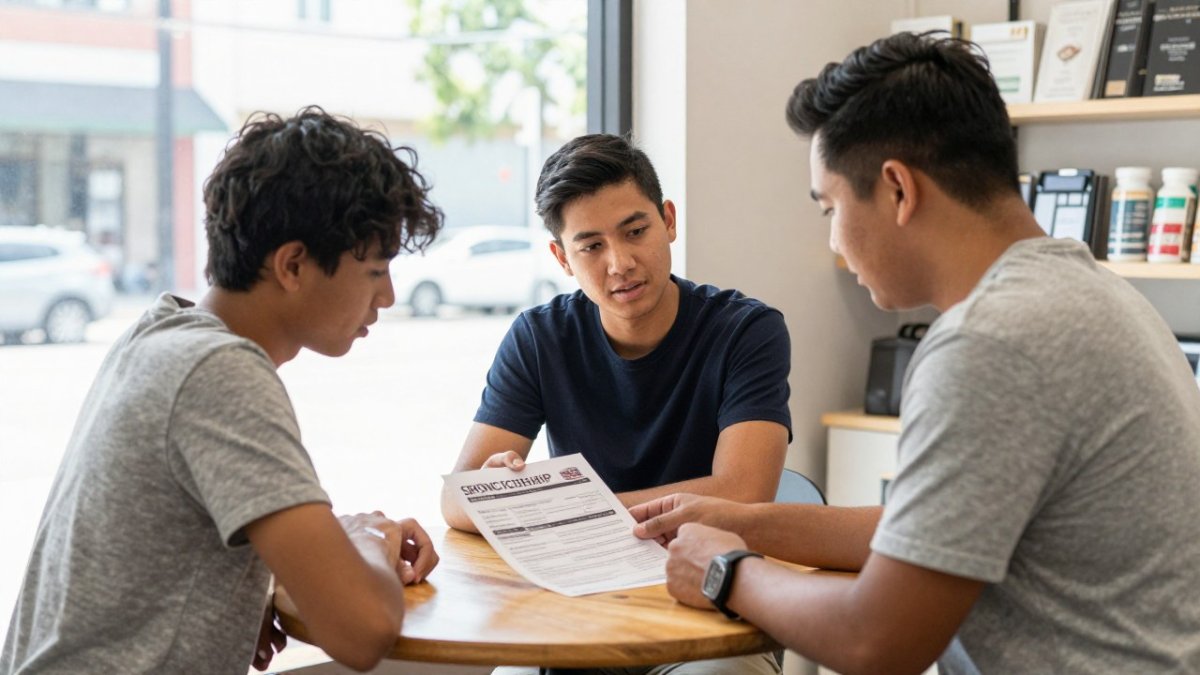
A simple structure works well:
- One sentence on your group and its mission
- One sentence on why this business fits
- One sentence on the specific sponsorship tier you have in mind
- A clear next step, such as a 15-minute call
For the full proposal, include a one-page summary, your tier options, a short description of your audience, and a contact name. Keep the design clean and easy to scan on a phone.
Teams that focus on a personal, specific pitch tend to get more replies than those that send generic form letters. Reference something real about the business in the first line.
Sponsorship Proposal Examples for Youth Organizations
Real proposals vary, but the strongest ones share a few traits. They name the audience, list the benefits by tier, and make the next step easy.
Consider a youth soccer club that wants a local business as a sponsor. Its proposal might open by noting that the clinic serves many of the same families, then offer a Partner tier with a jersey logo and a mention in the season newsletter. It closes with a request for a short meeting to discuss the fit.
A church youth ministry approaching a local coffee shop might frame the offer around community: a monthly "student night" promotion and a thank-you banner at the group's events. The language stays warm and specific.
Adapt these examples to your group's voice. Sponsors respond to sincerity more than polish.
Best Practices for Non-Profit Youth Sponsorship and Renewals
Most sponsorships are lost after the first season, not during the pitch. Renewal depends on the sponsor being able to see, in plain terms, what they received for their money. The practices below give you a repeatable system.
Send a one-page sponsor report within two weeks of your final event. Keep it to five items: the benefits delivered (for example, "logo on 40 jerseys worn at 12 home games"), attendance or reach figures you can verify, two or three photos showing the sponsor's name in use, any feedback from families or coaches, and a single sentence thanking them by name. Avoid inflated reach numbers. A sponsor who later discovers the figures were overstated will not renew.
Build a renewal calendar with four dates per sponsor: the report date, a thank-you call about six weeks later, a renewal conversation roughly 90 days before the next season, and a signed agreement before registration opens. Putting these on a shared calendar keeps renewals from slipping while volunteers rotate.
For safeguarding, put sponsor terms in writing. Confirm that any sponsor message placed on materials used by minors is appropriate for a youth audience, that no child's name, photo, or personal details are shared with a sponsor without written parental permission, and that your child safeguarding policy applies to any sponsor-run activity on site. Ask sponsors to confirm these terms in the agreement. This protects members and gives your board a clear record.
For smaller businesses, consider in-kind renewals. A local shop that donates snacks for one tournament each year can renew indefinitely at little cost to either side. Put these arrangements in the same report and calendar so they are treated as real partnerships rather than one-time favors.
Watch out: skipping the report is the most common reason sponsors do not come back. Even a short, late report is better than none.
Your First Sponsor Meeting This Month
Pick three businesses from your prospect list and send each one a short outreach letter this week. Book a 15-minute call with any that reply. In that call, listen more than you talk. Ask what they hope to get from community partnerships and what has worked or failed for them before.
Afterward, send a follow-up with a clear proposal and a specific tier. Set a reminder to check in if you don't hear back within a week.
The groups that close sponsorships are not necessarily the largest. They are the ones that stay organized, pitch with specifics, and keep showing up. Start with one meeting this month.
Shop IGIT Apparel's faith-inspired designs for your group, such as the Pointing Kids To Jesus t-shirt at $28.50, and see how custom youth group apparel can support your sponsorship benefits.
Frequently Asked Questions
What strategies could you use to attract sponsors?
Start with businesses your families already use: local pharmacies, coffee shops, orthodontists, and auto repair shops. Ask parents and volunteers for warm introductions before cold outreach. Offer clear, tiered packages with visible benefits such as jersey or shirt logos, event banners, and social media thank-yous. Keep the ask specific and follow up within a week. Sponsors respond best when they can see exactly what they get and who they reach.
How do you create a sponsorship proposal that gets a yes?
Keep the proposal to one or two pages. Open with who your group is and how many young people it serves, then state the exact amount you are requesting and the tier it buys. List the deliverables in plain terms: logo placement, event mentions, and a thank-you post. Include a short section on why this business fits your community, and close with a clear next step and a deadline. Using a sponsorship proposal example from a similar youth organization as a model can speed up the drafting process considerably.
What benefits should a youth group offer to potential sponsors?
Offer benefits you can actually deliver. Common options include logo placement on uniforms or shirts, banners at events, recognition in newsletters and social posts, and sponsor-only mentions at the start of games or services. Put a rough value on each benefit so sponsors can compare tiers, but avoid inflated numbers you cannot support. Low-cost and in-kind options, such as a sponsor providing printing or refreshments, can also meet a business's goals without a large cash outlay.
How do you maintain long-term relationships with youth group sponsors?
Send a short impact report after each season or event with photos, attendance numbers, and a thank-you from a participant. Invite sponsors to one event a year so they can see the young people they support. Confirm renewal terms at least 60 days before the agreement ends. Sponsors who receive proof of results and personal attention are more likely to stay involved over time.
