

Table of Contents
- Why Durable Construction Matters in Everyday Apparel
- How to Tell If Clothes Are Well Made
- Fabric Types and Garment Durability
- Reinforced Seams in Clothing: The Hidden Strength
- How to Make Clothes Last Longer
- The Real Cost of Disposable Fashion
- Choosing Everyday Apparel That Lasts
- Frequently Asked Questions
Last Updated: October 15, 2026
Why Durable Construction Matters in Everyday Apparel
A shirt that falls apart after a few washes costs more than it saves.
Durable construction is the combination of fabric, stitching, and reinforcement that lets a garment hold up to repeated wear and washing. It is not a single feature.
Most shoppers judge clothes by look and price. The better question is how the garment is put together. A five-dollar tee and a well-built one can look identical on the rack.
How to Tell If Clothes Are Well Made
You can tell if clothes are well made by checking three things: the stitching, the fabric weight, and the reinforcement at stress points.
Turn the piece inside out. Look at the seams first. Then feel the fabric. Finally, check the spots that take the most strain, like shoulders and underarms.
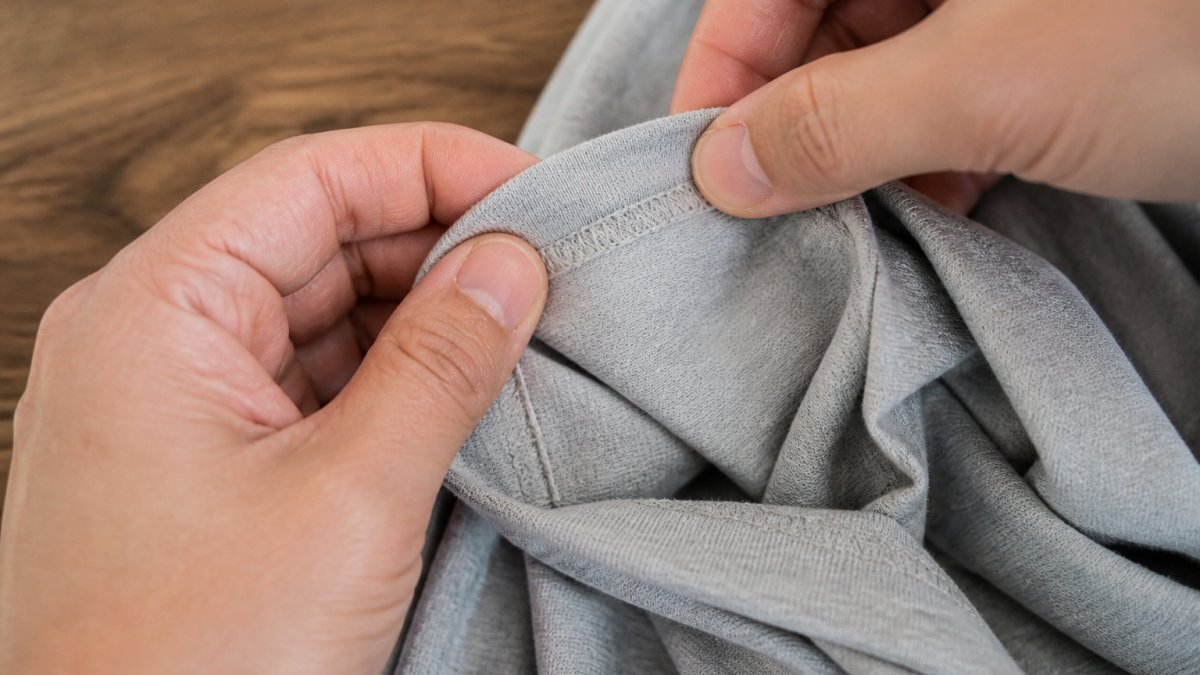
Stitching and Seam Inspection
Good stitching is tight, even, and consistent. Look for a high stitch count per inch, which means more thread holding the fabric together. Loose or wavy stitches are a warning sign.
Check the seam type too. A flat-felled seam folds the raw edge inside and stitches through both layers. It is stronger than a simple seam and resists fraying. Flat-felled seams outlast basic seams by a wide margin in high-wear spots.
Fabric Weight and Hand Feel
Fabric weight is measured in ounces per square yard (oz/yd²). Heavier fabric generally resists wear better, though it can feel stiffer at first.
A light tee sits around 4.5 oz/yd². A mid-weight tee runs about 6.0 oz/yd². The mid-weight fabric holds its shape longer and stands up to more washes. Feel the fabric between your fingers. Thin, see-through cotton wears out faster than a denser weave.
Fabric Types and Garment Durability
Fabric type decides how a garment ages. Natural fibers like cotton breathe well and feel soft. Synthetic blends add strength and stretch. The best choice depends on how you wear the piece.
Natural Fibers vs. Synthetic Blends
Cotton is soft, breathable, and easy to print. Its weakness is that it can shrink and thin over time. Combed ringspun cotton is a step up.
Synthetic blends mix polyester or elastane with cotton. They resist wrinkles and hold shape. The trade-off is less breathability. For everyday apparel, a cotton or cotton-rich blend usually wins on comfort. For workwear, blends win on toughness.
Here is how the main options compare:
| Fabric | Strength | Breathability | Best For |
|---|---|---|---|
| 100% cotton | Good | High | Everyday tees, kids' wear |
| Combed ringspun cotton | High | High | Soft, long-lasting basics |
| Cotton-poly blend | High | Medium | Workwear, heavy use |
| Synthetic | Very high | Low | Activewear, protective gear |
Reinforced Seams in Clothing: The Hidden Strength
Reinforced seams in clothing are the extra stitching and binding added where a garment takes the most stress.
Look for ribbed knitting at the collar. Ribbing stretches and springs back, so the neckline keeps its shape.
Seams along the sides matter too. A side-seamed garment holds its shape better than one with no side seams, though both can be well made.
How to Make Clothes Last Longer
You can make clothes last longer by washing less often, using cold water, and storing pieces properly. Most wear happens in the laundry, not on your back. Change how you wash and you add years to every piece. But care is only half the equation, the other half is matching the garment to how you actually live, and knowing when a repair beats a replacement.
Laundry and storage practices
Follow these habits to protect your clothes:
- Wash in cold water to reduce fiber breakdown
- Turn garments inside out before washing
- Use a gentle cycle and skip the dryer when you can
- Air-dry flat to keep shape and avoid heat damage
Repeated laundering is the number one cause of everyday wear. Every wash cycle pulls at fibers and seams. Cut the number of washes and you cut the damage. For most everyday tops, airing a garment out overnight between wears is enough to extend the interval between washes without any loss of freshness.
Repair before you replace
Small failures are cheap to fix and expensive to ignore. A dropped hem, a loose button, or a split seam takes minutes to repair and can add a year or more of wear.
A common pattern is that the first failure point is a seam, not the fabric. Repairing that seam early prevents the tear from spreading. Once fabric itself has thinned or pilled across a large area, repair stops being practical and the garment is genuinely at end of life.
Durability trade-offs across price, comfort, and style
Heavier is not always better, and more expensive is not always more durable. Every choice trades something off:
| Choice | Gains | Costs |
|---|---|---|
| Heavier fabric (6.0 oz/yd² vs. 4.5 oz/yd²) | Better abrasion resistance, holds shape longer | Stiffer hand, warmer in summer, slower to dry |
| Cotton-poly blend | Strength, wrinkle resistance, shape retention | Less breathability, can pill more than pure cotton |
| Flat-felled seams | Strength, no raw edges to fray | Bulkier seam, slightly higher cost |
| Ribbed collar and cuffs | Shape retention at high-stress edges | Slightly less stretch than a plain knit edge |
| Dark or saturated colors | Hides stains | Shows fading and dye loss sooner than light neutrals |
The right trade-off depends on how you wear the piece. A commuter who wears the same shirt under a backpack strap needs abrasion resistance at the shoulder. A caregiver who bends and lifts all day needs stretch and seam strength at the armhole. Someone who works outdoors needs color retention and UV resistance. Someone who mostly sits at a desk can prioritize comfort and drape without sacrificing much lifespan.
Durability across everyday activities
Everyday apparel is not one use case. Match the construction to the activity:
- Commuting, shoulder straps and seat belts abrade fabric. Look for denser weaves and reinforced shoulder seams.
- Caregiving, repeated bending, lifting, and washing. Prioritize stretch, strong armhole seams, and colorfast dyes that survive frequent laundering.
- Outdoor and active routines, sun exposure, sweat, and movement. Look for color retention, moisture handling, and seams that will not chafe.
- Desk and indoor work, lower mechanical stress. Comfort and shape retention matter more than abrasion resistance.
The Real Cost of Disposable Fashion
Cheap clothes carry a hidden price. A low-cost tee that fades or tears in a season gets replaced again and again. That adds up fast, and it adds to textile waste. But "cheap" and "durable" are not the same axis, and the only honest way to compare two garments is to measure how each one actually ages.
Measuring durability and lifespan
Durability is not a feeling. It shows up in specific, observable failure points. Track these indicators over the life of a garment and you can compare pieces on evidence rather than on price tag or brand:
- Wear frequency before first failure, how many wears before a seam splits, a hem unravels, or a button pulls free.
- Seam failure, the point at which stitching separates at a stress area (shoulder, armhole, side seam) rather than the fabric itself tearing.
- Color retention, how many wash cycles before noticeable fading, graying, or dye bleed. Dark cottons and saturated prints usually show this first.
- Shape retention, whether the collar, cuffs, and body still hold their original dimensions after repeated laundering, or whether they stretch, sag, or shrink.
A common pattern is that a mid-weight cotton tee costing a few dollars more than a bargain alternative will outlast it by two to three times the number of wears. That flips the cost-per-wear math in favor of the higher upfront price. The exact ratio depends on fabric weight, stitch density, and how the piece is laundered, which is why the indicators above matter more than any single number.

Cost per wear in practice
Cost per wear is the honest way to compare. Divide the price by the number of times you wear it. A well-built piece worn for years often costs less per wear than a bargain that lasts a few months.
Run the comparison on two everyday items you already own. Pick the piece you have worn the most and the piece you have worn the least, then estimate wears for each.
Why this matters beyond your closet
Durability also cuts environmental impact. Environmental Protection Agency has reported that textiles make up a significant share of municipal solid waste, with the majority ending up in landfills rather than being recycled (the EPA).
Sustainable workwear and everyday apparel share the same logic: buy better, wear longer. The difference is that everyday apparel gets laundered more often and worn in more varied conditions, so the durability bar is arguably higher, not lower.
Choosing Everyday Apparel That Lasts
Choosing apparel that lasts comes down to reading construction, not labels. Check the seams, the fabric weight, and the reinforcement. Then care for the piece so it holds up.
At IGIT Apparel, we build our line with this in mind. Our Unisex Ultra Cotton Tee uses 100% cotton in a medium 6.0 oz/yd² weight, with a ribbed collar for lasting shape and no side seams for a clean fit. For kids, the Kid's Fine Jersey Tee uses soft combed ringspun cotton that holds up to repeated wear.

Here is a quick inspection checklist to use before you buy:
- Seams are tight and even, with no loose threads
- Collar has ribbed knitting that springs back
- Fabric is dense enough that light doesn't pass through
- Stress points (shoulders, armholes) have extra stitching
- Binding at edges is ribbed, not raw
Frequently Asked Questions
Is durable clothing always more expensive?
Not necessarily. Durable construction often means better materials and stitching, which can raise the upfront price, but it lowers cost per wear. A $23.50 tee that lasts two years costs less per wear than a $10 tee that fades in three months. Look for reinforced seams, quality cotton, and a weight that suits your use. Many affordable brands now prioritize durability without premium pricing, so compare construction details rather than just the tag.
How do fabric type and weight affect garment durability?
Fabric weight and fiber type directly impact how long a garment lasts. Heavier fabrics like 6.0 oz/yd² cotton resist wear better than lightweight 4.5 oz/yd² options, which are softer but thinner. Natural fibers like cotton breathe well and hold up to repeated washing, while synthetic blends can add strength but may pill. For everyday wear, a mid-weight cotton or cotton-poly blend offers a good balance of comfort and longevity.
What reinforced seams in clothing should I look for?
Check high-stress areas: shoulders, armholes, crotch, and pockets. Look for double-stitched or flat-felled seams, which enclose raw edges and add strength. Bar tacks at pocket corners and stress points prevent tearing. Ribbed bindings on collars and cuffs improve elasticity and durability. If you can see loose threads or single stitching, the garment may not withstand frequent wear. Quality construction uses tight, consistent stitches without gaps.
How can I make my everyday clothes last longer?
Wash less often, use cold water, and turn garments inside out to reduce abrasion. Avoid overloading the dryer; air-dry when possible. Store folded items in a cool, dry place and hang heavier pieces to prevent stretching. Repair small holes or loose seams promptly. Rotate your wardrobe to reduce wear on favorite pieces. These habits extend garment life, reduce replacement frequency, and lower your cost per wear over time.
Disposable fashion looks cheap until you add up the replacements. Durable construction pays you back in fit, comfort, and fewer trips to the store. IGIT Apparel builds faith-inspired clothing for men, women, and kids with quality fabric and lasting details, plus free shipping and secure payments. Every piece supports Christian youth ministries, so your wardrobe does good while it lasts. Shop now with IGIT Apparel and wear your faith with purpose.