

Table of Contents
- Why Custom Merchandise Builds Youth Ministry Engagement
- Designing Youth Group Shirts Students Will Actually Wear
- Custom Church Apparel Options Beyond T-Shirts
- Youth Ministry Fundraising Ideas Using Merchandise Sales
- Promoting Youth Ministry Events With Branded Apparel
- Budgeting, Ordering, and Fulfillment Planning
- Measuring Results and Building Repeat Participation
- Frequently Asked Questions
Last Updated: October 13, 2026
Why Custom Merchandise Builds Youth Ministry Engagement
Youth ministry custom merchandise goes beyond branded T-shirts. It builds community, fosters belonging, and creates visible unity among teens who might otherwise feel disconnected from their faith community.
When students wear custom youth group shirts, they become walking ambassadors.
The real power is what it represents: membership, identity, and shared purpose. Teens who wear youth ministry apparel are more likely to attend events, invite friends, and stay engaged long-term.
Beyond T-shirts, hoodies for fall events, hats for summer camps, or water bottles for Bible study groups each serve a different occasion and extend your ministry's visibility year-round.
Designing Youth Group Shirts Students Will Actually Wear
The biggest mistake youth ministries make is designing for adults, not teens. A shirt with a cheesy slogan, outdated font, or preachy message ends up in a drawer.
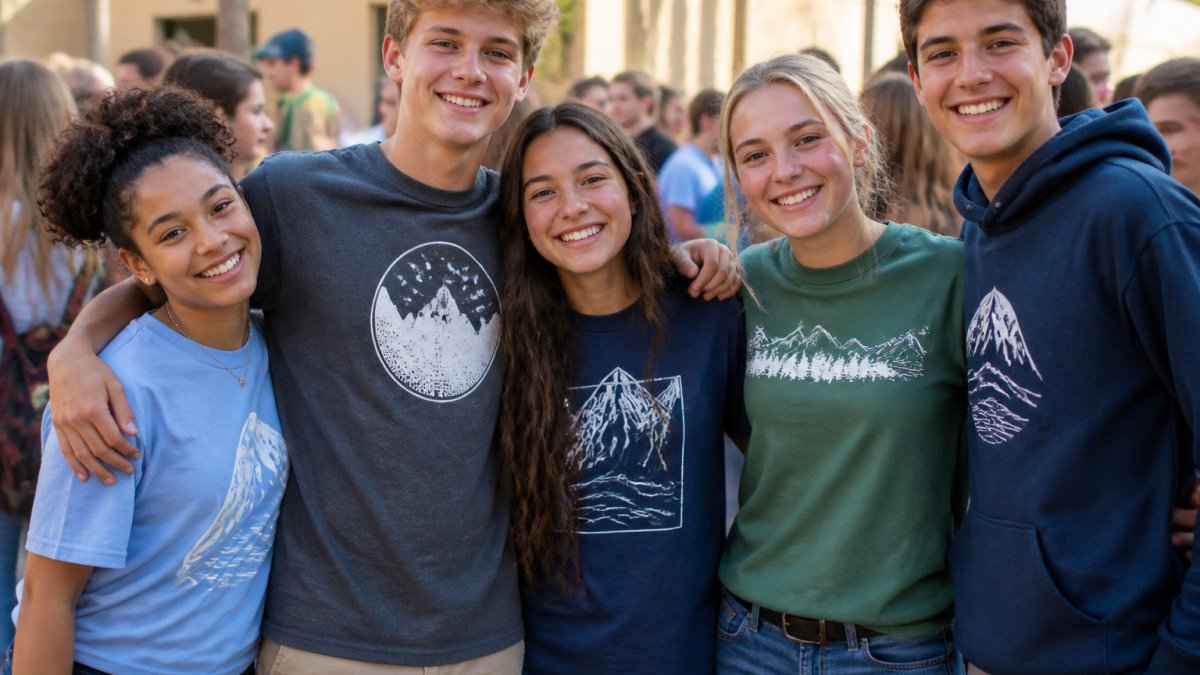
Ask: Would a teen wear this shirt if it had no ministry branding? If not, redesign it.
Effective youth group shirt designs share these qualities:
- Minimal text. One strong phrase beats a paragraph. "Faith Over Fear" works. A Bible verse with three supporting sentences doesn't.
- Clean typography. Modern fonts, not decorative or overly stylized lettering.
- Subtle branding. Put the ministry name or logo small, on the sleeve, chest, or back. Let the design breathe.
Let students design. Run a contest where youth vote on their favorites; the winner gets printed and recognized.
For custom church apparel, quality matters, a cheap shirt falls apart after a few washes and students stop wearing it. IGIT Apparel's Unisex Ultra Cotton Tee at $23.50 offers durable 100% cotton construction with no side seams, so the design stays sharp through repeated wear.

Custom Church Apparel Options Beyond T-Shirts
T-shirts are the foundation, but expanding your custom apparel line keeps engagement fresh.
Hoodies are essential for fall events, winter camps, or outdoor gatherings. A Unisex Heavy Blend Full Zip Hooded Sweatshirt at $35.00 combines comfort with durability; its 50% cotton, 50% polyester construction resists pilling and holds up through constant wear.

Long-sleeve shirts work year-round for layering at outdoor events or in cooler months.
Water bottles or drinkware branded with your ministry logo extend visibility at school, home, and sports.
Accessories like wristbands or patches are affordable for students on tight budgets or as event giveaways.
The key is variety: one teen loves hoodies, another prefers hats.
Youth Ministry Fundraising Ideas Using Merchandise Sales
Youth ministry custom merchandise like custom youth group shirts can fund ministry activities, mission trips, or outreach without asking families for extra donations.
The direct sales model is simplest: announce a sale, set a deadline, take orders, then print and distribute.
The tiered fundraising approach works when you need significant funding.
To maximize fundraising potential:
- Price competitively but with clear margin. Explain to families where money goes.
- Offer payment plans for larger orders. Remove cost barriers.
- Set clear deadlines. Urgency drives sales.
IGIT Apparel supports this mission directly: every purchase funds Christian youth ministries and initiatives, aligning your ministry with a brand that shares your values.
Promoting Youth Ministry Events With Branded Apparel
Branded apparel turns students into event promoters, wearing custom youth group shirts to school, at sports, or around town advertises your ministry.
Event day matching creates visual unity. Everyone wears the same shirt or hoodie. Photos look cohesive. Social media posts stand out.
Design strategies for promotion:
- Include event dates or "Class of 2026" so the shirt stays relevant beyond one season.
- Add a QR code linking to event details or registration.
- Use bold colors or eye-catching graphics that stand out in photos and on social media.
Use social media: have students post photos wearing event apparel, tag the youth ministry account, create a hashtag, and repost student photos.
Budgeting, Ordering, and Fulfillment Planning
Step 1: Size the order against your real audience.
Count three groups, not one:
- Active students, the teens who show up most weeks.
- Occasional attendees, students who come to events, camps, or holiday programs but not weekly.
- Adults who buy, parents, grandparents, small group leaders, and volunteers. This group is often larger than the student group and is the reason a 40-student ministry can sell 70 shirts.
A common pattern: take active students, multiply by 1.5 for occasional attendees, then add 10-15% for adult buyers and leaders.
Step 2: Choose a fulfillment model.
| Model | Best for | Trade-off |
|---|---|---|
| Preorder (take orders first, then print) | First-time campaigns, event-specific designs, limited editions | Zero leftover risk, but you must collect payment upfront and wait 2-4 weeks for delivery |
| Bulk order (print a set quantity upfront) | Proven designs, annual signature gear, camps with known headcount | Lowest per-unit cost and fastest delivery, but unsold units tie up funds and storage |
| Print-on-demand | Small groups, testing a new design, ongoing online store | No minimums and no inventory, but higher per-unit cost and slower ship times |
Preorder is usually the safest first move because it converts the campaign into a commitment: families pay before you spend.
Step 3: Build a simple budget.
Write down four numbers before you announce anything:
- Unit cost from your printer (varies by garment and quantity).
- Sell price, typically set so the margin covers the ministry goal, not just the shirt.
- Target units based on Step 1.
- Break-even point, the number of units you must sell to cover the print run.
If break-even is 18 units and realistic demand is 65, you can fund the event and hold a reserve.
Step 4: Plan distribution before the boxes arrive.
Distribution is where most campaigns stall. Decide in advance:
- Pickup table after service, simplest, but only works if buyers attend regularly.
- Hand-out at the event itself, best for camp and retreat shirts, since everyone is already in one place.
- Ship to home, necessary for print-on-demand and for families who live far from the building.
Step 5: Handle leftovers deliberately.
If you bulk-ordered and have extras, do not let them sit in a closet. Common options:
- Hold them as visitor gifts for first-time students.
- Use them as volunteer thank-yous at the end of the year.
- Save a small number as next year's samples so students can feel the fabric before ordering.
A realistic campaign timeline:
- Weeks 1-2: Finalize design, confirm garment and printer, set price and break-even.
- Week 3: Open preorders with a hard close date.
- Week 4: Close orders, submit final count to the printer, collect remaining payments.
- Weeks 5-6: Production and shipping.
Build at least one buffer week into the schedule.
Measuring Results and Building Repeat Participation
Set a baseline before you launch.
You cannot prove impact without a starting point. Two weeks before launch, record:
- Average weekly attendance at your main youth gathering.
- Number of first-time visitors in the last month.
- Number of students who attended the most recent event.
- Social media followers and average post reach.
Write these numbers down. They become the comparison for everything that follows.
Track four categories of results.
1. Sales and reach.
- Total units sold versus target units.
- Percentage of active students who bought at least one item.
- Number of buyers who are not current students (parents, alumni, community members), this tells you whether merchandise is extending your reach beyond the room.
2. Event impact.
- Attendance at the event tied to the merchandise versus the same event last year.
- Number of first-time visitors at that event.
- On the sign-in sheet or registration form, add one optional question: "How did you hear about this event?" Include "saw the shirt" as an option. This is the single cheapest way to connect merchandise to turnout.
3. Social and word-of-mouth.
- Number of student posts or stories featuring the apparel.
- Number of tags, mentions, or hashtag uses during the campaign window.
- Number of times a student or parent shares a ministry post, shares matter more than likes because they reach people outside your existing audience.
4. Retention.
- Of the students who bought merchandise, how many attended the next two gatherings?
- Of the students who bought merchandise, how many brought a friend in the following month?
Retention matters most: a shirt worn once and forgotten has no ministry value, while one that shows up in photos six months later does ongoing promotional work for free.
Turn results into decisions.
After each campaign, answer three questions in writing:
- What sold best? If hoodies outsold T-shirts two to one, lead with hoodies next time.
- Where did demand come from? If most buyers were parents rather than students, your design may be skewing adult, adjust the artwork and let students vote on the next round.
- What was the cost per new connection? Divide total campaign cost by the number of first-time visitors or new sign-ups it produced. If a $600 campaign brought in 12 new students, that is $50 per new connection, a number you can compare against the cost of other outreach efforts like flyers or paid ads.
Build repeat participation on purpose. Repeat wear and attendance come from the same habits:
- Refresh the design each season so returning students have a reason to buy again, and new students are not wearing last year's leftovers.
- Create cohort identity. Class-year designs ("Class of 2030") give students something to carry across four years and make reunions and graduations feel connected to the ministry.
- Recognize the wearers. A monthly photo roundup of students in ministry gear costs nothing and rewards the behavior you want to see repeated.
- Use limited runs sparingly. Scarcity works once or twice a year; overused, it trains students to ignore deadlines.
A simple scorecard to keep.
Keep one spreadsheet with a row per campaign and columns for: date, units sold, units produced, margin, event attendance, first-time visitors, social shares, and repeat attendance rate.
Frequently Asked Questions
How can custom merchandise help promote a youth ministry?
Custom merchandise creates visible unity and pride among youth group members, turning them into walking advertisements for your ministry. When students wear branded apparel to school, community events, or social gatherings, they spark conversations about your youth ministry. Merchandise also strengthens community bonds, students feel part of something bigger. Additionally, selling apparel generates direct funding for youth programs, mission trips, and events without relying solely on donations or fundraiser meals.
What's the best way to involve students in designing youth group shirts?
Create a student design committee of 3-5 youth who represent different interests and styles within your group. Ask them to research current trends, sketch ideas, and vote on slogans that feel authentic to their generation. Share 2-3 design options with the broader youth group for feedback before finalizing. Student-led design ensures the apparel reflects what they actually want to wear, not what adults think they should wear. It also builds ownership and investment in the merchandise campaign.
Can youth ministry merchandise work for fundraising?
Yes. Merchandise fundraising works best when you set a clear goal, such as funding a mission trip or youth retreat, and communicate how many shirts need to sell to reach it. Offer pre-order periods to minimize inventory risk, then use the sales window to promote both the cause and the apparel. Many youth ministries also use tiered pricing: students pay one price, and donors or supporters pay a higher price knowing extra proceeds go to the ministry. This approach raises more money than a single price point.
How far in advance should we order youth ministry apparel for an event?
Order at least 4-6 weeks before a major event like a youth camp or conference. This timeline allows for design finalization, production, quality checks, and shipping without rush fees. For smaller gatherings or ongoing merchandise sales, 2-3 weeks is workable. Print-on-demand options with no minimums can reduce lead time to 1-2 weeks if you're flexible on design or willing to pay slightly higher per-unit costs. Always confirm production and shipping timelines with your apparel vendor before committing to an event date.