

Table of Contents
- What Makes High Quality Christian Streetwear Stand Out
- Understanding Fabric Weight and GSM Specifications
- Heavyweight Cotton for Streetwear: Durability and Comfort
- Ring-Spun vs. Carded Cotton: What the Difference Means
- Cotton-Poly Blends and Their Role in Longevity
- How to Start a Christian Clothing Brand with Quality Blanks
- Selecting Premium Streetwear Blanks for Print Durability
- Frequently Asked Questions
Last Updated: September 21, 2026
What Makes High Quality Christian Streetwear Stand Out
The difference between generic apparel and high quality christian streetwear comes down to one thing: fabric choice. Everything else, design, messaging, fit, lives on top of the foundation the material provides. At IGIT Apparel, we've built our entire mission around sourcing and offering garments that don't just look good but perform through repeated wear, washing, and the kind of daily life teenagers and young adults actually live.
Most faith-based brands spec the cheapest fabric that won't immediately fall apart, print a message on it, and call it done. The result: garments that shrink unpredictably, lose shape after three washes, or feel thin and flimsy. Your teenager stops wearing it. The impact gets lost.
Quality signals respect. When someone wears IGIT Apparel, they're choosing something that will still look intentional and well-made weeks from now. That durability and longevity separate high quality christian streetwear from everything else crowding the market.
Understanding Fabric Weight and GSM Specifications
Fabric weight measured in GSM (grams per square meter) is the most direct indicator of how a garment will perform over time. A lightweight tee at 4.2 oz/yd² feels different than a midweight at 6.0 oz/yd², and that difference compounds with every wash.
Higher GSM means more fiber packed into the same space, translating to durability, better drape, and resistance to pilling. A 203 g/m² fabric (6.0 oz/yd²) sits in the sweet spot for everyday wear: substantial enough to hold its shape, light enough to wear year-round. At 285 g/m² (8.4 oz/yd²), the garment becomes a statement piece with real substance.
Lightweight fabrics develop thin spots faster and pill more easily; the print sits on the surface rather than bonding with fibers. Midweight fabrics distribute stress evenly, keeping designs vibrant and garments holding their shape season after season.
For streetwear, especially pieces meant to be worn and reworn, aim for 180 g/m² or higher. That's the threshold where a tee stops feeling disposable and starts feeling like something worth keeping.
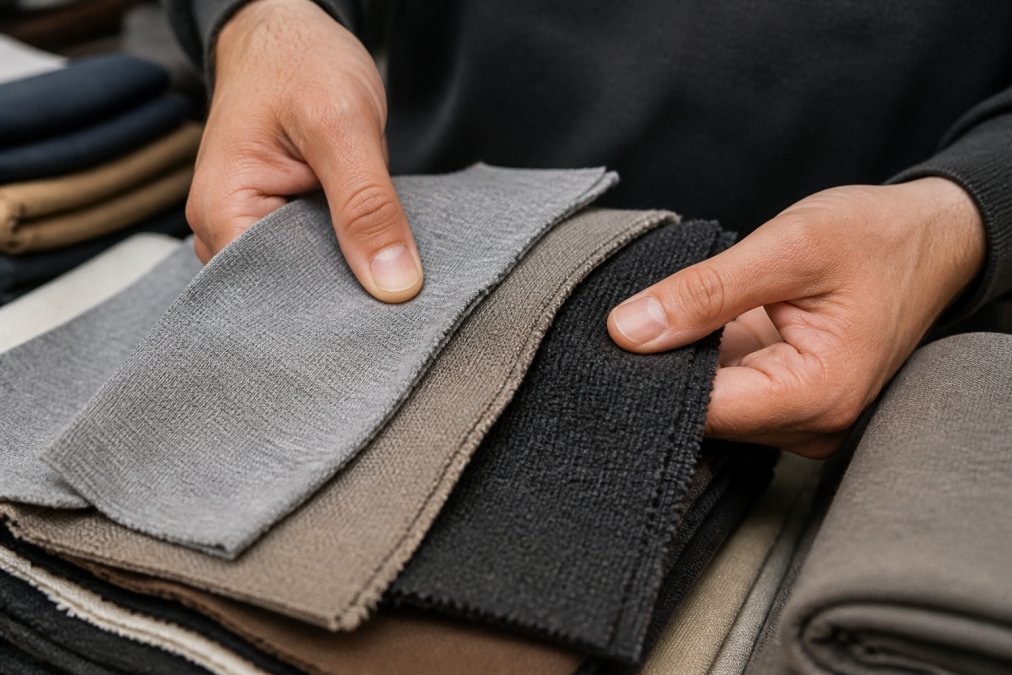
Heavyweight Cotton for Streetwear: Durability and Comfort
Heavyweight cotton represents the gold standard for high quality christian streetwear that's meant to last. Pure cotton at 200+ GSM combines breathability with genuine durability, two qualities that usually trade off against each other.
Heavyweight cotton works because more fiber creates a barrier against wear patterns that destroy cheaper pieces. The neckline doesn't stretch out, seams don't separate, and fabric resists pilling where shoulders and armpits take repeated stress.
Cotton accepts dye and print differently than synthetics. Direct-to-garment printing on quality cotton produces vivid, long-lasting color because ink bonds with the fiber. Faith messages printed on heavyweight cotton hold their impact wash after wash.
Heavyweight cotton costs more but lasts longer, looks better, and feels better. For pieces carrying a faith message, that investment makes sense. [IGIT Apparel's Men's Jersey Curved Hem Tee](https://igitapparel.com/products/mens-jersey-curved-hem-tee) at $28.50 uses 100% Airlume combed and ring-spun cotton at 4.2 oz/yd².

Ring-Spun vs. Carded Cotton: What the Difference Means
Not all cotton is created equal. The process that transforms raw fiber into yarn determines how soft the fabric feels, how durable it becomes, and how well it accepts color and print.
Carded cotton is the baseline, fibers are combed and aligned quickly, producing functional cotton for basic garments. Ring-spun cotton takes the process further, using a ring frame to create tighter, more consistent yarn with better fiber alignment.
Ring-spun cotton is noticeably softer, holds color better, resists pilling, and maintains shape through more wash cycles. For high quality christian streetwear, ring-spun is the expectation. IGIT Apparel's Long Sleeve Crewneck Tee at $34.50 uses 100% Combed ring-spun cotton.


When you're sourcing blanks for your own line or evaluating what to wear, look for "ring-spun" on the spec sheet. It's a single detail that signals the manufacturer cares about the final product, not just the unit cost.
Cotton-Poly Blends and Their Role in Longevity
Pure cotton shrinks unpredictably, wrinkles easily, and loses shape in high-stress areas. Cotton-poly blends solve these problems by combining the best of both fibers.
An 80/20 cotton-polyester blend provides breathability and comfort from cotton, while polyester adds shrinkage resistance, shape retention, and durability. The blend also creates a softer hand-feel than pure cotton.
An 80/20 blend shrinks less unpredictably, resists pilling better, and adheres print more reliably. IGIT Apparel's Unisex Midweight Softstyle Fleece Crewneck Sweatshirt at $24.50 uses this blend with a brushed interior and 100% ring spun cotton face at 8.4 oz/yd².
How to Start a Christian Clothing Brand with Quality Blanks
If you're launching your own high quality christian streetwear line, blank selection determines success or failure. Design and message matter, but if the blank falls apart after five washes, the impact is lost.
Perform a Fabric Durability Test Before Committing to Production
Request sample blanks and run three tests before placing a bulk order:
-
The Wash Test: Wash and dry a sample five times (warm water, regular detergent, medium heat). Inspect for pilling, fading, shrinkage, and seam separation. A quality blank should shrink less than 3% in length and width combined.
-
The Stretch Test: Apply moderate tension at the shoulder seam for 10 seconds, then release. Quality fabrics should return to original shape within seconds. Permanent deformation indicates poor fiber quality.
-
The Pilling Test: Rub a fabric section vigorously with a rough cloth for 30 seconds. Minimal pilling indicates strong fibers; heavy pilling means the yarn was poorly twisted.
Understand the Difference Between Wholesale Blanks and Custom Cut-and-Sew Manufacturing
Wholesale blanks are fast, affordable, and consistent, ideal for testing and small runs. However, you're limited to standard sizing, colors, and construction.
Custom cut-and-sew manufacturing lets you specify fabric, pattern, seams, and finishing. The tradeoff: higher minimums, longer lead times, and higher costs. For faith-based brands, custom manufacturing controls the supply chain, knowing where cotton is sourced, which dyes are used, and whether labor practices align with your values.
Start with wholesale blanks to validate design and messaging. Transition to custom manufacturing once demand and margins support it.
Evaluate Supply Chain Transparency
Look for manufacturers that document their supply chain. Key questions:
- Where is the cotton grown? (Domestic cotton from Texas or Georgia, or imported?)
- What dyeing and finishing processes are used? (Some dyes are more environmentally friendly than others.)
- Are garments made in the United States or overseas? (Relevant for "Made in" labeling and labor standards.)
- What certifications do they hold? (OEKO-TEX, Fair Trade, GOTS, Global Organic Textile Standard, indicate third-party verification.)
This information becomes part of your brand story.
Map Fabric Choice to Retail Pricing and Margins
Selecting Premium Streetwear Blanks for Print Durability
Print durability is where blank quality becomes non-negotiable. Poor-quality fabric accepts ink inconsistently and sheds it through wear. Premium blanks keep designs sharp through normal use.
Match Fabric Texture to Ink Type for Optimal Adhesion
Smooth, Tightly-Woven Fabrics (Ring-Spun Cotton, 180+ GSM)
- Best for: Direct-to-garment (DTG) printing and screen printing
- Why: Smooth surface allows ink to penetrate and bond with fibers. DTG printers spray liquid ink directly onto fabric; smooth cotton accepts this without bleeding.
- Durability: Ink bonds at fiber level, surviving 50+ wash cycles without cracking or fading.
- Example: IGIT Apparel's Men's Jersey Curved Hem Tee uses 100% Airlume combed and ring-spun cotton at 4.2 oz/yd².
Loopback Jersey (Cotton-Poly Blend, 240-280 GSM)
- Best for: Puff printing and embroidery
- Why: Textured, brushed interior provides grip for dimensional inks. Puff ink needs that texture to adhere without cracking.
- Durability: Puff print survives 30-40 wash cycles before flattening. Polyester content prevents excessive shrinkage.
- Example: IGIT Apparel's Unisex Midweight Softstyle Fleece Crewneck Sweatshirt at $24.50 uses 80/20 cotton-poly blend with brushed interior.
Lightweight Jersey (140-160 GSM)
- Best for: Heat transfer vinyl only
- Why: Thin fabrics lack fiber density to anchor screen-printed or DTG ink. HTV adheres via heat and pressure.
- Durability: HTV lasts 20-30 wash cycles before peeling. Not ideal for high-wear pieces.
- Limitation: Avoid DTG or screen printing on lightweight blanks.
Test Print Adhesion Before Full Production
- Wash the sample five times using warm water and regular detergent (same as customer would).
- Inspect for cracking: Look at edges, corners, and areas of high stress (shoulders, underarms). Any visible cracks or ink loss means the blank-ink combination isn't suitable.
- Perform a rub test: Rub the printed area firmly with a damp cloth for 10 seconds. If ink transfers to the cloth, adhesion is poor.
- Check color consistency: Fading is normal, but the design should remain legible and vibrant. Significant fading indicates the blank's surface isn't accepting ink properly.
GSM and Preshrinking: Non-Negotiable for Print Durability
Demand These Specifications for High Quality Christian Streetwear
- Fiber composition: 100% ring-spun cotton OR 80/20 cotton-poly blend (never below 80% cotton)
- Weight: Minimum 180 g/m² (5.3 oz/yd²) for everyday wear; 240+ g/m² for statement pieces
- Surface: Smooth and tightly woven for DTG/screen printing, or brushed loopback for puff/embroidery
- Preshrinking: Confirmed preshrunk to prevent uneven shrinkage
- Seam quality: Reinforced shoulder seams and side seams (or no side seams for premium aesthetic)
Frequently Asked Questions
What fabric weight is best for high quality Christian streetwear?
Medium to medium-heavy fabrics (5.3-8.4 oz/yd²) deliver the best balance for Christian streetwear. Light fabrics (4.2 oz/yd²) work for layering pieces, while heavyweight options provide durability for frequently worn items. Ring-spun cotton in the 5.3-6.0 oz/yd² range resists shrinkage and holds print vividly, making it ideal for faith-inspired designs that need to stay bold through repeated washing.
Is ring-spun cotton better than carded cotton for streetwear?
Yes. Ring-spun cotton undergoes extra processing that aligns fibers and removes short strands, creating a softer, stronger fabric with better print adhesion. Carded cotton is faster to produce but delivers a less refined hand-feel and shorter garment life. For Christian streetwear where durability and visual quality matter, ring-spun cotton justifies the investment.
What's the advantage of cotton-poly blends in premium streetwear blanks?
Cotton-poly blends (typically 80/20 or 50/50) combine cotton's breathability and softness with polyester's shape retention and moisture-wicking. An 80% ring-spun cotton, 20% polyester blend resists shrinkage better than 100% cotton while maintaining comfort. For Christian apparel that will be worn frequently and washed often, this blend extends garment life significantly.
How does print method affect fabric choice for Christian designs?
Direct-to-garment (DTG) printing works best on combed, ring-spun cotton with a smooth surface that accepts ink vividly, making lighter fabrics (4.2-5.3 oz/yd²) ideal. Screen printing tolerates heavier fabrics better. Choose fabric based on your design complexity: intricate faith-based artwork favors DTG on premium cotton, while bold graphic designs work across all weights.