

Last Updated: October 26, 2026
Quick Summary
For a youth ministry retreat, read the camp's own dress code first, then pack layers: a base tee, a mid-layer hoodie or crewneck, and a light or rain jacket. Bring two pairs of broken-in shoes and one outfit per activity, from worship to hiking to swimming.
- Dress codes are camp-specific, so check the destination's own page instead of assuming one standard applies.
- Pack at least one warm layer per day plus a rain shell for fast weather changes.
- Bring two pairs of shoes minimum: one for dry land and one for wet ground.
- Break in new sneakers at least a week ahead to avoid blisters on day one.
- For a five-day retreat, pack six t-shirts, three shorts, two hoodies, and seven pairs of socks.
Table of Contents
- Start With the Camp's Rules, Not Guesswork
- What to Wear to a Youth Retreat: Build Around Layers
- Youth Retreat Outfit Ideas for Every Part of the Day
- Footwear for Mud, Rain, and Long Walks
- Your Youth Camp Packing List With Real Quantities
- Dressing for Different Bodies, Budgets, and Abilities
- Shop Faith-Inspired Layers Before You Pack
- Frequently Asked Questions
Start With the Camp's Rules, Not Guesswork
Packing for a youth ministry retreat goes wrong when you guess. The fix is simple: read the camp's own dress code first, then build every outfit around it.
Dress rules are camp-specific, not universal. Published guidance proves it. Crossroads Summer Camp asks for fingertip-length shorts and bans revealing or tight clothing, while a Spring Youth Retreat page requires clothing at least knee length that covers shoulders.
How to Read a Dress Code Before You Pack
Most camp dress codes are short, and they usually cover five things:
- Shorts length: fingertip, mid-thigh, or knee
- Shoulders and necklines: covered or open
- Tight clothing: often called out by name
Read the code out loud with your teen. Then sort the bag into "fits the rules" and "leave it home." If your group is writing its own policy, 7 tips for creating a youth group dress code policy walks through how to set one that people actually follow.
What to Wear to a Youth Retreat: Build Around Layers
The best youth ministry retreat wardrobe is built in layers, because camp weather changes fast. A hot afternoon turns into a cold evening, and a dry hike turns into a muddy walk. Layers solve both.
Base Layers, Mid Layers, and the Jacket That Saves the Trip
Think in three levels:
- Base: a cotton tee or light long-sleeve shirt
- Mid: a crewneck sweatshirt or hoodie
- Outer: a light jacket, windbreaker, or rain jacket
Sunday Cool's retreat clothing guidance recommends exactly this approach. Most youth ministries pair lightweight base tees with long sleeves, crewnecks, or hoodies for cooler conditions.
Pack at least one warm layer per day, plus a rain shell. Our full-zip hooded sweatshirt and quarter-zip pullover both pull on over a tee in seconds, which matters when the temperature drops at evening worship.


Youth Retreat Outfit Ideas for Every Part of the Day
A youth retreat outfit should match the activity, not the other way around. Most schedules rotate through worship, active games, hiking or swimming, meals, and downtime, and each one asks something different of a wardrobe. Use this activity-by-activity map as your default, then adjust for the camp's dress code and the season.
Worship and Session Outfits
Worship is the one block where teens sit still, often on the floor or in folding chairs, and often in a room that runs cold from air conditioning or warm from a crowd.
- Warm-weather worship: jeans or corduroy pants with a clean tee, plus a light sweater in the bag for the air-conditioned room
- Cool-weather worship: the same pants with a crewneck or hoodie over a long-sleeve tee
- What to avoid: shorts that ride up when sitting cross-legged, and slogans that a camp code may flag
A plain cotton tee under a fleece crewneck sweatshirt covers most worship blocks in spring and fall without a full change.

Games, Rec, and Field Activities
Games are where clothes get dirty, stretched, and occasionally torn. Dress for movement and assume grass stains.
- Tops: a tee you do not mind staining, not a white one
- Bottoms: shorts that meet the camp's length rule, or joggers if the code requires longer coverage
- Extras: a baseball cap for sun, and a hair tie for anyone with long hair
Skip denim for the muddiest rec blocks. Cotton joggers and synthetic shorts dry faster and move better when teens are crawling, sliding, or running.
Hiking and Trail Outfits
Hiking is the block most likely to expose a bad packing decision. Trails mean uneven ground, sun exposure, and temperature swings between shade and open ridge.
- Top: a moisture-wicking tee or light long-sleeve, not heavy cotton
- Bottom: quick-dry pants or sturdy shorts, never loose pajama pants that catch on brush
- Layer: a light jacket tied around the waist or stuffed in a daypack
If the camp sits at higher elevation, pack one more warm layer than the forecast suggests. Ridges and shaded valleys run cooler than the main camp buildings.
Swimming and Waterfront Outfits
Waterfront rules vary more than any other part of a camp dress code, so confirm the specifics before packing.
- Swimwear: one-piece suits or modest two-pieces where required; some camps ask for a dark tee over suits
- Cover-up: a quick-dry tee and shorts for walking to and from the water
- Footwear: sandals or water shoes for the dock and shower house, not bare feet
Pack a plastic bag for wet suits so they do not soak the rest of the duffel.
Meals and Dining Hall Outfits
Meals are casual, but they are also the block where teens are most visible to camp staff and visiting speakers. Clean and simple beats elaborate.
- What works: jeans or shorts with a clean tee, or the same outfit from the afternoon session
- What to skip: pajama pants, tank tops where the code bans them, and anything with offensive text
- Practical note: a hoodie over the chair handles a cold dining hall without a trip back to the cabin
Downtime and Cabin Outfits
Downtime is where comfort matters most, and where modesty rules still apply because cabins and common areas are shared.
- Sleepwear: modest enough for shared rooms, shorts and a tee, or pajama pants and a tee
- Lounge clothes: joggers and a hoodie for cabin hangouts and late-night talks
- Footwear: flip-flops or slides for the cabin floor and shower house
Travel-Day Outfits
Travel day is a layering problem, not a fashion problem. Buses and vans swing between hot and cold, and teens will sit for hours.
- Base: a tee and comfortable pants or joggers
- Layer: a hoodie or quarter-zip you can shed on the bus
- Footwear: the broken-in sneakers, not the rain boots
Adjusting the Map for Season and Setting
The same schedule plays out differently depending on when and where the retreat happens.
- Summer: lighter fabrics, more shorts, sun protection, and a rain shell for afternoon storms
- Fall and spring: more layers, long pants for evening sessions, and a warm mid-layer every day
- Winter: insulated jacket, warm hat and gloves, and waterproof boots for slush
Matching group shirts help too. Camp shirts and matching apparel make the group easy to spot and give teens something to keep.
Footwear for Mud, Rain, and Long Walks
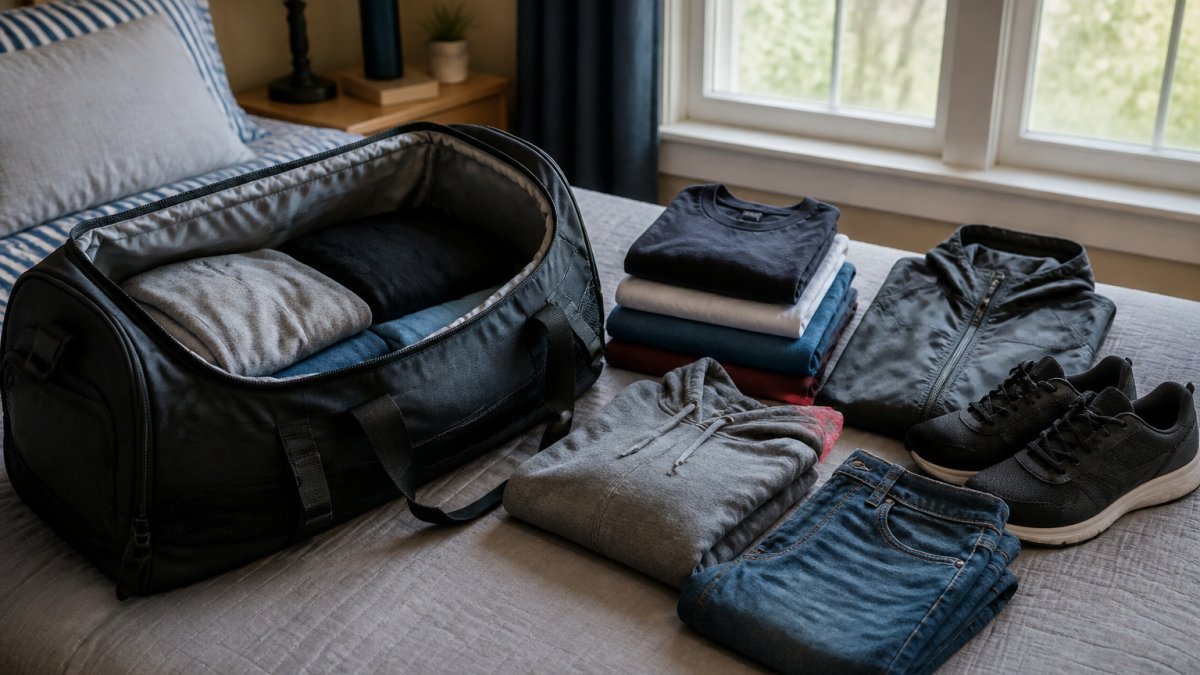
Footwear is where most packing lists fail. Bring two pairs minimum: one for dry land and one for wet ground. The details below are what separate a comfortable week from a blister-filled one.
The Two-Pair Rule
- Dry-land pair: broken-in sneakers or trail shoes with good traction
- Wet-ground pair: rain boots, old sneakers, or quick-dry water shoes
- Optional third pair: sandals or slides for showers and the cabin floor
Two pairs cover most retreats. Add the third pair only if the camp has a shower house separate from the cabins or a waterfront block.
Break In Shoes Before Travel
Brand-new shoes cause blisters on day one, and day one is usually the longest walking day of the trip. Break in new sneakers at least a week ahead with short daily walks, then a longer walk in the same socks you plan to pack. If a shoe rubs in the store, it will rub worse on a trail.
Match the Shoe to the Activity
- Hiking and trails: trail shoes or sturdy sneakers with tread; avoid smooth-soled fashion sneakers
- Muddy fields and creek crossings: rain boots or quick-dry shoes, not canvas sneakers that stay wet for days
- Waterfront and showers: sandals or water shoes with a textured sole for slick concrete
Traction and Safety
Wet grass, wooden docks, and shower-house floors are the three most common slip surfaces at a camp. Look for shoes with a visible tread pattern, and avoid flip-flops for anything beyond the cabin and shower house. For teens with mobility needs, choose shoes with simple closures, hook-and-loop straps or slip-on designs, over laces that come untied on trails.
Socks and Blister Prevention
- Quantity: one pair per day, plus two spares
- Material: moisture-wicking socks for hiking and active blocks; cotton is fine for downtime
- Blister kit: blister bandages, a small roll of athletic tape, and a spare pair of socks in the daypack
Managing Wet Shoes Overnight
- Stuff wet shoes with newspaper or a dry towel and set them near, not on, a heat source
- Pull insoles out to dry separately
- Never put wet shoes in a sealed bag; they will mildew before the trip ends
A Quick Footwear Checklist
- Sneakers, broken in before travel
- Rain boots or quick-dry shoes
- Sandals or slides for showers
Watch out: brand-new shoes cause blisters on day one. Break them in a week ahead, and pack blister bandages. If the camp sits near water or has a creek crossing, waders or quick-dry shoes beat soggy sneakers every time.
Your Youth Camp Packing List With Real Quantities
A workable youth camp packing list uses one rule: pack for the number of days, then add one. Here are quantities that hold up for a five-day retreat.
| Item | Quantity | Why |
|---|---|---|
| T-shirts | 6 | One per day plus a spare |
| Shorts | 3 | Meet the camp's length rule |
| Jeans or pants | 2 | Evening sessions and cool days |
| Sweatshirt or hoodie | 2 | One to wear, one to wash |
| Light or rain jacket | 1 | Afternoon storms |
| Underwear | 7 | One per day plus spares |
| Socks | 7 | Plus two extra pairs |
| Sneakers | 1 pair | Broken in before travel |
| Rain boots | 1 pair | Mud and wet grass |
| Sleepwear | 2 | Modest enough for shared rooms |
| Towel | 2 | One for showers, one for swim |
| Toiletries | 1 bag | Travel size, leak-proof |
Adjust down for a weekend trip and up for a full week. Print the list and check items off as they go in the bag.
Dressing for Different Bodies, Budgets, and Abilities
Bodies: loose, comfortable clothing works for every shape. Skip tight clothing entirely, since most codes ban it anyway.
Budgets: thrift stores, hand-me-downs, and one or two new pieces cover a full week. Buy plain basics and let one or two camp shirts do the work.
Abilities: for wheelchair users or teens with limited mobility, choose soft fabrics, easy pull-on pants, and shoes with simple closures.
Identity: ask teens what they feel comfortable in, then check it against the camp's rules.
Shop Faith-Inspired Layers Before You Pack
The right layers make a youth ministry retreat easier to pack and easier to enjoy. That is where IGIT Apparel fits in: faith-inspired clothing for men, women, and kids, with every purchase helping fund Christian ministries and youth initiatives.
Build the bag around a few pieces you will actually wear again:
- A tee as the base layer for warm days
- A crewneck or hoodie for cool evenings
- A full-zip or quarter-zip for fast weather changes
Get started with IGIT Apparel and pack layers that carry your faith into the week.
Frequently Asked Questions
What should I wear to a youth retreat?
Start with the camp's own dress code, then build outfits around layers: a lightweight tee, a sweatshirt or hoodie, and a rain jacket. Add jeans or knee-length shorts for activities and closed-toe shoes you don't mind getting muddy. Most youth ministry retreat weekends need two to three outfits plus sleepwear and one nicer set for worship or group photos. Check whether the camp requires modest clothing like knee-length shorts or covered shoulders before you pack.
What is the dress code for church camp?
There is no single church camp dress code. Published guidance varies: some camps require shorts to reach the fingertips, while others ask for clothing that is at least knee length and covers shoulders. Many prohibit revealing or tight clothing and offensive slogans. Read the specific camp's rules page and follow it exactly, since packing the wrong items can mean borrowing clothes or sitting out an activity. When in doubt, choose looser fits and longer lengths.
How many outfits should I pack for a weekend retreat?
For a two-night youth camp packing list, plan three daytime outfits, two sets of sleepwear, one nicer outfit for worship or group photos, and one extra pair of socks and underwear per day. Add a rain jacket, a warm layer, and two pairs of shoes. Roll clothes to save space and pack a separate bag for muddy or wet items so clean clothes stay dry.
What shoes are best for youth camp?
Bring two pairs: closed-toe sneakers with grip for hiking and games, and rain boots or old shoes for muddy conditions. Sandals work for shower blocks but not for trails. Break in new shoes before the trip to avoid blisters, and pack blister plasters plus extra socks. If the camp lists waders or water shoes for creek activities, pack those too rather than improvising.
Packing for a retreat should not be the hard part of the trip. If you want clothing that holds up through mud, rain, and late-night worship, IGIT Apparel has you covered, with faith-inspired designs, mission-driven giving toward youth ministries, free shipping, and secure checkout. Start with a base tee, add a hoodie, and you are ready for the week.
