

Table of Contents
- What Defines Mission-Driven Apparel
- Best Christian Clothing Brands for Faith-Based Shoppers
- Christian Brands That Give Back: Impact Models Compared
- Ethical Christian Apparel Companies: Supply Chain Transparency
- Comparison: Mission-Driven Apparel Alternatives
- How to Choose the Right Mission-Driven Brand for Your Values
- Conclusion
Last Updated: August 7, 2026
What Defines Mission-Driven Apparel
Mission-driven apparel is clothing designed and sold with a primary commitment to supporting a specific cause, community, or faith-based initiative beyond simply generating profit. Every purchase directly funds charitable work, ministry support, or social impact, the business model itself is the mission.
For Christian shoppers, your clothing choices become an extension of your stewardship and evangelism. You're funding youth ministries, supporting Christian organizations, or advancing causes aligned with your faith. What separates authentic mission-driven brands from performative ones is accountability: real companies publish impact reports, clearly articulate their giving model, and maintain verifiable partnerships with the organizations they support.
The growth in conscious consumerism has created genuine alternatives to mainstream retail. Christian consumers increasingly find brands that align biblical principles of stewardship with modern design sensibilities, no longer choosing between looking current and expressing your faith.
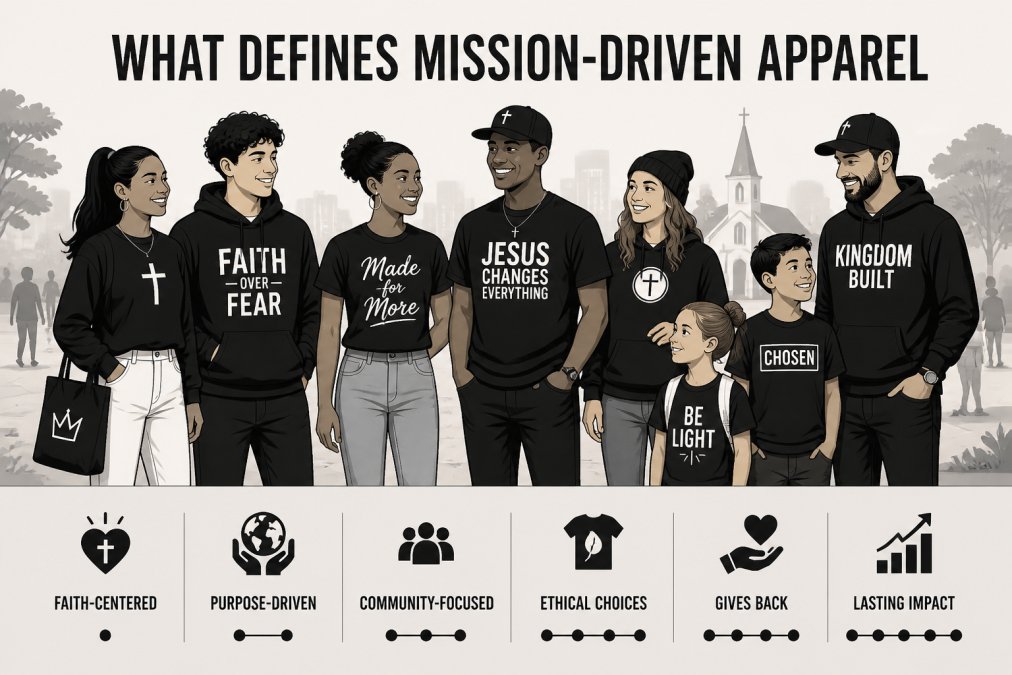
Best Christian Clothing Brands for Faith-Based Shoppers
Finding Christian brands that give back requires looking beyond surface-level messaging. The best options combine authentic faith inspiration, quality construction, and transparent giving models.
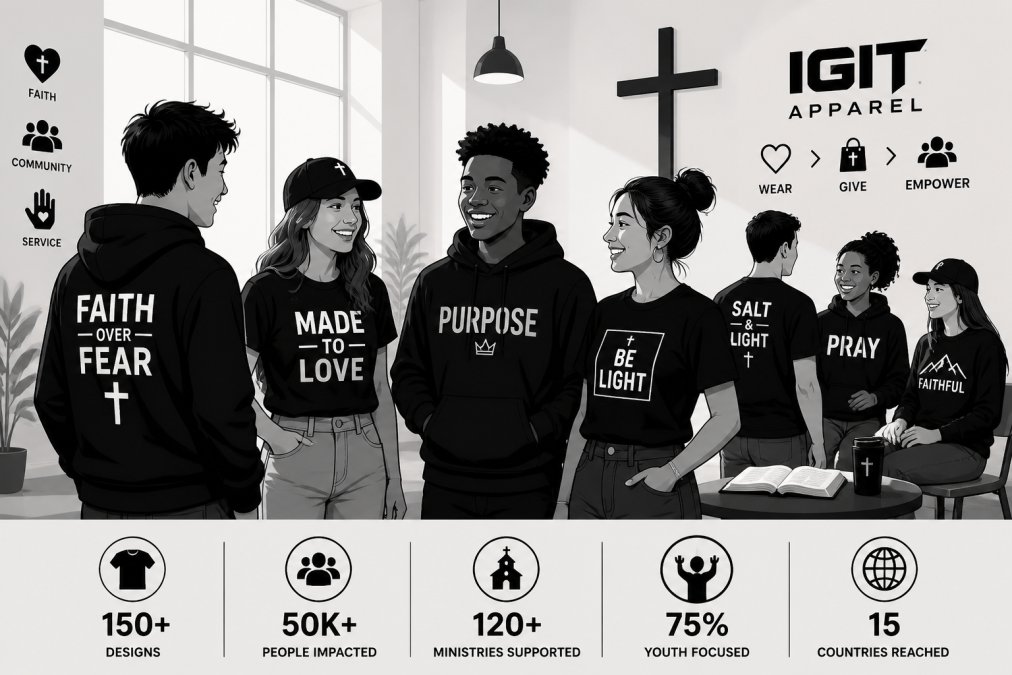
IGIT Apparel: Youth Ministry Focus
IGIT Apparel's business model centers on youth ministry funding. Every purchase directly supports Christian youth initiatives and teen discipleship programs.
The brand offers faith-inspired designs across men's, women's, and kids' categories, with particular strength in apparel that resonates with younger audiences. Gen Z Christians often reject clothing that feels preachy or outdated; IGIT Apparel focuses on wearable designs that don't sacrifice style for message.
What differentiates IGIT is operational transparency around its giving model. The company provides free shipping and secure payments, removing friction from the purchase process. More importantly, it clearly communicates that proceeds fund youth ministries rather than inflating corporate margins. For parents and youth leaders buying multiple items, this accountability becomes the deciding factor.
If your primary motivation is supporting the next generation of Christian leaders through tangible funding, IGIT Apparel's singular focus on youth ministry creates a direct line from your purchase to impact.
Pact: Ethical Organic Cotton Basics
Pact prioritizes environmental stewardship and fair labor practices through organic cotton clothing for the whole family, with Fair Trade Certified factories ensuring ethical labor conditions. This appeals to Christian shoppers who understand stewardship as environmental responsibility.
Pact uses GOTS-certified organic cotton, reducing water consumption and eliminating harmful chemical exposure in manufacturing. The "Give Back Box" program lets customers recycle old clothing rather than contributing to landfill waste. The brand works best for shoppers seeking everyday basics and essentials rather than statement pieces.
The pricing reflects the ethical manufacturing commitment. Organic cotton basics cost more than conventional alternatives, but Fair Trade Certification provides confidence that workers are treated fairly. For conscious consumers who view purchases as moral decisions, that accountability justifies the premium.
Made Trade: Curated Ethical Marketplace
Made Trade functions as a curated marketplace rather than a single brand, vetting every seller and product against strict ethical and sustainability standards: Fair Trade certification, vegan materials, USA manufacturing, and recycled or upcycled components.
This curation model means you're shopping across multiple artisans and small businesses simultaneously, each committed to responsible production. Design quality tends toward contemporary and aesthetically sophisticated, these aren't charity-case items, they're products people genuinely want to wear. For gift-givers and shoppers seeking unique pieces with verified ethical origins, Made Trade provides confidence that your purchase supports legitimate mission-driven makers.
The tradeoff is slightly higher pricing due to artisan production and verified ethical sourcing, but premium pricing reflects authentic commitment to ethical practices.
Christian Brands That Give Back: Impact Models Compared
Understanding how different brands distribute charitable contributions helps you align your purchases with your priorities.
Direct Donation Models
Some Christian apparel brands operate straightforwardly: sell clothing, donate a percentage or fixed amount per item to ministry partners. This creates clarity about how much of your purchase supports the cause.
Direct donation models work best when brands publicly commit to specific percentages. Transparency here is non-negotiable, genuine mission-driven brands publish this information prominently because it's their competitive advantage. The strength is simplicity; you buy, the company donates. The weakness is that direct donations often represent smaller percentages than complex models, since the brand still needs to cover operational costs.
IGIT Apparel's model exemplifies this approach with straightforward funding of youth ministries and transparent allocation.
Profit-Sharing and Membership Models
Other brands use membership structures or profit-sharing arrangements where members receive deeper impact visibility and potentially better pricing. Thrive Market provides a free membership to a low-income family for every paid membership, creating a direct one-to-one impact model.
Membership models create community around shared values, though they add friction to the purchase decision. Profit-sharing models work well for established brands with sufficient scale. Patagonia pioneered this by transferring ownership to a trust ensuring all profits not reinvested in the business go to environmental causes.
For apparel specifically, profit-sharing models tend to work better than membership models because clothing purchases happen infrequently.
Ethical Christian Apparel Companies: Supply Chain Transparency
How a brand manufactures its clothing matters. Ethical production and transparent supply chains separate authentic mission-driven companies from those using mission language as marketing cover.
Fair Trade Certification Standards
Fair Trade Certification provides third-party verification that workers in the supply chain earn living wages and work in safe conditions. For apparel, this certification applies to factories and production facilities.
Pact's Fair Trade Certified factories represent the standard you should expect from ethical Christian apparel brands. This certification requires independent audits, wage verification, and documented working conditions. It's significantly more rigorous than unverified claims.
Fair Trade matters because apparel manufacturing often happens in countries with minimal labor protections. Without certification, "ethical production" is just marketing language. The cost difference between Fair Trade and conventional manufacturing is real, if a brand claims ethical production but charges commodity prices, the math doesn't work.
Vetting Criteria for Authentic Mission-Driven Businesses
Before committing to a brand, ask these specific questions:
Accountability: Does the company publish annual impact reports? Can you access data on how much money reached charitable partners versus operational costs?
Partner verification: Are the charitable organizations real, verifiable, and independently operated? Vague references to "community impact" without named partners suggest the mission is secondary.
Supply chain documentation: Can the brand explain where materials come from and how products are manufactured? Transparency indicates confidence in their practices.
Pricing honesty: Does the company acknowledge that ethical production costs more? Brands that pretend ethical apparel costs the same as conventional retail are either lying about ethics or about margins.
Customer feedback: What do actual customers report about quality, durability, and design? Mission-driven doesn't excuse poor construction.
Comparison: Mission-Driven Apparel Alternatives
| Brand | Focus | Impact Model | Best For | Key Strength |
|---|---|---|---|---|
| IGIT Apparel | Faith-inspired, youth ministry | Direct donation to Christian youth initiatives | Parents and youth leaders | Specific youth ministry focus with transparent giving |
| Pact | Organic cotton basics, ethical sourcing | Fair Trade Certified manufacturing | Sustainable wardrobe builders | Verifiable labor practices and environmental stewardship |
| Made Trade | Curated ethical marketplace | Supports independent artisans and small businesses | Unique pieces and gift-givers | Rigorous vetting of every seller and product |
| Patagonia | Outdoor apparel | Profit-sharing to environmental causes | Outdoor enthusiasts | Pioneering model with proven long-term commitment |
| Warby Parker | Eyewear | Buy a Pair, Give a Pair program | Vision care shoppers | Direct one-to-one giving model with social impact |
| TOMS | Casual footwear | One-third of net profits to nonprofits | Everyday shoe shoppers | Established brand with proven charitable track record |
| Etsy | Handmade and vintage marketplace | Supports independent sellers, carbon-neutral shipping | Unique items and small business support | Direct connection to artisans with environmental commitment |
How to Choose the Right Mission-Driven Brand for Your Values
Selecting the right brand requires matching your priorities to what each company actually delivers.
Stewardship and Accountability
Christian stewardship means managing resources responsibly. For apparel purchases, this translates to choosing brands that prove they're using your money effectively.
Start with published financial information. Legitimate mission-driven brands publish annual reports or impact statements showing the percentage of revenue reaching charitable causes. If a company won't share this data, move on. Accountability also means ongoing communication, does the brand update customers on the impact their purchases created?
For faith-based shoppers, accountability connects to biblical stewardship principles. You're entrusted with resources and called to use them wisely. Choosing a brand that can't demonstrate responsible fund allocation violates that principle.
Quality and Design for Different Ages
Mission-driven doesn't excuse poor quality. The clothing should actually be worth wearing, which means different standards for different age groups.
For children's apparel, prioritize durability and comfort. Pact's focus on organic cotton basics works well because the designs emphasize longevity over trends. For teenagers, design becomes critical, Gen Z won't wear clothing that feels preachy or outdated. IGIT Apparel succeeds by creating contemporary designs that happen to express faith rather than forcing faith messaging onto dated silhouettes. For adults, quality and versatility matter since you're wearing these pieces regularly.
The best brands prove you don't have to choose between values and aesthetics. You can wear something that looks good, feels good, and funds causes you believe in.
Local vs. Global Impact
Mission-driven shopping raises a philosophical question: should you prioritize local community impact or global causes?
Local impact means your purchases support nearby nonprofits, churches, or community organizations, creating visible, tangible connection to the work you're funding. Global impact addresses larger-scale causes like environmental sustainability or international charitable work. Neither approach is inherently superior, the question is alignment with your values.
The practical consideration: local impact often means smaller organizations with less professional marketing. You might need to dig harder to verify their legitimacy. Global-impact brands often have more established reputations and easier-to-verify credentials.
Conclusion
Choosing mission-driven apparel means accepting that your clothing purchases are moral decisions, not just consumer transactions. The brands covered here, IGIT Apparel, Pact, Made Trade, and others, each offer different paths to align your wardrobe with your values.
IGIT Apparel stands out as a choice for faith-based shoppers specifically focused on youth ministry support. The brand's transparent commitment to funding Christian youth initiatives, combined with free shipping and secure payments, removes friction from values-aligned shopping. If your priority is supporting the next generation of believers through direct ministry funding, IGIT Apparel delivers exactly that promise. Shop now with IGIT Apparel and transform your clothing purchases into meaningful support for youth discipleship.
Frequently Asked Questions
How do I verify that a mission-driven apparel brand actually donates to charitable causes?
Look for published impact reports, specific donation amounts, and third-party certifications like B Corporation status. Legitimate mission-driven brands disclose their giving model clearly on their website, specify which organizations receive funds, and often provide annual transparency reports. Request documentation before purchasing if the information isn't readily available. Brands that give back to youth ministries should clearly state what percentage of each sale goes to these initiatives.
What's the difference between ethical Christian apparel companies and regular faith-based clothing brands?
Ethical Christian apparel companies prioritize both faith-inspired design and responsible manufacturing practices. They pursue Fair Trade Certification, use sustainable materials like organic cotton, ensure safe labor conditions, and maintain transparent supply chains. Regular faith-based brands may focus primarily on messaging without addressing manufacturing ethics. When evaluating ethical Christian apparel companies, check for certifications from organizations like Fair Trade USA or Global Organic Textile Standard (GOTS).
Are mission-driven apparel alternatives more expensive than conventional clothing?
Mission-driven apparel typically costs more than fast fashion due to ethical manufacturing, quality materials, and charitable giving. However, prices vary widely depending on the brand's model. Some focus on affordability alongside impact, while others emphasize premium quality and craftsmanship. The actual cost difference depends on the specific brand, materials used, and how much of each sale goes to charitable causes. Compare brands directly based on your budget and values.
What should I look for in best Christian clothing brands for my teenager?
Teenagers want designs that feel contemporary and authentic to their style without appearing preachy. Look for brands offering age-appropriate designs, quality construction that withstands frequent washing, and clear communication about the mission. Check customer reviews specifically mentioning durability and fit for younger wearers. The best Christian clothing brands balance meaningful faith messaging with modern aesthetics that resonate with Gen Z sensibilities.
How do Christian brands that give back compare in terms of actual impact?
Christian brands that give back use different models: some donate a percentage of profits, others use one-for-one giving, and some operate membership-based systems where giving increases with volume. Direct donation models typically show clear impact numbers, while profit-sharing requires understanding the company's operating costs. Youth ministry-focused brands may provide specific examples of funded programs. Compare impact by looking at annual giving totals, beneficiary organizations, and whether the brand publishes progress toward stated goals.
This article was written using GrandRanker