

Table of Contents
- Why Most Faith-Based Clothing Falls Apart (and What to Check Instead)
- Fabric Weight and GSM: The Numbers That Predict How Long Durable Christian Apparel Lasts
- Print Methods Compared: Which One Keeps Your Scripture Design Intact
- How to Care for Screen Printed Apparel So It Survives Real Life
- Finding Christian Tees for Men That Actually Hold Up
- How to Evaluate the Best Christian Clothing Brands Before You Buy
- What Most Guides Miss About Long-Term Wear
- Frequently Asked Questions
Last Updated: September 26, 2026
Why Most Faith-Based Clothing Falls Apart (and What to Check Instead)
Most faith-based clothing fails because brands spend money on the message and almost nothing on the garment. A shirt arrives looking sharp, then shrinks, cracks, or splits a seam within months. Learning how to find durable christian apparel comes down to three things you can check before you buy: fabric weight, print method, and stitching.
The Three Failure Points: Fabric, Print, and Stitching
Fabric, print, and stitching are the three places christian apparel breaks down first: fabric thins and develops holes, prints crack or fade, and stitching pulls loose at the shoulders and hem.
A quick pre-purchase check catches all three:
- Fabric: Look for a stated weight in oz/yd². Under 4 oz/yd² is thin.
- Print: Ask which method was used. Screen printing outlasts most alternatives.
- Stitching: Check for double-stitched hems and reinforced shoulder seams.
Fabric Weight and GSM: The Numbers That Predict How Long Durable Christian Apparel Lasts
Fabric weight is the single best predictor of how long a shirt lasts. Measured in ounces per square yard (oz/yd²), heavier fabric generally means a longer life.
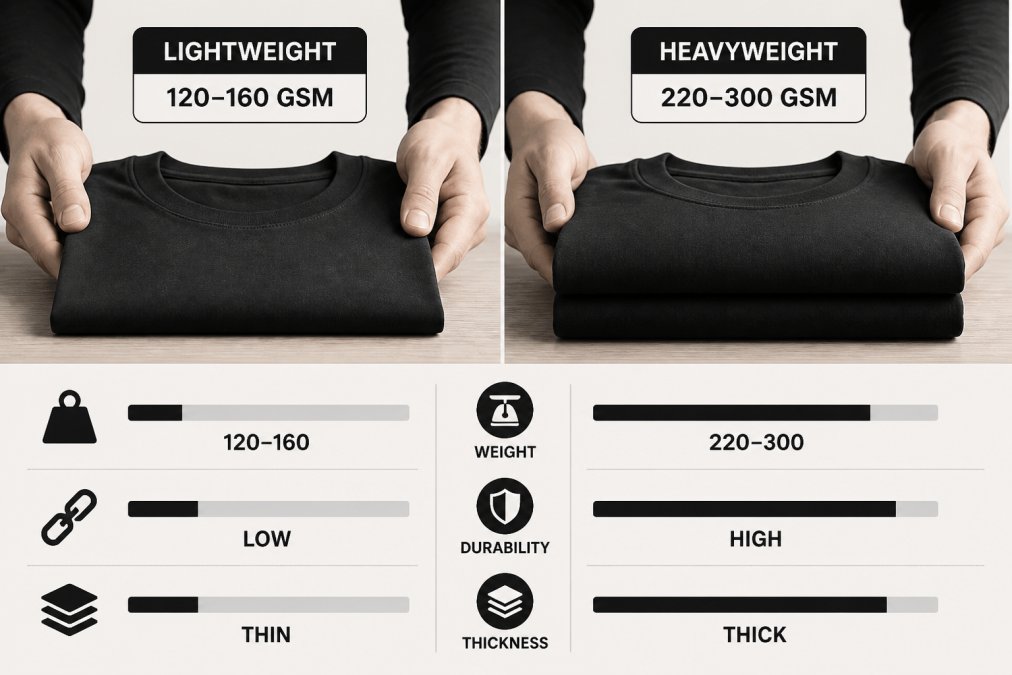
Here's how the ranges break down.
Lightweight (Under 5 oz/yd²): Performance and Athletic Pieces
Lightweight fabric works for gym wear and warm-weather pieces, drying fast and moving well, but it's not built for daily wear. Expect visible thinning within a year of regular washing.
Midweight (5-7 oz/yd²): Everyday Wear and Graphic Tees
Midweight is the sweet spot for everyday tees, holding a print well and surviving repeated washing. Most quality christian tees for men land in this range.
Heavyweight (8 oz/yd² and Up): Hoodies and Cold-Weather Layers
Heavyweight fabric is for hoodies and cool-weather layers, resisting pilling and holding its shape for years. The trade-off is warmth, making it a poor pick for summer.
| Fabric Weight | Best For | Expected Lifespan |
|---|---|---|
| Under 5 oz/yd² | Athletic wear, summer | 1-2 years |
| 5-7 oz/yd² | Everyday tees | 3-5 years |
| 8 oz/yd² and up | Hoodies, layers | 5+ years |
Print Methods Compared: Which One Keeps Your Scripture Design Intact
Print method decides whether your scripture design survives the wash or peels off in flakes. What matters is how each method behaves after 25, 50, and 100 wash cycles, where the difference between a two-year shirt and a ten-year shirt shows up.
DTG (Direct-to-Garment)
DTG prints water-based ink directly onto the fabric, bonding with the cotton fibers rather than sitting on top. That is why DTG prints feel soft and almost disappear into the shirt.
DTF (Direct-to-Film)
DTF prints the design onto a film, dusts it with adhesive powder, then heat-presses the film onto the garment, producing a slightly raised, rubbery print that handles bright colors and fine detail on almost any fabric, including blends and polyester.
Screen Printing
Screen printing pushes thick plastisol ink through a mesh screen and cures it under heat, leaving a flexible layer on top of the fabric.
Side-by-Side: How the Three Methods Age
| Method | Best Design Type | Typical First Failure | Wash Cycles Before Visible Wear |
|---|---|---|---|
| DTG | Detailed, multi-color, light fabric | Fading on dark colors | 30-50 |
| DTF | Bright colors, blends, small runs | Cracking along fold lines | 20-40 |
| Screen print | Bold, 1-3 color graphics | Ink softening (rarely fails) | 100+ |
These ranges assume cold wash and low-heat drying. Hot water and a hot dryer can cut every number in that table roughly in half.
How to Care for Screen Printed Apparel So It Survives Real Life
Caring for screen printed apparel is simpler than most people think and doubles the life of a favorite tee. The goal is to protect the ink and the cotton at the same time.
Follow these steps:
- Wash inside out in cold water.
- Skip the fabric softener, which breaks down ink over time.
- Tumble dry low, or air dry when you can.
- Iron on the reverse side only, never directly on the print.
- Store folded, not on hangers, to keep the shoulders from stretching.
Finding Christian Tees for Men That Actually Hold Up
Christian tees for men that hold up share a few traits: midweight or heavier fabric, reinforced seams, and a print method suited to the design. Fit matters too, since a shirt that pulls at the shoulders wears out faster.
Check these before you buy:
- Fabric weight of at least 5 oz/yd² for daily wear
- Double-stitched hems and neckline
- Pre-shrunk cotton to limit surprise shrinkage
- A fit that lets you move without strain
How to Evaluate the Best Christian Clothing Brands Before You Buy
The best christian clothing brands make quality easy to verify. They list fabric weights, name their print methods, and stand behind their garments. If a brand hides these details, that tells you something.
Use this checklist before you commit:
- Fabric weight is listed in oz/yd²
- Print method is named (screen print, DTG, or DTF)
- Care instructions are included on the product page
- Return policy covers defects like cracking or seam splits
- The brand is clear about where its money goes
FTC guidance on textile labeling and care instructions
What Most Guides Miss About Long-Term Wear
Almost every guide to christian apparel tells you what to look for on the tag. Almost none tell you what the shirt looks like after 50 washes. That is the only test that matters, because a shirt that looks great on day one and sags by month six was never durable to begin with.
The 50-Wash Benchmark
A 50-wash benchmark is simple. Wear and wash the shirt normally for 50 cycles, then check four things:
- Length and width: Measure the shirt flat before the first wash and again at 50. A pre-shrunk 100% cotton tee will maintain its size well. Significant shrinkage can indicate the fabric was not properly pre-shrunk.
- Neckline: Lay the collar flat. A ribbed collar with a taped seam should still sit flat. A cheap collar will ripple, stretch, or develop a wave within 20 washes.
- Seams: Check the shoulder seams and the side seams under the arms. Double-stitched seams hold. Single-stitched seams start to pull and pucker.
- Print: Look at the print under a bright light. Fading, cracking, or a chalky white underbase showing through are all signs the print is on its way out.
Why GSM and Fabric Weight Predict the Outcome
Fabric weight is not just a comfort spec but a durability spec, because it tells you how much cotton is in the shirt.
The Fast Fashion Math
For cooler months, the Unisex Heavy Blend™ Full Zip Hooded Sweatshirt uses 8 oz/yd² fabric with air-jet spun yarn to reduce pilling, a common failure point on cheaper fleece. That is the same durability logic applied to a heavier layer: more cotton, tighter yarn, longer life.

Frequently Asked Questions
What fabric blends are best for durable Christian t-shirts?
100% cotton at 6 oz/yd² or heavier holds up well for everyday wear, while 50/50 cotton-polyester blends resist pilling and shrinking over time. Look for pre-shrunk cotton to avoid surprises after the first wash. For performance pieces, 100% polyester interlock wicks moisture and keeps its shape. The key is matching the fabric to how you'll wear it: heavier cotton for casual tees, blends for hoodies, and polyester for athletic styles.
How can I tell if a faith-based clothing brand uses quality materials?
Check the product listing for fabric weight in oz/yd², fiber content, and whether the item is pre-shrunk. Brands that publish these specs are confident in their construction. Look for details like ribbed collars, double-needle stitching, and tear-away labels, all signs of clothing built to last. If a listing skips fabric weight entirely, that's a red flag for durable Christian apparel.
Does the printing method affect how long a scripture design lasts?
Yes. DTG prints sit on the fabric surface and can fade after 20-30 washes if not cared for properly. DTF prints bond to the fabric with a transfer film and hold up well through repeated washing. Screen printing is a durable option for bold designs because the ink cures into the fabric. Whichever method a brand uses, proper care extends the print's life significantly.
How do I balance style and durability when shopping for Christian tees for men?
Start with fit and fabric weight. A classic-fit tee in 6 oz/yd² cotton gives you a clean look that survives regular wear. Check that the design placement works with the cut, and avoid overly large prints on thin fabric, which crack faster. Brands like IGIT Apparel offer unisex ultra cotton tees that balance a classic fit with medium-weight fabric, so you get style and longevity in one piece.