

Table of Contents
- What Determines How Long Modern Bible Verse Shirts Last
- How to Wash Graphic Tees to Prevent Fading
- The Impact of Wash Cycles and Detergent on Print Quality
- Choosing the Best Christian Apparel Brands for Long-Term Wear
- Christian Tees for Men: Quality Fabrics That Last
- How to Extend the Life of Printed Apparel: A Step-by-Step Guide
- Sustainable Faith-Based Fashion and Biblical Stewardship
- Frequently Asked Questions
Last Updated: September 16, 2026
What Determines How Long Modern Bible Verse Shirts Last
A well-made Bible verse shirt typically holds up for two to five years of regular wear, and the deciding factors are fabric weight, print method, and how you wash it. This guide from IGIT Apparel breaks down each variable so you can buy smarter and keep your favorite Christian tees in rotation longer.
The short answer: heavier cotton and screen-printed designs often outlast lightweight fabric and direct-to-garment prints. Below, we'll show you exactly how to tell the difference before you buy, plus a step-by-step care routine that prevents fading and cracking.
American Chemical Society textile research overview
Fabric Weight and GSM Impact
GSM (grams per square meter) measures fabric density, and it's the single best predictor of how long a shirt survives. A 6.0 oz/yd² (203 g/m²) cotton tee resists structural wear far better than a 4.5 oz/yd² (153 g/m²) light fabric, because thicker cotton fiber holds its shape through repeated wash cycles.

Lightweight shirts feel comfortable in summer but develop pilling, thin spots, and stretched collars faster. Mid-weight options hit the sweet spot for wardrobe staples you plan to wear weekly.
Print Method Durability: DTG vs. Screen Printing
Direct-to-garment printing sprays ink into the fabric surface, so it sits on top of the cotton and can fade with each wash. Screen printing pushes a thicker ink layer into the weave, which can offer greater durability.
That said, modern DTG has improved considerably. The trade-off is detail: DTG handles complex, multicolor artwork that screen printing can't reproduce economically.
| Print Method | Typical Durability | Best For | Fade Risk |
|---|---|---|---|
| Screen printing | Longest | Bold, simple designs | Low |
| DTG | Moderate | Detailed, full-color art | Higher |
| Heat transfer | Shortest | Small runs, samples | Highest |
This is where most buyers get it wrong: they judge a shirt by the design and ignore the print method entirely.
How to Wash Graphic Tees to Prevent Fading
Wash graphic tees inside out in cold water on a gentle cycle, then air dry. Heat is the enemy of both cotton fiber and printed ink, so skipping the dryer does more for print longevity than any detergent choice.
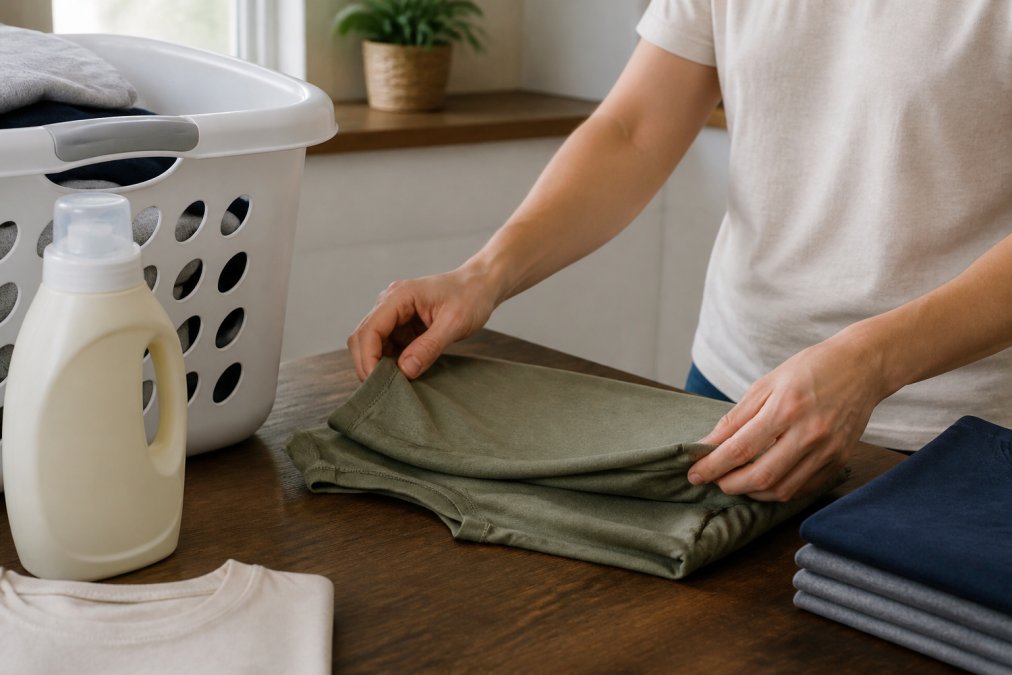
Follow these rules and most prints can stay vivid for a long time:
- Turn the shirt inside out before washing
- Use cold water only, never hot
- Choose a mild, bleach-free detergent
- Skip fabric softener, which coats and degrades ink
- Air dry or tumble on low heat
The Impact of Wash Cycles and Detergent on Print Quality
Every wash cycle does two things at once: it abrades the ink film against other garments, and it swells and relaxes the cotton fibers underneath. Over time, that combination dulls the print and weakens the fiber structure. The number of cycles matters more than the calendar, a shirt worn twice a week and washed after every wear hits 100 cycles in a year, while the same shirt washed after every three wears hits roughly 35. That difference can significantly impact a print's usable life.
Detergent chemistry compounds the effect. Most mainstream liquid detergents use surfactants and enzymes that are gentle on cotton but can slowly attack the binder that holds DTG ink to the fabric. Powdered detergents often include builders and higher alkalinity that accelerate that breakdown. Chlorine bleach oxidizes both dye and ink pigment, so it fades a print faster than any other single additive. Fabric softener is the worst offender: its cationic surfactants leave a waxy film that coats the ink and interferes with the binder, and once that film sets, the damage is not reversible.
Water temperature is the other lever. Hot water accelerates fiber swelling and ink-binder degradation, while cold water keeps both stable. A common pattern among people who keep prints looking new is cold wash, gentle cycle, and air dry, habits that protect the cotton itself.
There's a stewardship angle here too. Washing less often, in cold water, and air drying reduces both the wear on the garment and the energy and water the wash consumes. A Bible verse shirt cared for this way lasts longer and carries its message further, which is the practical version of the sustainable faith-based fashion idea.
EPA textiles and waste reduction guidance
Choosing the Best Christian Apparel Brands for Long-Term Wear
The best Christian apparel brands publish fabric specs, name their print method, and stand behind construction details like reinforced collars. When a brand hides those details, quality is usually the reason.
IGIT Apparel lists fabric weight and print method on every product page, and each purchase supports Christian ministries focused on youth and teenagers. That combination of transparency and mission is rare in faith-based fashion.
Look for these markers of a durable shirt:
- Published fabric weight (GSM or oz/yd²)
- Named print method (DTG or screen print)
- Reinforced collar and shoulder construction
- Clear care instructions on the listing
Christian Tees for Men: Quality Fabrics That Last
Men's Christian tees hold up best in 100% cotton at 6.0 oz/yd² or heavier, with a classic fit that doesn't stretch out at the shoulders. The Unisex Ultra Cotton Tee from IGIT Apparel uses medium-weight 100% cotton with ribbed collar knitting and no side seams, two construction choices that directly resist structural wear.
For a lighter feel, the Unisex Softstyle T-Shirt uses 100% combed ringspun cotton at 4.5 oz/yd² with twill-taped shoulders for added durability. It runs true to size and suits guys who want a softer hand feel.

Cotton Incorporated fiber quality guide
How to Extend the Life of Printed Apparel: A Step-by-Step Guide
You can extend the life of any printed shirt by following a consistent care routine. Here's the exact process:
- Read the care label first. Fiber content dictates water temperature and drying method.
- Wash inside out in cold water. This protects the print from friction against other garments.
- Use gentle, bleach-free detergent. Skip softener entirely.
- Choose a short, gentle cycle. Fewer rotations mean less fiber degradation.
- Air dry whenever possible. If you must machine dry, use the lowest heat setting.
- Fold instead of hanging. Hangers stretch the shoulders over time.
- Store away from direct sunlight. UV exposure fades both dye and ink.
Sustainable Faith-Based Fashion and Biblical Stewardship
Caring for your clothes is an act of stewardship. Scripture calls believers to manage resources wisely, and extending a garment's lifespan reduces textile waste while honoring that principle.
Sustainable faith-based fashion starts with buying quality once instead of replacing cheap shirts repeatedly. A durable Bible verse shirt worn for a long time carries more meaning than shirts that fall apart quickly.
EPA textiles and waste reduction guidance
Modern Bible verse shirts can last years, but only if the fabric weight, print method, and care routine all work together. Most shoppers focus on the message and ignore the construction, then wonder why the print cracks after a few months. IGIT Apparel builds faith-inspired clothing for men, women, and kids with published fabric specs, free shipping, and secure payments, and every purchase funds Christian ministries that support youth and teenagers. Shop now with IGIT Apparel and wear your faith with purpose, knowing your shirt is built to last and your purchase makes an impact.
Frequently Asked Questions
What is the average lifespan of a screen-printed T-shirt?
A screen-printed T-shirt can last for a significant period with regular wear before noticeable fading and cracking. The exact lifespan depends on fabric weight, ink quality, and how you wash it. Heavier cotton (6.0 oz/yd² or more) with proper care can last longer than lighter fabrics. Cold water washing and air drying are two significant factors in extending print life.
How does the printing method affect the durability of faith-based apparel?
Direct-to-garment (DTG) printing soaks into cotton fibers and can fade after repeated washing, while screen printing lays a thicker ink layer on top. Both methods can offer good durability when the garment is washed inside out in cold water and air dried. Fabric weight also matters: heavier cotton holds prints better than thin, lightweight tees.
What are the best laundry practices to keep Bible verse shirts looking new?
Turn the shirt inside out, wash in cold water on a gentle cycle, and use a mild detergent without bleach or fabric softener. Skip the dryer and hang or lay flat to air dry. Avoid ironing directly over the print; if needed, iron inside out on low heat. Following these steps can help keep bible verse shirts looking new and protect the message you want to share.
Does fabric quality impact how long Christian graphic tees last?
Yes. Fabric weight and fiber integrity play a major role. A 6.0 oz/yd² 100% cotton tee like the Unisex Ultra Cotton Tee holds up longer than a 4.5 oz/yd² lightweight option because thicker yarn resists pilling and structural wear. Ringspun cotton also feels softer and tends to last longer. Choosing heavier fabrics is one of the simplest ways to get more years out of your Christian graphic tees.