

Table of Contents
- What Ethical Fashion Means for Christian Consumers
- Biblical Principles of Sustainability in Your Wardrobe
- The Real Cost of Fast Fashion: Labor Exploitation and Poverty
- Fair Trade Christian Clothing Brands That Walk the Walk
- Building a Sustainable Wardrobe on a Budget
- How to Spot Greenwashing and Discern True Ethical Claims
- Making Your Purchases Count: Thrifting, Repair, and Responsible Disposal
- Conclusion: Your Fashion Choices Matter
- Frequently Asked Questions
Last Updated: September 3, 2026
What Ethical Fashion Means for Christian Consumers
Ethical fashion for Christian consumers means aligning your wardrobe choices with biblical principles of stewardship, human dignity, and social justice. Every purchase carries moral weight, affecting the person who made your shirt, the environmental cost of production, and whether your money upholds or exploits others.
More Christians are asking hard questions about where their clothes come from and what their spending habits say about their faith. The tension is real: you want affordable, stylish clothing that reflects your values while navigating a global fashion industry built on fast turnover, hidden labor practices, and environmental shortcuts.
At IGIT Apparel, we believe ethical fashion choices for Christian consumers start with understanding that your wardrobe is a form of witness. When you buy from brands that prioritize fair wages, sustainable materials, and transparent supply chains, you're voting with your dollars for a system that honors the people making your clothes. You're practicing conscious consumerism rooted in the conviction that human beings deserve dignity and just compensation.
The challenge isn't finding one perfect outfit. It's building a wardrobe that reflects your values consistently, within real budget constraints, and without becoming a full-time investigator of supply chains. That's what this guide covers: how to make ethical fashion choices for Christian consumers that are actually sustainable for your life and your wallet.
Biblical Principles of Sustainability in Your Wardrobe
The Bible doesn't mention polyester or fast fashion, but it's full of principles about stewardship that apply directly to how you consume. Stewardship means recognizing that what you have isn't ultimately yours, you're a caretaker of resources meant to serve God's purposes and care for His creation.
In Genesis, Adam is placed in the garden "to tend and keep it." That's stewardship language: intentional care, not exploitation. When you buy clothing made by workers earning poverty wages in unsafe conditions, you're participating in a system that violates the principle that all people are made in God's image and deserve dignity.
Proverbs repeatedly warns against excess and greed. "Keep your life free from the love of money, and be content with what you have" (Hebrews 13:5). This doesn't mean you can't buy new clothes, but it does mean examining whether you're buying out of genuine need or out of the constant dissatisfaction that fast fashion deliberately cultivates. A sustainable wardrobe built on quality and intention reflects biblical wisdom about contentment.
Throughout Scripture, God's concern for the poor and marginalized is unmistakable. When you knowingly support systems that keep garment workers trapped in poverty, you're making a choice about whose dignity matters. Ethical fashion choices for Christian consumers flow from the conviction that justice is central to following Christ.
The practical application is simple: buy less, choose well, and keep what you have longer. Repair your clothes. Thrift. Support brands that pay fair wages and use sustainable materials. These are expressions of biblical stewardship.
The Real Cost of Fast Fashion: Labor Exploitation and Poverty
Fast fashion's business model depends on keeping prices artificially low through labor exploitation. Garment workers, mostly women in developing nations, earn wages so low they can't afford basic necessities while working 12-16 hour days in unsafe conditions with exposed machinery and chemical hazards (ilo.org).
A garment worker in Bangladesh might earn $3-4 per day producing clothing sold in the United States for $40-60 (peer-reviewed research). The markup isn't going to innovation or quality, it's going to marketing, retail overhead, and corporate profit. The person who made your shirt is living in poverty while you pay a fraction of what her labor is genuinely worth.
Fast fashion also accelerates textile waste through artificial urgency ("limited time," "exclusive drops," "seasonal must-haves"). Most clothing is worn only a handful of times before being discarded (the EPA). The environmental footprint is staggering: water used to grow cotton, chemicals used in dyeing, carbon emissions from shipping, and landfills overflowing with barely-worn garments.
The connection between fast fashion and poverty is structural. The industry's profitability depends on keeping labor costs as low as possible, which means paying workers in countries with weak labor protections wages that trap them in poverty. When you buy from fast fashion brands, you're directly funding a system that perpetuates global inequality.
This is where ethical fashion choices for Christian consumers become non-negotiable. You can't claim to care about justice while knowingly funding injustice.
Fair Trade Christian Clothing Brands That Walk the Walk
Fair trade means workers earn living wages, factories meet safety standards, environmental practices are transparent, and supply chains are verifiable. It's fundamentally different from fast fashion's model.
IGIT Apparel stands out by combining faith-inspired design with a mission-driven model. Every purchase directly supports Christian ministries and youth initiatives. The brand offers pieces like the "Pointing Kids To Jesus" t-shirt ($28.50) made from 100% cotton with reinforced construction, and the "Is God Real" tee ($24.50) in premium combed ring-spun cotton. More importantly, IGIT's model is transparent about where your money goes: straight to supporting the next generation of believers. With free shipping and secure payments, you're investing in youth ministry funding.

When evaluating fair trade Christian clothing brands, look for transparent supply chain information, verifiable certifications (Fair Trade Certified, B Corp status), specific information about worker wages and factory conditions, and clear communication about where profits go.
Building a Sustainable Wardrobe on a Budget
A sustainable wardrobe doesn't require replacing everything at once or spending a fortune. It requires buying less, choosing better quality, and keeping what you have longer.
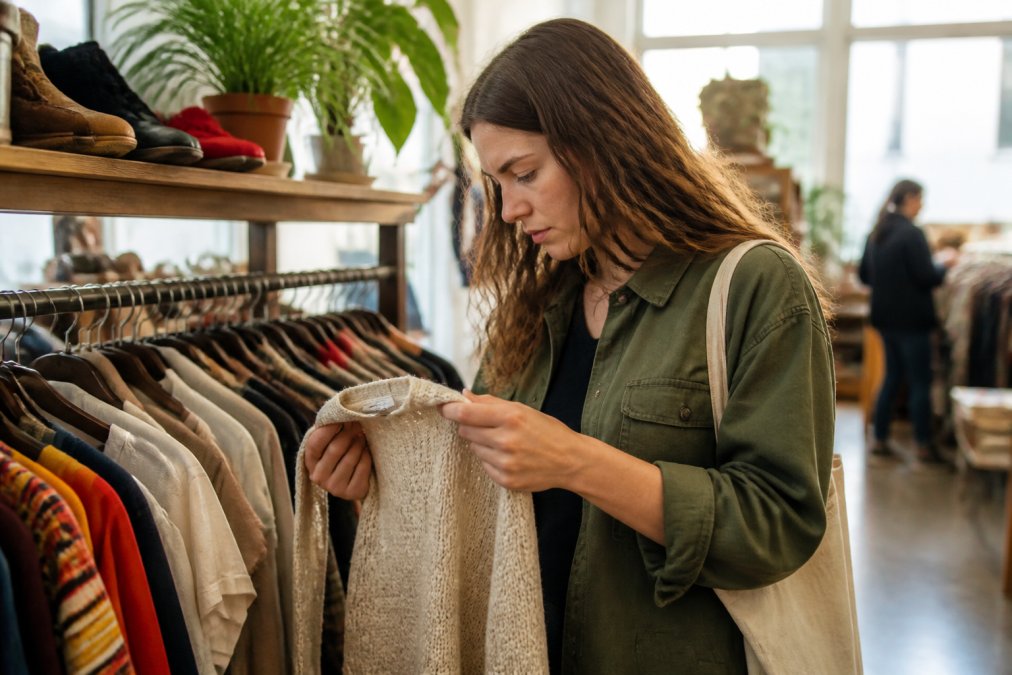
Start with a capsule wardrobe approach: a small collection of versatile, high-quality pieces that work together. Instead of 50 items you wear occasionally, you have 20-30 pieces you actually wear regularly. This reduces waste and saves money through strategic rather than impulsive buying.
Here's a practical framework:
-
Assess what you actually wear. Track your clothing for two weeks to reveal your genuine style and lifestyle needs versus aspirational purchases.
-
Choose a neutral color palette. Stick to 3-4 neutral base colors (black, white, gray, navy, tan) to make mixing and matching exponentially easier.
-
Invest in quality basics. A well-made white t-shirt, dark jeans, and neutral sweater are worth the investment because you'll wear them constantly. IGIT Apparel's "GOD IS MY ROCK" unisex soft-style t-shirt ($24.50) in 100% cotton works as a basic while expressing your faith.

GOD IS MY ROCK -
Add intentional statement pieces. Once you have basics, add a few pieces that reflect your personality or faith.
-
Thrift strategically. Thrifting extends a garment's life and keeps it out of landfills. Look for quality indicators: solid seams, no stains, natural fibers when possible.
-
Repair and maintain. Learn basic repairs: sewing buttons, fixing tears, replacing zippers. These skills extend your wardrobe's life dramatically and cost almost nothing.
Quality costs more upfront, but the cost-per-wear calculation shows the savings. A $50 shirt worn 100 times costs $0.50 per wear. A $15 shirt worn 10 times costs $1.50 per wear. You're actually saving money by buying better.
| Strategy | Budget Impact | Time Investment | Sustainability Impact |
|---|---|---|---|
| Capsule wardrobe | Lower ongoing cost | High initial planning | Reduced consumption |
| Thrifting | Lowest cost per item | Moderate searching | Maximum waste reduction |
| Quality basics | Higher upfront | Low ongoing | Extended garment life |
| Repair skills | Minimal cost | Learning curve | Significant waste prevention |
| Strategic sales | Moderate savings | Requires patience | Supports ethical brands |
How to Spot Greenwashing and Discern True Ethical Claims
Greenwashing is rampant in fashion. Brands slap "eco-friendly" labels on products with minimal environmental benefit, use vague language like "sustainable practices" without specifics, or tout tiny charitable donations as transformative. As a Christian consumer, discernment is essential.
Real transparency means specific, verifiable information. A brand claiming ethical production should tell you which factories, where they're located, what certifications they hold, what workers actually earn, and how you can verify this information.
Watch for these red flags:
Vague language. "Sustainable," "eco-friendly," "ethical" without specifics. Real brands name their certifications: Fair Trade Certified, B Corp, GOTS (Global Organic Textile Standard).
Greenwashing imagery. Photos of pristine nature and happy workers don't prove anything. Ask for documentation.
Hidden supply chains. If a brand won't tell you where products are made or who makes them, that's intentional. Ethical brands are transparent.
Charity theater. "We donate 1% of profits to charity!" might sound good until you realize that's after expenses. Demand specifics: How much money? To which organizations? What measurable change resulted?
Certification shopping. Some brands use obscure certifications because they're easier to obtain than legitimate ones. Stick with recognized standards.
IGIT Apparel's model is straightforward to evaluate because the mission is clear: profits go to Christian youth ministries. That's not a hidden claim, it's the entire business model.
Making Your Purchases Count: Thrifting, Repair, and Responsible Disposal
Ethical fashion choices for Christian consumers extend beyond what you buy new. How you handle your existing wardrobe and where you shop secondhand matters enormously.
Thrifting as spiritual practice. Buying secondhand is the most sustainable fashion choice available. You're extending a garment's useful life, preventing it from entering a landfill, and typically spending far less money. Thrift stores, consignment shops, and online resale platforms (Poshmark, Depop, ThredUP) give clothing a second life. Thrifting is an act of responsible stewardship, honoring the resources already invested in that garment and ensuring the maker's work isn't wasted.
Repair as resistance. Learning to repair your clothes is countercultural in a disposable fashion world. A torn seam, missing button, or small hole aren't reasons to discard a garment, they're opportunities to extend its life. YouTube has countless tutorials for basic repairs. One repaired garment that otherwise would have been discarded is one less item in a landfill.
Responsible disposal. When a garment truly reaches the end of its life, responsible disposal matters. Donate still-wearable items to thrift stores or clothing banks. For truly unusable fabric, textile recycling programs exist in many communities. Only donate items you'd actually wear if you found them in a thrift store.
Conclusion: Your Fashion Choices Matter
Your wardrobe is a daily expression of your values. When you choose ethical fashion, you're aligning your consumption with your faith, refusing to participate in systems that exploit workers, practicing stewardship of creation, and voting for a different kind of fashion industry.
This doesn't require perfection. You won't find completely ethical clothing made in a broken system. But you can make better choices, support brands that are genuinely trying, repair what you have, and buy less overall.
IGIT Apparel makes this easier by combining faith-inspired design with transparent mission. Every purchase supports Christian youth ministries. The quality reflects that commitment, pieces designed to last, not designed to fail and force replacement. With free shipping and secure payments, you can invest in your values without breaking your budget.
Start small. Buy one quality piece from an ethical brand. Learn to repair something. Visit a thrift store with intention. These are how change happens: one choice, one wardrobe, one person at a time.
Frequently Asked Questions
Q: What does the Bible say about consumerism and fashion?
A: Scripture emphasizes stewardship and warns against materialism. First Timothy 6:10 notes that the love of money is a root of evil, while Proverbs 31:8-9 calls believers to advocate for those who cannot speak for themselves. This applies directly to fashion: choosing ethical clothing honors the dignity of garment workers and reflects biblical values of justice and integrity. Your purchasing decisions either support or perpetuate systems that exploit vulnerable people.
Q: How can Christian consumers identify truly ethical clothing brands?
A: Look for transparency: ethical brands publish supply chain information, labor certifications, and material sourcing details. Check for third-party certifications like Fair Trade Certified or B Corp status. Ask questions about factory locations, worker wages, and environmental practices. Brands like IGIT Apparel that explicitly tie purchases to ministry impact and publish where funds go demonstrate accountability. If a brand won't answer these questions, that's a red flag.
Q: Why is ethical fashion considered a form of stewardship?
A: Stewardship means managing resources responsibly on behalf of God. Ethical fashion choices honor human dignity, protect creation from textile waste, and ensure garment workers receive fair compensation. By choosing quality over quantity, supporting fair trade, and caring for your clothes, you're stewarding both people and the environment. This aligns with Genesis 2:15, which calls us to tend and keep the earth, and to value the people who work within it.
Q: What's the difference between sustainable fashion and ethical fashion?
A: Sustainable fashion focuses on environmental impact: reducing waste, using natural materials, and minimizing carbon footprint. Ethical fashion prioritizes human dignity: fair wages, safe working conditions, and transparent supply chains. True ethical fashion for Christian consumers combines both. A brand can be sustainable but still exploit workers, or ethical but wasteful. Look for companies addressing both dimensions, like fair trade brands using organic materials with transparent labor practices.
Making ethical fashion choices for Christian consumers is an act of faith. It's saying that how we spend our money matters, that the people making our clothes deserve dignity, and that stewardship extends to every purchase we make. Shop now with IGIT Apparel and help shape the next generation of believers through every purchase.
This article was written using GrandRanker