

Table of Contents
- Why Christian Values Matter in Fashion Production
- Faith, Identity, and What We Wear
-
Ethical Fashion Production and Human Dignity
- What dignified production actually requires
- The audit problem: why a certificate is not proof
- Mapping the supply chain: the first practical step
- Wage benchmarks and the living-wage gap
- Grievance channels and worker voice
- Practical due diligence for buyers and brands
- Measuring whether values are reflected in production
- Sustainable Clothing Materials and Stewardship
- Measuring the Charitable Impact of Clothing Purchases
- How to Verify Ethical Claims and Supply Chain Transparency
- Frequently Asked Questions
Last Updated: October 19, 2026
Why Christian Values Matter in Fashion Production
Christian values fashion production connects what we wear to how we live. At IGIT Apparel, faith-inspired clothing reflects a commitment to justice, dignity, and stewardship.
The fashion industry employs millions of workers globally, many in conditions that contradict Christian principles: unsustainable wages, unsafe factories, and opaque supply chains.
This guide explores how Christian values translate into production ethics, environmental stewardship, and measurable accountability.
Faith, Identity, and What We Wear
Clothing communicates identity; for Christians, apparel is a visible, daily declaration of faith.
Faith-inspired clothing with genuine Christian messages creates conversation and connection, a teenager finds community, a parent signals what matters in their household.
But the message breaks down when production contradicts Christian values: you cannot glorify God while wearing something produced through conditions that deny human dignity.
Christian values fashion production are inseparable from faith expression: the message on the shirt and the factory conditions must align.
Ethical Fashion Production and Human Dignity
Ethical fashion production starts with one principle: workers deserve dignity. Scripture calls us to care for the vulnerable, pay workers justly, and recognize the image of God in every person, but principles matter only when translated into checkable mechanisms.
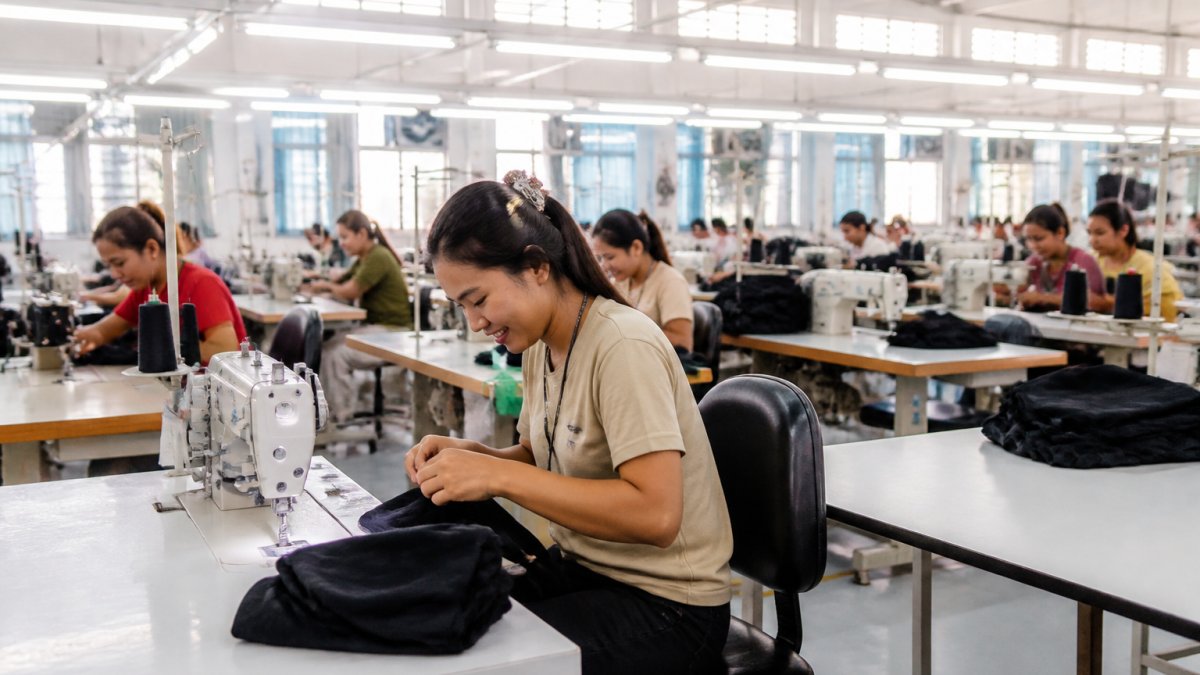
What dignified production actually requires
Dignity in garment production requires overlapping conditions, getting wages right but ignoring safety doesn't achieve it. Core requirements:
- Wages that meet basic needs. A fair wage is not the same as the legal minimum wage. In many garment-producing regions the legal minimum falls below what a worker needs to support a family. Brands committed to dignity benchmark wages against living-wage estimates for the producing region and disclose how their wage levels compare.
- Safe workplaces. Fire safety, ventilation, chemical handling, and machine guarding are the recurring failure points in garment factories. Dignified production requires documented safety inspections and a record of correcting hazards, not just a certificate on a wall.
- Reasonable hours and rest. Excessive overtime is one of the most common violations in apparel supply chains. A brand that does not monitor hours cannot claim to protect workers' rest or family time.
The audit problem: why a certificate is not proof
Most brands claiming ethical production rely on third-party social audits, which have well-known limits: scheduled audits can be prepared for, workers may be coached, and an audit captures a snapshot, not ongoing conditions.
What distinguishes a serious program is what happens after the audit. Ask a brand:
- Do you publish audit findings, including violations, or only pass/fail results?
- What is your corrective-action process when an audit finds a problem, and what is the timeline for fixing it?
- Do you ever terminate a supplier for labor violations, and can you describe an example?
A brand that can describe its corrective-action process in detail is more credible than one listing certifications. Fair Trade USA, SA8000, and B Corp provide external accountability but vary in scope and rigor, treat them as one input, not a verdict.
Mapping the supply chain: the first practical step
You cannot protect workers you cannot locate. Supply chain mapping, identifying every facility from fiber through mills, dye houses, cut-and-sew, and finishing, is foundational, yet many brands know only their final assembly factory.
A brand serious about dignity should be able to answer:
- Which factories perform cut-and-sew, and where are they located?
- Which mills supply fabric, and which facilities dye and finish it?
- Are any processes subcontracted without the brand's knowledge?
Publishing a supplier list is a meaningful transparency step: it doesn't guarantee good conditions, but it makes verification possible. A brand that refuses to name its factories asks you to trust a claim you cannot check.
Wage benchmarks and the living-wage gap
The gap between legal minimum and living wages is a central ethical problem. A living wage covers food, housing, healthcare, education, and some discretionary income, and in many regions, minimum wages fall well short.
Brands committed to dignity pay above the legal minimum, join industry wage-setting initiatives, or require suppliers to show progress toward a living-wage benchmark. The mechanism matters less than disclosure: ask whether the brand benchmarks wages against a published living-wage estimate per region and publishes the results.
Grievance channels and worker voice
Grievance mechanisms are the practice most often missing from brand claims. Workers facing harassment, unpaid wages, or unsafe conditions need a way to report problems without fear of retaliation, through independent hotlines, elected worker committees, or third-party systems.
The test is whether workers use the channel and whether reports lead to change. Ask how many grievances were filed last year, how many were resolved, and the average resolution time.
Practical due diligence for buyers and brands
If you are selecting suppliers or evaluating a brand, use a structured due-diligence sequence rather than relying on impressions:
- Map the supply chain. Identify all tiers and confirm whether subcontracting occurs.
- Collect labor standards and audit reports. Review findings, not just pass/fail results.
- Benchmark wages. Compare disclosed wages against a published living-wage estimate for the region.
- Verify grievance mechanisms. Confirm that a channel exists and that outcomes are tracked.
- Check corrective-action follow-up. Ask for examples of violations found and fixed.
- Review consistency over time. A single good audit is weaker evidence than a multi-year record.
Measuring whether values are reflected in production
Values become credible when measured. Useful indicators include audit coverage, factories with functioning grievance channels, wages relative to a living-wage benchmark, findings closed on timeline, and material traceability to mill or farm.
For Christians evaluating apparel brands, the question is direct: can this brand prove workers are treated with dignity? Named factories, wage benchmarks, audit follow-up, and a working grievance channel give you something to weigh.
Sustainable Clothing Materials and Stewardship
Christian stewardship extends to the earth: how materials are grown, processed, and manufactured affects creation.
Sustainable materials reduce production's footprint: organic cotton eliminates synthetic pesticides, recycled fabrics cut waste, and natural dyes replace water-contaminating chemicals, care for creation, not exploitation.
The problem is complexity: cotton requires significant water, synthetics shed microplastics, and even "sustainable" materials demand energy and transport. There is no perfect fabric.
What matters is intentionality: stewardship-minded brands make deliberate sourcing decisions, acknowledge trade-offs, publish their environmental impact, and reduce waste and toxins.
Measuring the Charitable Impact of Clothing Purchases
Many faith-based apparel brands claim purchases support Christian ministries, but "supports" can mean anything from a percentage of profit to a dollar per item. Without specifics, it's marketing, not accountability: how a brand allocates giving reveals whether generosity is structural or promotional.
The three giving models you will encounter
Faith-based apparel brands generally use one of three models, each with different accountability implications:
- Percentage-of-revenue giving. The brand commits a fixed share of every sale, commonly stated as a percentage of gross revenue or net profit, to named ministries. This model is the easiest to verify because the commitment scales with sales and can be checked against published revenue figures.
- Per-item giving. A fixed dollar amount per garment sold goes to a cause. This is simple to communicate but easy to obscure, because the per-item figure can be small relative to the retail price and is rarely reconciled against total units sold.
- In-kind or program giving. The brand donates product, funds a specific program (a youth camp, a ministry building project), or sponsors events. In-kind giving can be genuine, but it is the hardest to value and the easiest to overstate.
Ask which model a brand uses before asking how much it gives. A percentage commitment is auditable; a vague "a portion of proceeds" is not.
Questions that produce verifiable answers
Replace open-ended questions like "Do you support ministries?" with checkable ones:
- What percentage of gross revenue or net profit went to charitable causes in the most recent fiscal year?
- Which ministries received funds, and can the brand provide the ministry's contact information so you can confirm the gift?
- Is the giving commitment written into the brand's operating budget, or is it discretionary and subject to change?
- Does the brand publish an annual report showing total revenue, total giving, and the split between cash and in-kind donations?
- What is the average gift per item sold, and how does it compare with the item's retail price?
A legitimate brand will answer most of these directly. One that answers only with stories and testimonials, without numbers, is signaling that accountability is not part of its model.
Red flags in charitable claims
Watch for these common patterns in faith-based apparel marketing:
- Unnamed ministry partners. "Supports Christian ministries" without naming them prevents verification.
- Percentage language without a base. "A portion of profits" is meaningless unless the brand defines whether the base is revenue, gross profit, or net profit.
- Giving tied to a limited-time promotion. A campaign that donates during a launch week is not the same as a structural commitment.
A simple verification workflow
You don't need an accounting background to check a charitable claim. Use this sequence:
- Read the brand's published giving page. Look for a stated percentage, a named base (revenue or profit), and named partners.
- Request the most recent annual report or giving summary. If none exists, ask for a written statement of the giving commitment.
- Contact one named ministry partner. Confirm that the partnership is active and that funds were received.
- Compare the giving commitment with the price point. A high-margin item with a small per-item gift is not necessarily wrong, but the ratio should be disclosed.
- Check consistency over time. A brand that gave meaningfully last year but has no current commitment may be treating generosity as a campaign rather than a value.
Why this belongs in a production discussion
Charitable giving is part of the same stewardship question as production ethics. A brand that pays workers fairly, sources responsibly, and gives transparently makes consistent choices about how money moves through its business; one that gives generously to ministry but cannot document fair wages does not.
When you evaluate a faith-based apparel brand, treat charitable claims like labor claims: ask for the mechanism, the number, and the verification path. Generosity that cannot be measured cannot be trusted to be real.
How to Verify Ethical Claims and Supply Chain Transparency
Supply chain transparency is the foundation of accountability: if a brand cannot tell you where garments are made, by whom, and under what conditions, you cannot verify its ethical claims.
Start with what the brand publicly shares, factory names, labor standards, third-party verification. Legitimate brands typically provide:
- Factory locations and names
- Labor standards and wage information
- Safety certifications or audit reports
Look for third-party verification: organizations like Fair Trade USA and B Lab conduct independent audits and certify brands meeting specific standards.
Ask the brand directly.
Check charitable partnerships directly: contact the named ministries and confirm funding is real and meaningful.
Finally, evaluate consistency: do practices align with stated values, environmental claims with material choices, charitable commitments with pricing and margins?
Choosing apparel that reflects your Christian values requires intentionality about production practices, environmental impact, and charitable authenticity.
Frequently Asked Questions
How can Christian values influence fashion production?
Christian values like human dignity, stewardship, and justice directly shape ethical fashion production. Brands rooted in Christian faith prioritize fair wages, safe working conditions, and environmental care, reflecting the principle that workers and creation deserve respect. When Christian values guide production decisions, every garment becomes an expression of faith in action.
What should a faith-based clothing brand disclose about its supply chain?
A credible faith-based brand should publish clear information about where and how garments are made, including factory locations, worker wage standards, safety certifications, and material sourcing. Transparency reports showing charitable impact, how much revenue goes to ministry and youth initiatives, build trust. Vague claims about 'supporting missions' without documented proof are a red flag; genuine brands welcome accountability.
Can Christians enjoy fashion while staying true to their values?
Yes. Christian faith and fashion are not in conflict when your choices reflect your beliefs. Modesty, quality over quantity, and intentional consumption align with Christian stewardship. Fashion becomes problematic only when it fuels materialism, pride, or exploitation. Choosing faith-inspired apparel that supports ethical production and charitable causes transforms fashion from a potential stumbling block into a tool for witness and generosity. Your wardrobe can communicate your identity in Christ while honoring workers and creation.
How can a clothing purchase support a charitable mission?
Mission-driven brands like IGIT Apparel direct a portion of each sale directly to Christian ministries and youth initiatives. When you purchase faith-inspired clothing, your money funds youth programs, mentorship, and spiritual development in your community. Transparent brands disclose exactly how much of your purchase supports these causes and provide impact reports showing results. This model turns everyday shopping into active participation in ministry, you're not just buying a shirt; you're investing in the next generation of believers.