

Table of Contents
- Why Christian Apparel That Supports Charities Matters
- How to Verify Charitable Donations from Clothing Brands
- Faith-Based Clothing Brands That Give Back to Youth and Ministries
- Apparel Designs That Start Spiritual Conversations
- Transparency Reports and Impact Audits: What to Demand
- Sustainability vs. Charity: Balancing Values in Your Purchase
- Making Your Purchase Count: From Selection to Impact
Last Updated: August 11, 2026
Why Christian Apparel That Supports Charities Matters
Wearing your faith isn't just a personal statement anymore. When you choose christian apparel that supports charities, you're making a decision that extends far beyond fashion. Every purchase becomes an act of stewardship, transforming a simple clothing transaction into meaningful support for causes that align with your values.
The market for faith-based fashion has grown significantly, but not all brands are created equal. Many companies claim to support charitable causes while keeping the majority of profits for themselves. Others donate inconsistently or lack transparency about where the money actually goes. This creates a real problem for mission-driven consumers: how do you know if your purchase is genuinely making an impact?
IGIT Apparel stands out because it was built with this exact challenge in mind. The brand offers faith-inspired clothing for men, women, and kids with a clear commitment to supporting Christian ministries and youth initiatives. Every purchase directly fuels their mission, and that transparency matters when you're trying to align your spending with your beliefs.
This guide explores the landscape of christian apparel that supports charities, showing you how to verify donations, identify brands worth supporting, and understand what separates genuine mission-driven companies from those just using charity as a marketing angle.
How to Verify Charitable Donations from Clothing Brands
Before you buy, you need a framework for evaluating claims. Too many brands make vague promises about "giving back" without publishing specific numbers or transparency reports.
Start by asking three direct questions: What percentage or dollar amount goes to charity? Which specific organizations receive the funds? How often do they publish impact reports showing where money was actually distributed?
Legitimate brands answer these questions clearly on their website. Look for dedicated pages about their giving model, not just a single sentence buried in their footer. The FTC's guidance on charitable claims emphasizes that companies must substantiate any charitable contributions they advertise. This means if a brand says they donate a percentage of profits, they should be able to prove it.
A common mistake is assuming that "portion of profits" means a generous amount. Profit margins in apparel typically run 20-40%, so a brand donating 25% of profits might only be giving 5-10% of your actual purchase price. Brands that donate a fixed amount per item (like $7 per shirt) are often more transparent about impact because the math is simpler to verify.
Check whether the brand partners with recognized nonprofits. If they mention supporting specific organizations like Samaritan's Purse, Compassion International, or established youth ministries, you can independently verify those partnerships. Unknown or vague charity names are a red flag.
Finally, request their impact reports. The best brands publish annual or quarterly reports showing total funds raised and distributed. If a brand won't share this information when asked directly, that's telling you something important about their commitment level.
Faith-Based Clothing Brands That Give Back to Youth and Ministries

The brands listed here have made specific commitments to supporting Christian causes and youth-focused initiatives. Each operates differently, so understanding their model helps you choose the one that aligns with your values.
IGIT Apparel: Mission-Driven Youth Ministry Support
IGIT Apparel represents a direct approach to mission-driven commerce. The brand offers a diverse line of faith-inspired clothing for men, women, and kids, with every purchase directly supporting Christian ministries and youth initiatives. What sets IGIT Apparel apart is the specificity of its mission: the brand exists to help teenagers and youth through essential funding.
The buying experience includes practical features that remove friction. Free shipping on all orders means more of your money goes toward the mission rather than logistics costs. Secure payment processing gives you confidence that your transaction is protected. The range of sizes and styles for kids, teens, and adults means you're not limited to one demographic.
For parents and youth leaders, IGIT Apparel solves a real problem: finding apparel that actually resonates with teenagers while supporting causes you believe in. The designs are intentionally created to appeal to Gen Z without the "preachy" aesthetic that turns younger wearers away.
Sovereign Shirts: Direct Medical Crisis Relief
Sovereign Shirts takes a different approach, focusing on immediate human need. The brand donates $7 from every shirt sold directly to individuals facing medical crises. This fixed-dollar model means you know exactly how much impact your purchase creates.
The brand partners with established nonprofits including Samaritan's Purse, Eight Days of Hope, and Compassion International. These aren't unknown organizations, they're recognized names in disaster relief and humanitarian work. Designs feature uplifting messages and scripture, creating apparel that works as both fashion and conversation starter.
The trade-off here is transparency about which specific medical cases receive funding. The brand supports the concept broadly without necessarily publishing details about individual recipients, which is understandable given privacy concerns.
FACT Goods: Medical Research and Positive Messaging
FACT goods focuses on supporting medical research, donating 25% of profits to organizations researching cancer, spinal cord injuries, Alzheimer's, Parkinson's, and MS. For someone who's experienced these conditions personally or lost someone to them, this specificity matters.
The brand offers free shipping on all orders and a 30-day return or exchange policy, removing purchase risk. The designs emphasize positive and faith-based messaging rather than heavy religious imagery, making them wearable in secular settings while still expressing your faith.
The percentage-of-profits model means donation amounts fluctuate with sales volume and business costs, which is less transparent than a fixed-per-item donation but still represents genuine commitment.
Hope Outfitters: 100% Profit Donation Model
Hope Outfitters operates on an unusual model: 100% of the profit from every t-shirt purchase goes directly to those in need. This isn't a percentage of profits, it's all of them. The brand has distributed over $300,000 to various causes, providing concrete evidence of impact.
Beyond apparel, Hope Outfitters offers hoodies, jewelry, art, and coffee, giving you multiple ways to support their mission. The transparency about total dollars distributed builds trust that this is a genuine mission-driven business, not a charity angle layered onto a profit-focused operation.
Elevated Faith: Global Christian Organization Support
Elevated Faith creates apparel and jewelry designed as conversation starters for faith. The brand donates a portion of all profits to reputable Christian organizations globally, supporting missionary work and faith-based community development.
The strength here is the breadth of Christian organizations supported. Rather than focusing on one cause, Elevated Faith spreads impact across multiple faith-based initiatives, which appeals to donors who want to support the broader Christian ecosystem rather than one specific cause.
Apparel Designs That Start Spiritual Conversations
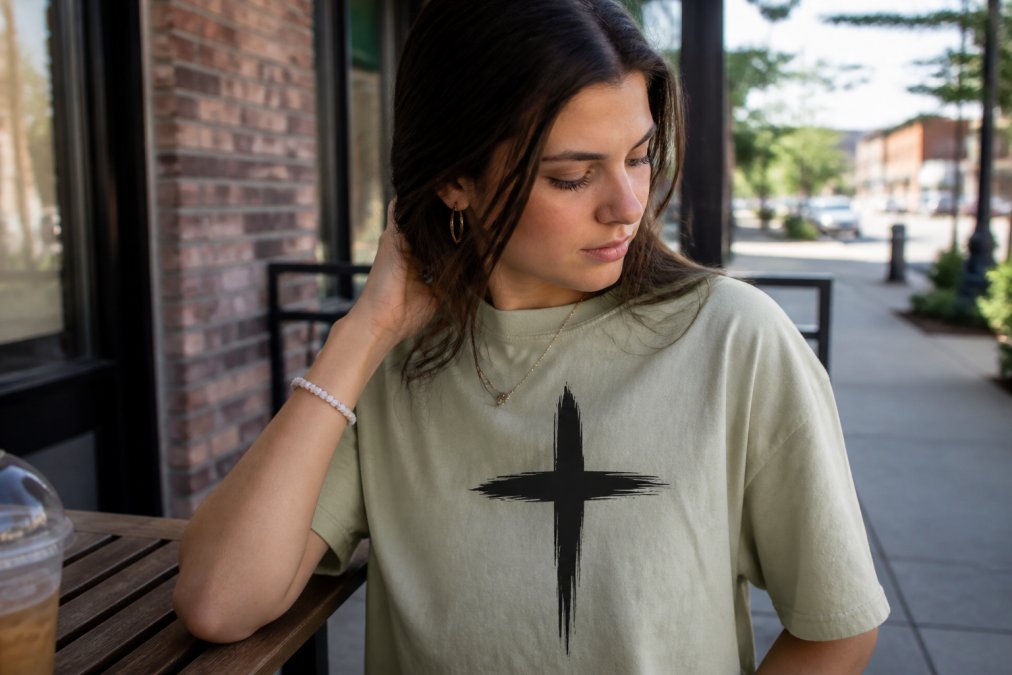
The best faith-based apparel works on two levels: it expresses your personal faith and creates openings for conversations with others. A design that's too subtle disappears into the background. One that's too aggressive can feel preachy.
Effective spiritual conversation starters combine visual appeal with meaningful messaging. Scripture references work when they're relevant to the wearer's life stage. A design about youth empowerment resonates differently for a teenager than for a parent, even if both wear the same brand.
The most successful designs avoid clichés. Rather than generic phrases like "God is good," they use specific scripture or create visual interest that makes people curious. When someone asks "What does that mean?" you have a natural opening to share your faith.
Brands like Elevated Faith and Proclamation Coalition intentionally design their apparel as ministry tools. The goal isn't just looking good, it's creating moments where faith becomes part of the conversation. This requires thoughtful design work, not just slapping a Bible verse on a t-shirt.
Quality matters here too. A design that fades after a few washes stops being a conversation starter. It becomes a reminder that you made a poor purchase decision. Durable printing, quality fabric, and thoughtful color choices all contribute to apparel that actually lasts long enough to do its job.
Transparency Reports and Impact Audits: What to Demand
The difference between a brand that genuinely supports charities and one that uses charity as marketing comes down to transparency. Demand to see impact reports. Real numbers. Specific organizations. Published data.
The best brands publish annual reports showing:
- Total revenue from apparel sales
- Total amount donated to charity
- Specific organizations that received funds
- How much each organization received
- Impact metrics from those organizations (lives served, programs funded, etc.)
Some brands go further and conduct third-party audits of their charitable claims. This independent verification costs money, which is why many smaller brands don't do it. But if a brand claims to be mission-driven, a third-party audit demonstrates genuine commitment.
When a brand refuses to share specific numbers or publishes only vague statements about "giving back," that's a signal to look elsewhere. Transparency isn't difficult for brands that are actually giving. It's only difficult for those that aren't.
Request impact reports directly. Email the brand and ask for their latest report showing funds distributed. See how quickly they respond and how detailed their answer is. A brand that can't or won't answer this basic question isn't worth your money, regardless of how good their designs look.
Sustainability vs. Charity: Balancing Values in Your Purchase
Many mission-driven consumers face a tension: you want to support charities, but you also care about environmental impact. A brand that donates generously but uses unsustainable materials creates a different kind of problem.
The reality is that apparel manufacturing has environmental costs. Cotton requires significant water. Synthetic fabrics use petroleum. Shipping creates carbon emissions. A brand can't eliminate these impacts, but it can minimize them through thoughtful choices.
Some brands address this by using organic cotton or recycled materials. Others focus on durability, if a shirt lasts five years instead of two, the environmental impact per year of wear decreases significantly. A few brands explicitly balance both: they source sustainable materials and donate a portion of sales to environmental causes.
The tension between sustainability and charity isn't always resolvable. You might choose a brand with less sustainable practices but significantly higher charitable impact. Or you might prioritize environmental responsibility even if it means less money goes to charity. There's no universal right answer, it depends on your values hierarchy.
What matters is making an intentional choice rather than defaulting to whatever brand has the slickest marketing. If sustainability is important to you, ask brands directly about their materials and manufacturing practices. If charitable impact is your priority, push for transparency reports. Let your values drive your decision.
Making Your Purchase Count: From Selection to Impact
Choosing the right brand is only the first step. How you purchase and wear the apparel matters too.
Start by selecting designs that actually fit your life. A shirt you never wear because the design doesn't resonate is a wasted donation. Buy pieces you'll genuinely wear regularly. The more you wear them, the more conversations they start, and the longer the apparel serves its dual purpose of expressing faith and supporting causes.
Consider buying multiple items if you're committed to a brand. A single shirt makes an impact, but supporting a brand consistently shows you believe in their mission. Many brands offer discounts for bulk orders, which makes sense if you're buying for a youth group or church event.
Share your purchases on social media if you're comfortable doing so. When you post about why you chose a mission-driven brand, you create awareness for others. Many people simply don't know these brands exist. Your recommendation carries weight with friends and family members who trust your judgment.
Finally, follow up on impact. Check back with brands you've supported to see their impact reports. Did they publish their annual giving? Are the organizations you wanted to support actually receiving funds? This accountability matters. Brands that know customers are watching tend to maintain higher standards.
Frequently Asked Questions
How can I verify if a faith-based clothing brand actually supports a charity?
Look for brands that publish specific donation amounts, partner names, and annual impact reports. Ask these questions: Does the brand state an exact dollar amount or percentage per purchase? Does it name the charities it supports? Does it provide proof of donations through third-party verification or published reports? Transparent brands typically display this information on their homepage or in a dedicated 'impact' section. If a brand is vague about where money goes, that's a red flag, contact them directly and request documentation before purchasing.
What percentage of my purchase typically goes to charity from Christian apparel brands?
It varies significantly. Some brands like Hope Outfitters donate 100% of profits (not the full purchase price, profits are after costs). Others donate a fixed amount per item, such as Sovereign Shirts' $7 per shirt. Many donate a percentage of profits, typically ranging from 10-25%, though exact percentages aren't always publicly stated. IGIT Apparel directs proceeds to youth ministries; check their website for current details. Always ask the brand directly if the percentage isn't clear, legitimate mission-driven companies are transparent about this.
Are there Christian apparel brands that support specific humanitarian missions?
Yes. Proclamation Coalition directs portions of sales to missions work. Elevated Faith supports global faith-based organizations. Power of Prayer supports addiction recovery, homelessness, domestic violence prevention, and childhood cancer care. Sovereign Shirts partners with Samaritan's Purse, Eight Days of Hope, and Compassion International for disaster relief and global poverty relief. B the Light Boutique focuses on pro-life and suicide prevention charities. IGIT Apparel specifically targets youth ministry empowerment. Choose a brand whose charitable focus aligns with causes you care about.
What makes IGIT Apparel different from other faith-based clothing brands?
IGIT Apparel's specific focus is empowering youth and teenagers through Christian ministry funding, a narrower mission than many competitors. The brand offers free shipping and secure payments, making purchases accessible. Unlike brands that donate percentages of profits (which can be unclear), IGIT emphasizes that every purchase fuels support for youth initiatives. For families and youth leaders specifically seeking to invest in the next generation of believers, this focused mission-driven approach stands out. Visit their website to see current impact details and designs aimed at Gen Z audiences.
Choosing christian apparel that supports charities is an opportunity to align your spending with your faith. IGIT Apparel offers a direct path to that alignment, with transparent support for Christian youth ministries and intentional designs that resonate with Gen Z believers. Every purchase fuels their mission to empower teenagers through essential funding, all backed by secure payments and free shipping. Make your wardrobe count by choosing a brand that turns fashion into ministry.
This article was written using GrandRanker